





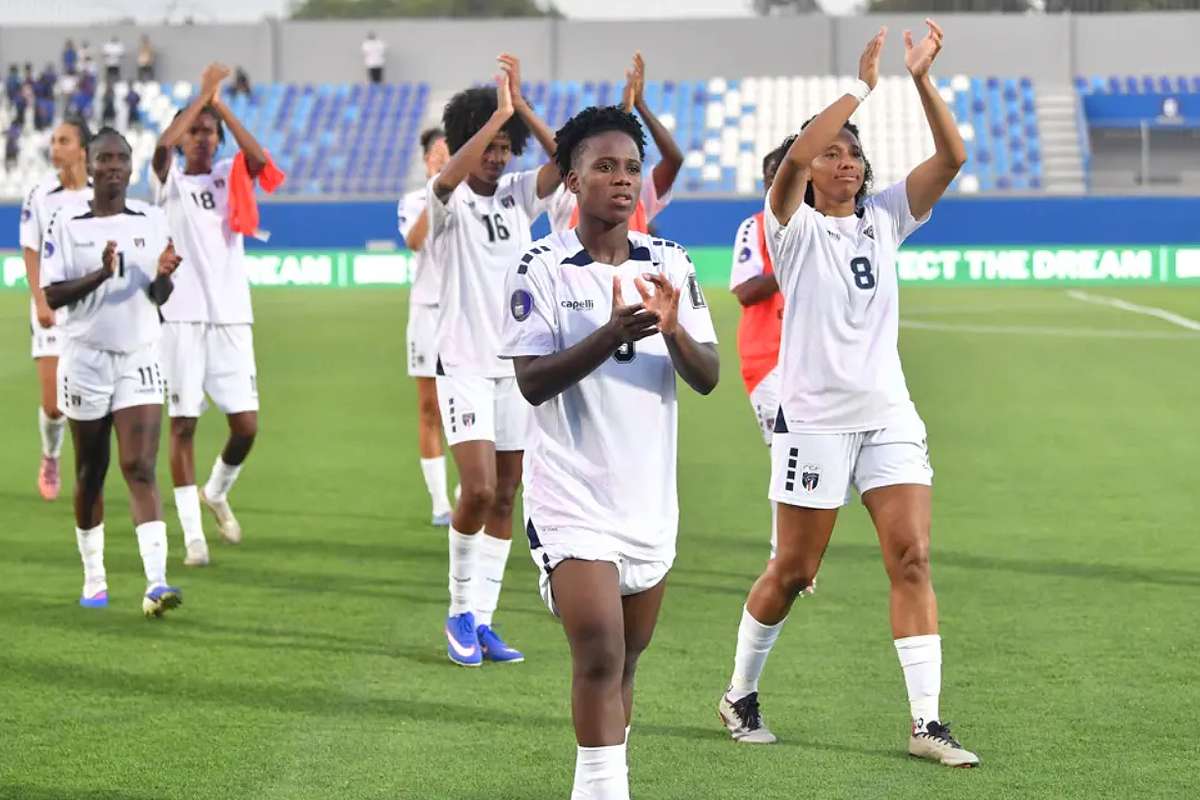
A year ago, the idea of Cape Verde competing at the Women's Africa Cup of Nations felt distant for a nation of just over half a million people. The women's program only played its first international match in 2018 and endured a two-year pause during the COVID-19 pandemic, yet the Blue Sharks arrived in Morocco as genuine qualifiers rather than ceremonial guests.
Their ticket was sealed through a dramatic playoff against Mali. Cape Verde fell 1-0 at home in Praia, then turned the tie around in Bamako to advance 4-3 on aggregate. That comeback captured the fighting spirit that has defined a remarkable summer for Cape Verdean football on both the men's and women's side.
A Summer of Firsts
The women's breakthrough followed closely on the heels of another milestone. Roughly a month earlier, Cape Verde's men's team made its first World Cup appearance and pushed reigning champions Argentina to the limit in the round of 16, falling 3-2 after extra time in a match that nearly went to penalties.
Tatiana Carvalho, the Cape Verdean Football Federation vice-president overseeing women's football, said that run lifted the entire federation. Speaking before the tournament, she described the men's exploits as a source of motivation for the women's squad, adding that the team was determined to forge its own identity while honoring the flag and the people of Cape Verde.
On the bench, that identity has a familiar face. Silveria Nedio, 60, has coached the team since its creation in 2018. A former handball player, rhythmic gymnast, and footballer who spent years as a winger for FC Juventude, Nedio carried visible emotion into the team's WAFCON debut. Before the opener against Ghana in Casablanca, she called it an absolute privilege to stand among Africa's established powers and pledged a committed performance against a strong, determined opponent.
Group D Reality Check
Morocco quickly tested Cape Verde against elite opposition. Ghana beat the debutants in their opening match at Moulay Rachid Stadium, exposing the gap between a historic first appearance and sustained continental competitiveness.
The Blue Sharks responded with a far more competitive showing against Mali at Larbi Zaouli Stadium in Casablanca. Oumou Kone gave Mali a 1-0 lead before Eveline Varela equalized for Cape Verde. Mali's greater cutting edge showed after the break as Fatoumata Niakate and Fatoumata Diarra extended the advantage, and Alivia Kelly's stoppage-time strike made the final score 3-2.
Two goals in a single match against a side ranked 52nd in the FIFA standings underlined the progress Cape Verde has made in a short timeframe. Mali entered the fixture as the stronger team on paper, yet Cape Verde refused to fold and left the pitch with tangible evidence that they could hurt established opponents.
Elimination Without Regret
The results meant Cape Verde's first WAFCON ended in group-stage elimination, a outcome that was always likely in a pool featuring Ghana and Mali. Ghana, ranked 74th globally, and Mali both brought deeper tournament experience and squads built for sustained African competition.
What matters is the trajectory. Cape Verde sits 69th in the FIFA rankings, having climbed into regular continental competition within seven years of their international debut. The playoff victory over Mali, the competitive loss in Casablanca, and the broader context of a nation simultaneously breaking ground at the World Cup suggest this WAFCON was a beginning rather than a ceiling.
Building From a Shared Foundation
Nedio's long tenure provides continuity rare for a program this young. Her multi-sport background and roots in domestic club football mirror the federation's grassroots approach: develop talent locally, compete with discipline, and treat every major stage as an opportunity to learn rather than a verdict on potential.
Carvalho's emphasis on parallel pride between the men's and women's programs also points to a structural advantage. Cape Verde is no longer asking whether it belongs on the continental stage. It is learning how to stay there.
The immediate task is consolidation. More competitive fixtures, stronger domestic pathways, and continued investment in women's football will determine whether this debut becomes a one-off fairytale or the first chapter of sustained growth. After a summer that included a World Cup scare against Argentina and a WAFCON campaign that ended with fight rather than surrender, Cape Verde has reason to believe the answer lies within reach.