









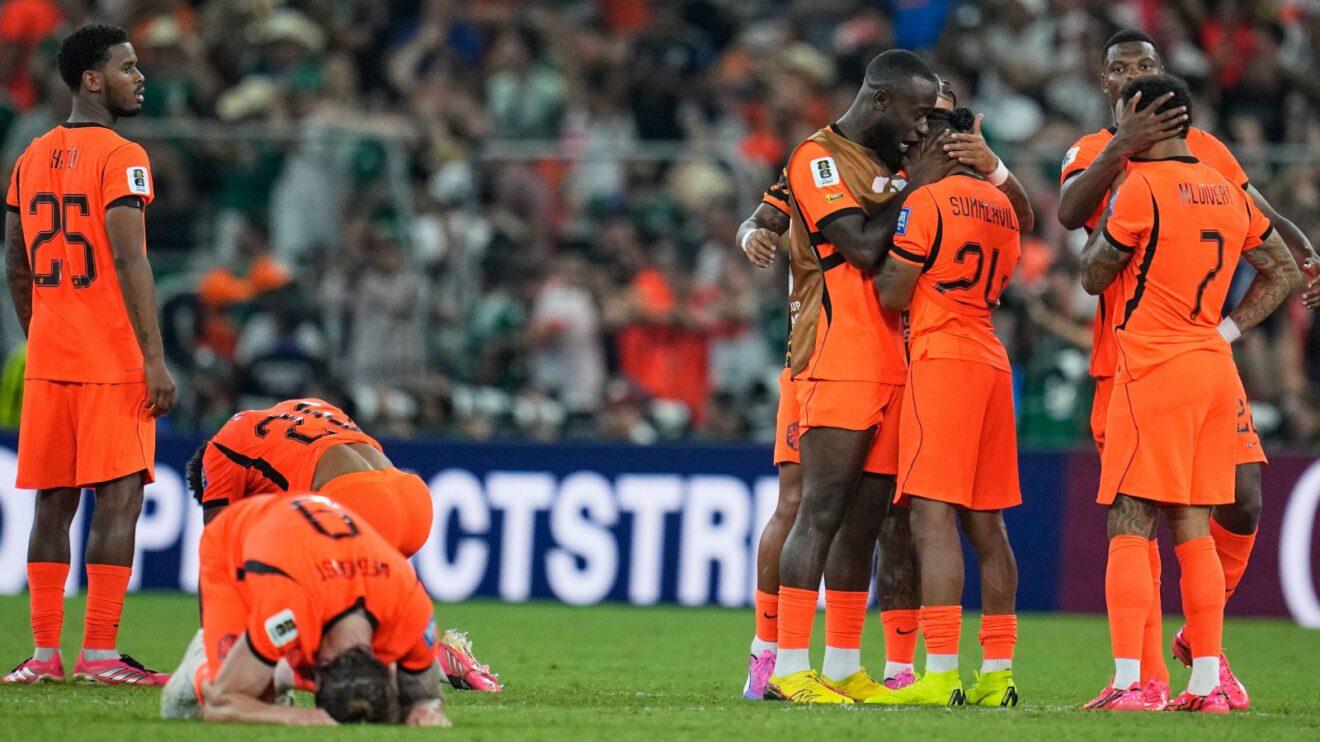
For the second time in four years, Morocco ended Netherlands World Cup dreams in the cruelest possible way. Monday’s Round of 32 tie in Monterrey finished 1-1 after extra time before the Atlas Lions prevailed 3-2 from the spot, booking a last-16 meeting with co-hosts Canada and sending Ronald Koeman’s side home in a contest that felt less like a knockout upset than a delayed verdict from 2022.
History Repeats, Only Louder
The parallels are impossible to ignore. In Qatar, these nations met in the quarterfinals amid a penalty controversy that still echoes through North African football. Moroccan supporters in Mexico did not let anyone forget it, reviving chants of “No era penal” long after the final whistle. This time there was no disputed spot kick to settle the tie in regulation — only a stubborn Dutch resistance that collapsed under the weight of a shootout and a stoppage-time equalizer that flipped the emotional ledger entirely.
Where the 2022 meeting saw the Netherlands advance in a tense, fractious affair, 2026 belonged to Morocco’s persistence. The Atlas Lions finished with roughly 70 percent possession, 11 shots and five on target against a Dutch side that managed just six attempts and two on frame. That is not the profile of a team that lost control of a match; it is the profile of a team that controlled everything except the one moment that mattered before penalties.
How the Night Turned in Monterrey
Morocco fashioned the clearer chances before the interval. Bart Verbruggen, thrust into a defining role for the Netherlands, produced a series of outstanding saves to deny Ayoub Bouaddi from close range and Neil El Aynaoui from distance. At the other end, Yassine Bounou was largely untroubled until he finally parried Micky van de Ven’s long-range strike.
Achraf Hakimi rattled the crossbar and forced another save from Verbruggen as the Dutch struggled to contain the full-back’s runs from deep. Ronald Koeman’s introduction of Wout Weghorst gave the Oranje a focal point they had lacked, and the tactical shift eventually produced a breakthrough — but not before Morocco had already established the rhythm of the evening.
The second half belonged emotionally to Cody Gakpo, whose opener appeared to tilt a tight knockout tie toward the Netherlands. Thousands of Moroccan supporters had backed the Atlas Lions throughout, with many local fans joining them in the stands. Then, in stoppage time, Issa Diop headed home an equalizer that sent the contest into extra time and drained the Dutch of the composure they had fought so hard to protect.
Neither side could find a winner in the additional 30 minutes. What followed was a shootout that swung repeatedly, capturing the jeopardy this tournament has finally embraced at the knockout stage.
The Shootout: Nerve, Error, and Redemption
El Aynaoui and Dutch substitute Justin Kluivert both missed early. Verbruggen then appeared to save Soufiane Rahimi’s effort, only for the ball to squirm underneath him and trickle over the line — the kind of marginal failure that defines knockout football. Quinten Timber dragged the Netherlands’ fourth kick wide. Hakimi struck the post with the chance to seal victory, keeping Dutch hope alive for one more heartbeat.
Ismael Saibari kept his nerve to convert the decisive spot kick after Bounou saved Crysencio Summerville’s attempt. Morocco won 3-2 on penalties. The final whistle triggered an eruption among Atlas Lions supporters in what was the last World Cup match to be played in Monterrey — a fitting end to a night that felt written in both footballing detail and historical grievance.
Van Dijk’s Case for the Plan
In defeat, Virgil van Dijk insisted the Netherlands’ approach had merit. “The game plan was working,” the captain argued — and on one level, the numbers support him. Koeman’s side absorbed pressure, stayed organized for long stretches, and found a route to lead through Gakpo. Against a Morocco team ranked eighth in the world, limiting them to a single goal from open play and extra time before penalties is not a tactical collapse.
Yet knockout football does not grade on process alone. The Netherlands entered this World Cup ranked seventh globally, fresh from a 5-1 group-stage win over Sweden and a 3-1 victory against Tunisia. They arrived in Monterrey with pedigree and momentum. They leave having held Morocco to a draw for 120 minutes but without the ruthlessness — in front of goal and from 12 yards — that separates quarterfinalists from tourists.
Van Dijk’s defense of the plan will resonate with coaches who value structure over spectacle. Supporters will ask whether a side that controlled so little of the ball can genuinely claim the blueprint was working when the result — elimination — is the only currency that counts in June.
What Morocco Carries Forward
Hakimi spoke afterward with the clarity of a team that understands its identity. “We know this type of game, we know against who we play,” he said. “We have to be focused and be strong physically but also mentally.” He also thanked Mexican supporters and the Moroccan diaspora who transformed Monterrey into a home fixture for the Atlas Lions.
Morocco now turn toward Canada with the confidence of a side that has beaten the Netherlands twice in World Cup knockout settings across two cycles — once through controversy, once through endurance. For the Netherlands, the conversation will linger on what might have been: a lead taken, a lead surrendered, and a shootout that turned on inches.
The game plan may have been working. On Monday in Monterrey, working was not enough.