













The 2026 World Cup has reached the stage where individual output curves matter as much as team shape. Across the opening rounds and into the knockout bracket, a small cluster of elite forwards is separating itself not only on the score sheet but in the underlying efficiency numbers that modern performance departments track every matchday.
From minutes-per-goal rates to chance-quality profiles, the tournament’s defining names are leaving a data trail that explains why certain sides look stable under pressure while others still feel one breakthrough away from control.
The Golden Boot Layer: Messi and Mbappé by the Numbers
No storyline has absorbed more analytical bandwidth than the duel between Lionel Messi and Kylian Mbappé. Both sit on six goals, yet their paths to that total tell two different efficiency stories.
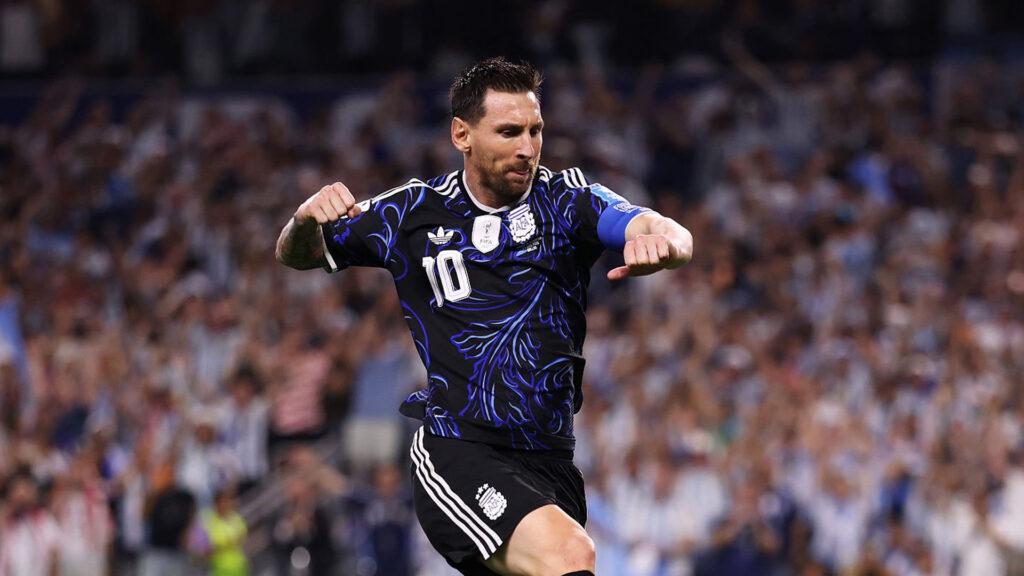
Messi has needed only 200 minutes to reach his tally — a strike every 33 minutes — while also climbing alone to 19 career World Cup goals, extending his record as the competition’s all-time leading scorer. That figure reframes every touch in Argentina’s title defense: opponents cannot simply man-mark him; they must compress the zones where his scan rate and final-third timing still outperform the defensive line.
His overall performance rating of 9.07 reflects more than finishing. Shot selection, pre-assist positioning and the ability to draw compact blocks before releasing runners have kept Argentina’s familiar, patient system functioning even when the scoreline stays tight. Argentina, ranked third in the latest FIFA standings at 1874.81 points, next face Cape Verde, a matchup that could add both to Messi’s current count and his historical lead.
Mbappé, meanwhile, has matched the six-goal mark with two assists across 351 minutes for France — a goal every 59 minutes — and has moved to 18 career World Cup goals, one behind Messi on the all-time list. France’s rise to No. 1 in the FIFA rankings mirrors the sustained transition threat Mbappé provides: his 8.63 rating underscores repeated success in high-speed channels and congested penalty areas.
France meet Paraguay next, a fixture that offers Mbappé another platform to convert volume into milestones. He has one more appearance than Messi at this stage, keeping the Golden Boot race on a knife edge where a single extra chance could swing the leaderboard.
What the Efficiency Gap Actually Means
The 26-minute gap in their scoring intervals is not cosmetic. Messi’s lower minute burden suggests Argentina have engineered rest cycles and controlled possession spells that limit his total workload while preserving peak output windows. Mbappé’s higher minutes reflect France’s reliance on direct vertical restarts — a different training emphasis on repeated sprint capacity and box arrival timing.
For analysts inside national setups, that contrast is a case study in how two world-class forwards can produce identical goal totals through entirely different physical and tactical load profiles.
Brazil vs Norway: Vinícius Júnior and Haaland Reset the Wide-Forward Model
On the other side of the bracket, a Round of 16 collision between Brazil and Norway brings together two forwards who arrived with contrasting club-season contexts and have both rebuilt momentum in national-team colors.
Vinícius Júnior entered the tournament with something to prove after an uneven domestic campaign. Four matches and 351 minutes later, he has four goals and one assist, good for an 8.20 performance rating. The first-step explosiveness is back, combination play around the box looks instinctive again, and his off-ball runs are forcing defenders into recovery sprints they cannot sustain for ninety minutes.
Neymar’s presence in the final third has added composure and timing, allowing Vinícius to attack defenders rather than manufacture chaos. Brazil, sixth in FIFA’s rankings at 1761.16 points, look closer to the fluid side many projected before the opener.
Norway counter with Erling Haaland, who has five goals in the tournament so far and has become the focal point of a direct, vertical structure built to maximize his penalty-box occupation. Haaland’s game is less about link play and more about repeatable movement patterns — near-post runs, blindside peels and second-phase finishes — that turn half-chances into high-probability attempts.
Norway sit 31st in the FIFA table at 1550.94 points, but Haaland’s individual output curve has carried them into a knockout test that will expose whether Brazil’s wide press can limit service into the channel he prefers. For performance staff, this fixture is a live experiment: elite wide creation against elite central finishing.
Metronome and Momentum: Kane and Ronaldo
Not every defining star is chasing raw goal volume. Harry Kane has operated like a metronome for England, fourth in FIFA’s rankings at 1825.97 points, linking phases with consistent touch quality and disciplined spacing. His value shows up in expected-threat chains — the passes that do not appear on highlight reels but elevate England’s chance creation floor match after match.
Cristiano Ronaldo, meanwhile, is pushing for a higher gear with Portugal, who moved up to fifth in the FIFA standings at 1763.83 points. At 41, his minutes management and recovery protocols have become as important as his finishing. Portugal’s staff have clearly tailored rest intervals and set-piece routines to keep him impactful in decisive moments rather than spread across every phase.
That approach mirrors a broader World Cup trend: veteran stars are no longer judged solely on ninety-minute endurance but on whether their peak-minute output still shifts knockout probabilities.
How Data Is Reshaping the Knockout Conversation
Three patterns are emerging from the numbers behind this star cluster.
First, minute efficiency is separating the Golden Boot leaders. Messi’s 33-minute scoring interval versus Mbappé’s 59-minute mark shows that identical goal totals can hide very different usage models — a key insight for anyone building load-management plans around marquee attackers.
Second, wide forwards are back at the center of tournament identity. Vinícius’s restored combination rate and Haaland’s central gravity represent opposite poles of modern attacking design, and their Round of 16 meeting will test which profile travels better under knockout stress.
Third, secondary contributors matter as much as headline scorers. Neymar’s guidance for Brazil, Kane’s link play for England and Portugal’s structured rest plan for Ronaldo all demonstrate that star-driven runs are rarely solo operations — they depend on systems calibrated to extract peak windows.
What Comes Next
Argentina and France still have group-stage business that could reshape the all-time scoring charts before the bracket tightens further. Brazil and Norway are on a collision course that feels like a seminar in contrasting forward archetypes. England and Portugal continue to balance collective structure with individual star minutes.
The World Cup always produces surprise heroes, but the first knockout phase has made one thing clear: the players defining this tournament are doing it with measurable efficiency, not just memorable moments. Track the minutes, the intervals and the chance quality behind each name — that is where the next twist in the race will appear before the final whistle blows.