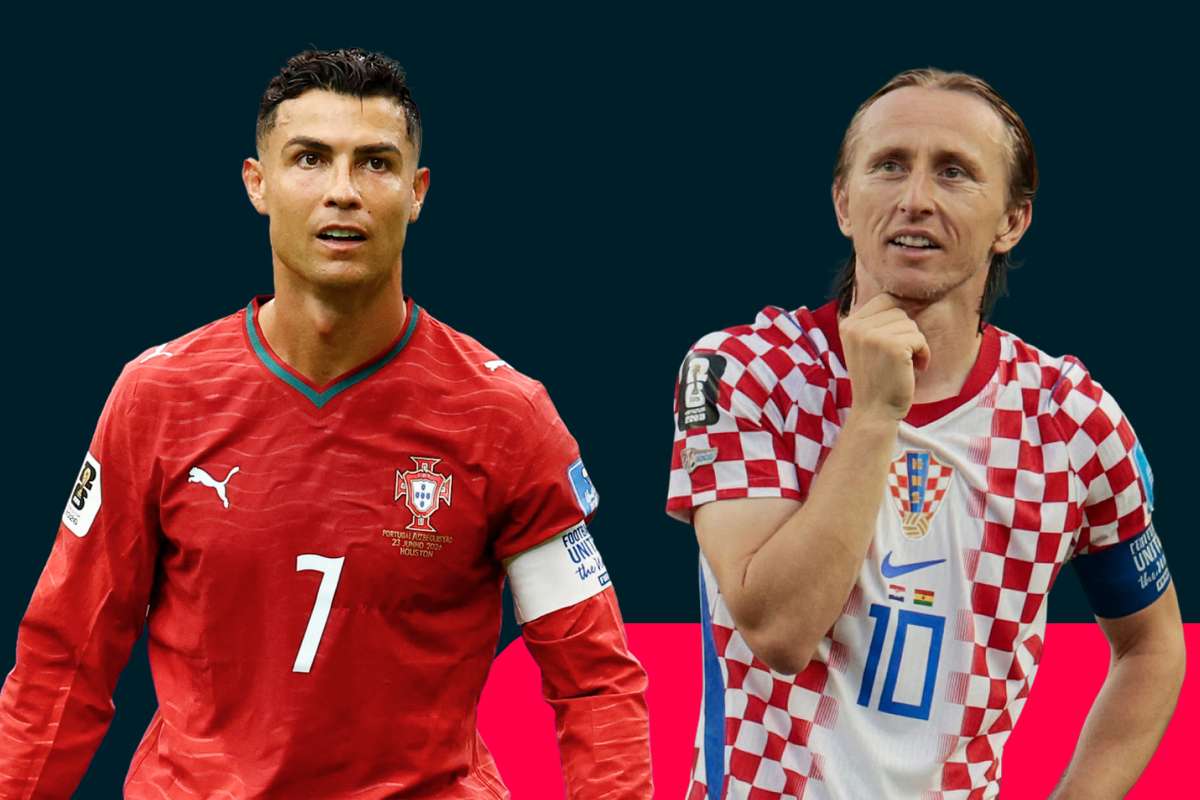









The World Cup 2026 knockout bracket delivers one of its most commercially and competitively loaded fixtures when Portugal and Croatia collide in the Round of 32 at BMO Field in Toronto. A venue built for 45,700 spectators gives the tie the scale of a flagship international event, while Portugal's designation as the home team adds another layer of operational planning around travel, recovery windows and match-day logistics.
On paper, the gap in global standing is clear. Portugal enter ranked fifth in the FIFA table with 1,763.83 points, having climbed one place from sixth. Croatia sit eleventh at 1,717.07 points, unchanged from their previous position. That spread matters less in a single-elimination setting than the way each federation has managed a three-match group phase — and the numbers behind those runs tell two different stories about risk, reward and how each side might navigate 90 minutes that could extend beyond regulation.
Event framing: why this fixture fits the knockout model
Knockout football at a World Cup is as much an organizational product as a sporting contest. Toronto's slot in the tournament calendar places this tie inside a dense travel corridor for federations already managing squad rotation, media obligations and recovery between venues. Portugal's home-team status does not change the competitive rules, but it can influence preparation rhythm, local support density and the commercial packaging of a fixture that already carries historical weight.
The head-to-head record reinforces that narrative. Portugal lead the series 7-1-2, including a 1-0 extra-time win in the Euro 2016 knockout round, a 4-1 home victory and a 3-2 away success in the 2020 Nations League, plus friendly wins of 1-0 in 2013 and 2-0 in 2005. Both teams have scored in each of the last six meetings, a trend that suggests the operational challenge for coaches may be less about unlocking the opponent and more about controlling tempo once chances arrive.
For broadcasters and tournament partners, a Portugal–Croatia tie at full capacity in a major North American market represents the kind of appointment viewing the expanded World Cup format was designed to produce. The fixture pairs a top-five ranked side with a nation that has repeatedly punched above its seeding in knockout environments, creating a narrative arc that sells itself without requiring manufactured storylines.
Projected structures and personnel anchors
Both sides are projected in a 4-2-3-1 shape, a formation that balances width, central rest defense and a clear link between midfield and attack. For Portugal, goalkeeper Diogo Costa anchors the back line alongside Rúben Dias, with Nuno Mendes providing thrust from left-back. Bruno Fernandes remains the primary creative hub, while Cristiano Ronaldo continues to define the focal point in the final third.
Croatia counter with experience across the spine. Dominik Livaković in goal, Joško Gvardiol in defense, Luka Modrić in midfield and Ivan Perišić in wide areas form a core that has repeatedly translated tournament structure into deep runs. Zlatko Dalić's management of minutes and roles through the group stage will be tested against a Portugal unit coached by Roberto Martínez, whose side has leaned on possession and chance volume rather than defensive conservatism.
The symmetry in shape does not guarantee symmetry in execution. Portugal's double pivot is expected to shield a back four while feeding wide runners and a central forward who still commands defensive attention even at this stage of his career. Croatia's version of the same system tends to compress space in the middle third before releasing Perišić or Modrić into pockets where their decision-making has decided knockout ties before.
Form metrics: volume versus balance
Portugal's group-phase profile reads like a team built to dominate territory. Across three matches they scored six and conceded one, keeping two clean sheets. Their average possession stood at 62 percent with a 91.2 percent passing accuracy rate — figures that reflect a deliberate build-up model and disciplined ball circulation. They generated nine big chances but missed seven of them, a conversion gap that becomes magnified in knockout football where a single half-chance can decide a tie. The Seleção attempted 37 shots with 12 on target, added 27 successful dribbles and won 10 corners, underlining a sustained attacking workload even when the scoreline stayed narrow.
Croatia's numbers present a more balanced ledger: five scored and five conceded with one clean sheet in three outings. They held the ball 53 percent of the time and completed 87.28 percent of passes, a profile that favors controlled transitions over prolonged siege. Twenty-four shots with 11 on target produced three big chances from five classified as high-value openings. Their physical output has been notable — 323 sprints and 127 ball recoveries — while the back line logged 78 clearances and three last-man tackles. A duels-won rate of 51.94 percent sits virtually level with Portugal's figure, suggesting this may become a contest decided in tight spaces rather than open transition lanes.
Individual performance watch without the scoreboard telling the full story
Martínez will look to Fernandes to convert chance creation into end product, while Dias and Mendes must maintain the defensive platform that produced two clean sheets in the group. Ronaldo's involvement in the final third remains a tactical constant even when his touches are limited — Croatia's center-backs will have planned for that gravity all week.
On the other side, Modrić's ability to regulate tempo could determine whether Croatia absorb pressure in blocks or step forward and invite Portugal's press. Gvardiol's distribution from deep and Livaković's shot-stopping in a stadium that will amplify every save add further layers to a tie where marginal gains in individual duels may outweigh macro possession totals.
Officiating and discipline as a management variable
Norwegian referee Espen Eskas takes charge after 324 senior appointments, a record that includes 1,116 yellow cards and 15 straight red-card decisions. For tournament operations staff and coaching teams alike, that profile demands clear messaging on tactical fouls, dissent and the cost of accumulated bookings in a knockout environment. The recent head-to-head card trend — fewer than 4.5 cards in each of the last ten meetings — offers a counterweight to Eskas's broader disciplinary history and may encourage both benches to push intensity without expecting an early card cascade.
Discipline management also intersects with squad planning. A yellow card in the Round of 32 can carry consequences deep into the bracket, so both federations will have mapped trigger points — late challenges on breaking runners, confrontations after set pieces, and the kind of tactical fouls that interrupt transition moments.
What the knockout equation demands
Single-elimination structure changes how federations evaluate success. Portugal's superior ranking and cleaner defensive record point toward control, yet their missed big chances highlight a finishing efficiency problem that Croatia's compact defending could exploit if the Vatreni absorb pressure and strike on the counter. Croatia's willingness to trade chances — five conceded in three group games — is a risk profile that can work when Modrić and Perišić find rhythm, but it leaves little margin against a side that has already shown it can monopolize possession for long stretches.
From an event-operations perspective, BMO Field's capacity crowd and the historical weight of Portugal–Croatia create a broadcast and sponsorship environment suited to a prime-time knockout slot. From a competitive standpoint, the tie hinges on whether Martínez's possession machine converts volume into goals, or whether Dalić's structured resilience turns a balanced statistical fight into another Croatian tournament survival act. The Round of 32 does not reward narrative alone — only the team that aligns organizational discipline with decisive moments in front of goal will advance toward the last sixteen.