


















The final afternoon of the 2025/26 campaign felt less like a routine home fixture and more like a stress test for everything Tottenham Hotspur have built at their 62,850-capacity ground in N17. One result away from a relegation trap door, Robert De Zerbi's side needed a win on their own pitch — and Joao Palhinha's 43rd-minute strike delivered it, keeping the club in the Premier League while West Ham United's defeat sent Nuno Espirito Santo's side into the Championship.
From the pressurized corridors beneath the stadium to the roar that followed the decisive goal, the day underscored how fragile elite status can feel even inside one of England's most modern venues. What happened next in the transfer market suggests the board understood that lesson immediately.
From Survival Sunday to a Statement Window
Had Tottenham lost to Everton and West Ham beaten Leeds United, it would have been Spurs falling through the trap door instead. The mathematics were that brutal. Palhinha's intervention spared De Zerbi's project and shifted the narrative from crisis management to long-term reconstruction.
Within weeks, the club moved from scrambling for points to assembling a squad designed for front-foot football. The first seismic move arrived from East London: Mateus Fernandes, one of West Ham's standout performers before their drop, swapped the London Stadium for North London in a reported £85 million deal.
For a player with just 72 Premier League appearances, the fee marks Tottenham's record signing — and a clear signal that the hierarchy intends to compete at the top of the market rather than patch holes after near-disaster seasons.
Fernandes Leads a North London Revolution
Fernandes arrives as the headline act in what is shaping up to be De Zerbi's defining summer. The Portuguese midfielder brings the physical drive and progressive passing that West Ham leaned on during a difficult campaign, and his profile fits the Italian's insistence on players who press aggressively and carry the ball forward without hesitation.
At Tottenham Hotspur, that profile matters. De Zerbi has never been a manager content to sit deep and absorb pressure. He wants expression, verticality, and courage on the ball — qualities that require individuals willing to accept mistakes as the price of ambition.
Mateus Fernandes embodies that philosophy. His move across London also carries a broader industry subtext: when a club drops out of the top flight, the best talent rarely stays tethered to the same project for long. Tottenham acted decisively before rivals could intervene.
The Tonali Pursuit and a Second Record Fee
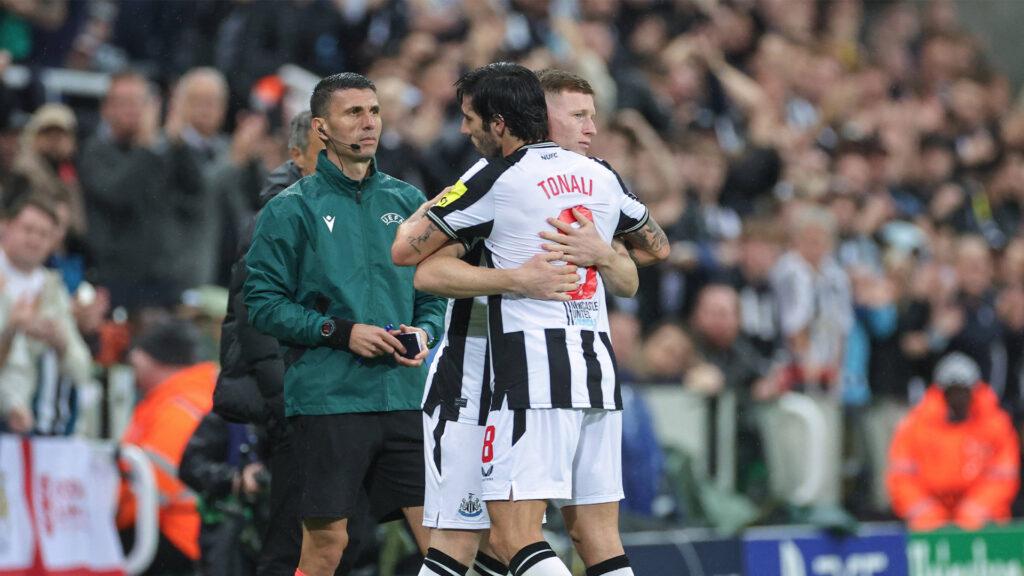
The window may not stop at Fernandes. Reports indicate Tottenham have agreed a fee of £92.5 million plus £7.5 million in add-ons for Sandro Tonali, the excellent midfielder at Newcastle United. If ratified, that deal would break the club's transfer record for a second time in one summer.
Tonali's pedigree — combative in duels, intelligent in build-up, and comfortable driving transitions — would give De Zerbi another elite engine in midfield. Pairing him with Fernandes would represent one of the most expensive central pairings assembled in recent Premier League history, a reflection of how seriously the board is treating this rebuild.
Building Depth Beyond the Headline Fees
Record fees dominate headlines, but squad architecture often decides whether expensive summers succeed. De Zerbi's recruitment has already extended beyond the marquee names.
Jan Paul van Hecke joined from Brighton and Hove Albion for a reported £52 million, adding composure and aerial presence at the back. Marcos Senesi arrived on a free transfer, alongside Andrew Robertson and Martin Dubravka — the latter clearly targeted as goalkeeper depth behind the first-choice options.
Even without further incomings or outgoings before the August kick-off of the 2026/27 campaign, Tottenham's summer spending is poised to push past £200 million. That figure represents a stark departure from recent windows when the club was criticized for hesitating while rivals strengthened.
What De Zerbi's Signings Actually Solve
Strip away the fees and the same question remains: what did this squad lack?
De Zerbi identified players with strong physical profiles who also think offensively. Aside from Dubravka's backup role, nearly every addition prefers to engage on the front foot — pressing high, receiving under pressure, and advancing play rather than recycling possession sideways.
That aligns with a manager whose teams are reliably associated with quick, brave, possession-based football. Much like Pep Guardiola's sides, De Zerbi's approach treats risk as a feature, not a bug. Errors in possession are acceptable if they come from attempting progressive actions.
Fernandes and the prospective Tonali signing supply the midfield thrust. Van Hecke and Senesi address defensive reliability without sacrificing ball-playing capacity. Robertson adds experienced left-sided quality on a free transfer — smart economics inside an otherwise lavish window.
Stadium Ambition Meets Squad Ambition
Tottenham Hotspur Stadium was conceived as a multi-purpose venue capable of hosting football, NFL games, and major concerts year-round. Operating a ground of that scale demands sustained Premier League revenue and European exposure. The relegation scare made the financial arithmetic uncomfortably visible: drop out of the top flight, and the business model behind the infrastructure wobbles.
Survival preserved that foundation. The transfer spree that followed suggests ownership wants the on-pitch product to match the off-pitch investment. After two difficult seasons, credit belongs to a board that finally backed its manager with resources commensurate to the club's stated ambitions.
Everton's Role in the Turning Point
The 43rd-minute winner against Everton was more than three points. It was the hinge on which Tottenham's entire summer turned. De Zerbi's side did not cruise through a comfortable afternoon in N17 — they endured a fraught, pressurized match befitting a club staring at the relegation zone.
That context matters when evaluating the signings. These are not cosmetic additions for a team cruising mid-table. They are targeted upgrades for a manager who survived by a margin and now has the tools to ensure 2026/27 looks nothing like the campaigns that preceded it.
Why Rivals Should Take Notice
Premier League history is littered with clubs that spend heavily without coherent planning. Tottenham's window, at least on paper, follows a logic: acquire aggressive, forward-thinking footballers who mirror the manager's tactical identity, supplement star purchases with economical depth, and do it immediately after a wake-up call.
If the Tonali deal crosses the line, De Zerbi will oversee a midfield pairing capable of dominating transitions against any opponent in the division. Combined with van Hecke's defensive leadership and Senesi's ball-playing from the back, Spurs could field a spine that matches their financial outlay.
Two rough seasons tested patience across North London. This summer answers that test with action rather than rhetoric. Whether the investment converts into sustained success will depend on integration, fitness, and the manager's ability to maintain the pressing identity that defines his best work.
For now, the message from N17 is unmistakable: Tottenham intend to be far more than survivors in 2026/27. They intend to be a side that takes some stopping.