















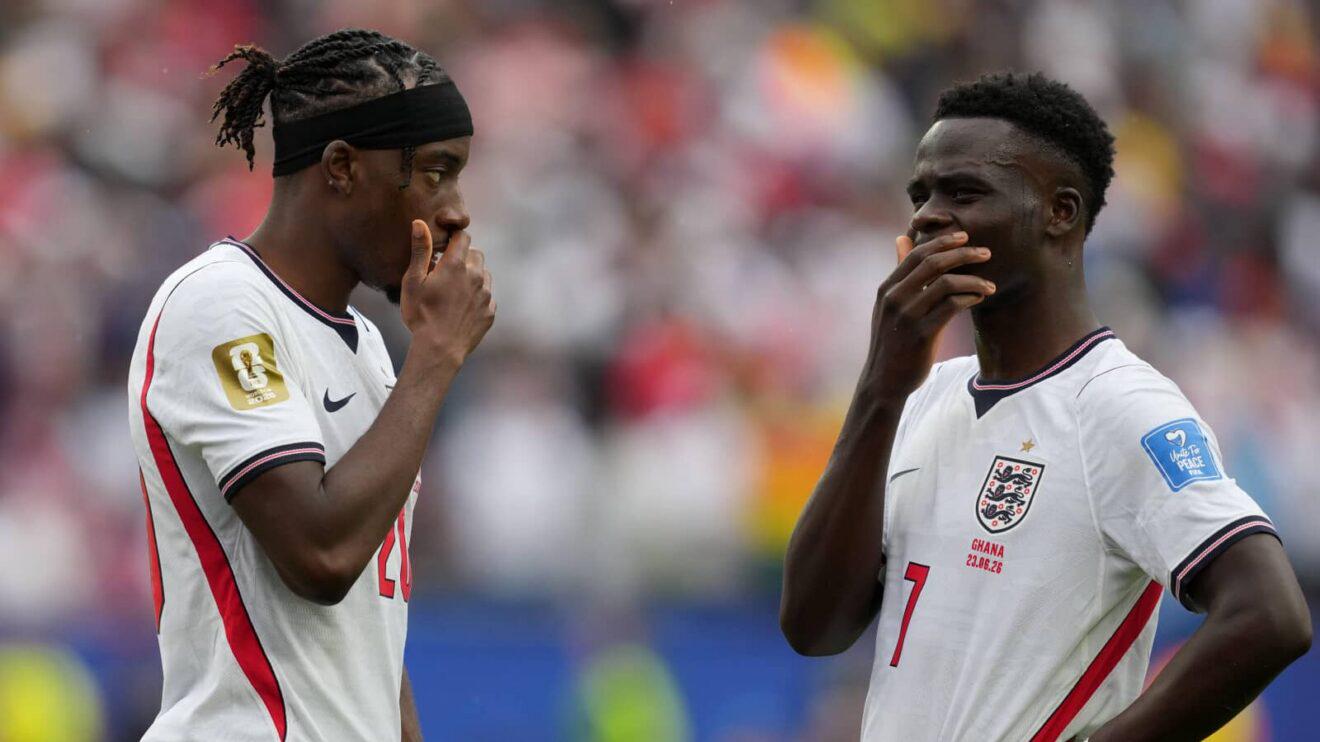
England advanced through the 2026 World Cup Round of 32 with a 2-1 comeback against DR Congo at Atlanta Stadium, but the result papered over structural issues that former international Wayne Rooney believes could end the campaign early if Thomas Tuchel does not address them.
The match followed a familiar stress pattern for the Three Lions. DR Congo, ranked 46th in FIFA's latest standings and operating in a compact 4-3-3, took the lead after just seven minutes and held that advantage until the 75th minute. England, fourth in the world rankings and deployed in a 4-2-3-1, needed two late strikes from Harry Kane to avoid elimination.
On the surface, the underlying numbers suggest control. England finished with 16 shots to DR Congo's seven, seven on target against two, and 60 percent possession built on 517 passes at a 91 percent completion rate. DR Congo managed only 365 passes at 82 percent accuracy while absorbing pressure in a lower block. Yet the scoreline stayed 1-0 for more than an hour, which is exactly the kind of efficiency gap Rooney highlighted in his post-match assessment.
Kane's Rescue Act Masks a Fragile Middle
Kane's equalizer at the 75th minute and winning goal in the 86th minute were acts of individual decisiveness rather than collective rhythm. The Harry Kane who has carried England through this tournament again showed why he remains the team's most reliable finisher in high-leverage moments. His movement between DR Congo's center-backs created the space England had failed to find for much of the evening.
Still, Rooney argued that relying on one forward to solve recurring systemic problems is not a sustainable World Cup formula. England's narrow win against a side they dominated territorially underscored how quickly a lead can flip when the middle third disconnects under pressure.
Where England Looked Exposed
Rooney's central concern was transition defense, not the final score. He pointed to how open England became immediately after losing possession, describing large gaps between the back line and midfield that better opponents would punish more ruthlessly than DR Congo did on Wednesday.
The structural picture supports that reading. England's 4-2-3-1 asked the full-backs to provide width while two holding midfielders were expected to shield a back four that sometimes sat too deep relative to the rest of the shape. When the press was bypassed, DR Congo's front three had room to attack a back line that lacked immediate midfield cover. Rooney specifically noted that the connection between defense and midfield "isn't great," a flaw he said has appeared in earlier matches as well.
Full-back output was another pressure point. Rooney acknowledged that Nico O'Reilly performed better on the night, but he grouped England's wide defenders together as an area of concern. In a system that depends on overlapping runs to stretch low blocks, inconsistent wide support leaves wingers isolated and central channels underloaded.
Madueke Under the Microscope
The most targeted individual criticism fell on Noni Madueke, who started as England's right-sided attacker. Rooney said Madueke "struggled," adding that there was "no connection" across the middle of the pitch when the winger failed to combine effectively with teammates around him.
From a technical standpoint, Madueke's role in this setup required more than individual dribbling. Tuchel needed a right-sided outlet who could hold width, offer an outlet in transition, and connect the midfield to the final third through combination play. Rooney's assessment implied Madueke did not consistently provide that link, leaving England's right flank disconnected from the rest of the attacking structure.
That matters because England's best periods came when Kane dropped to link play and when the left side generated overloads. Without balanced wide contribution, DR Congo could tilt resources toward England's stronger side and still survive long stretches despite inferior possession numbers.
What Tuchel Must Solve Next
Rooney directed his warning squarely at Thomas Tuchel, saying the manager now has clear evidence of what this squad can and cannot do. His blunt conclusion was that Tuchel must "look at other" options in key areas, or England "will go out" against stronger opposition.
The tactical question is not whether England can create chances. Sixteen shots and seven on target against a FIFA No. 46 side confirm they can generate volume. The question is whether they can control the moments after turnover, maintain compact spacing between lines, and get functional wide connections without leaning on Kane to rescue every difficult night.
DR Congo deserve credit for making England pay early and staying organized for 68 minutes despite conceding territory. England's 2-1 win keeps the tournament alive, but Rooney's concerns frame the next knockout test as a structural examination rather than a formality. If the gaps in midfield protection and wide integration remain, the Three Lions may survive one more scare — but probably not a sequence of them.