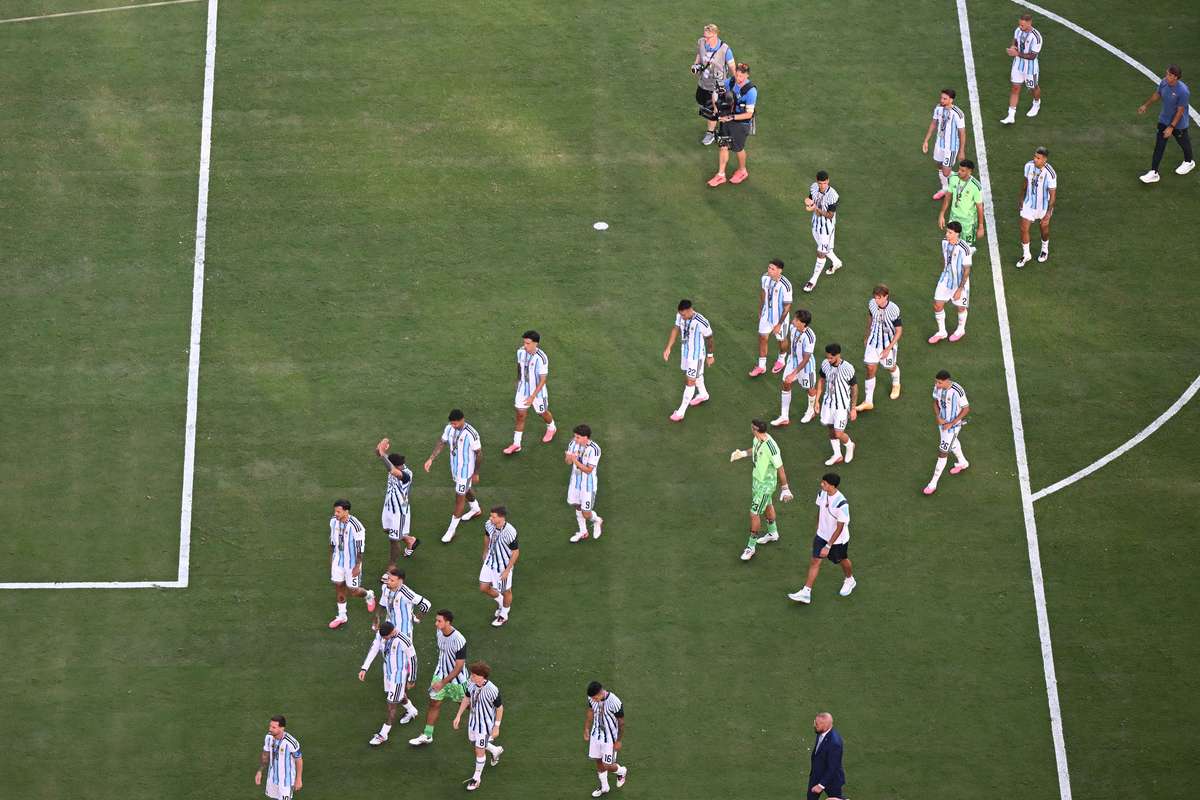


















The numbers at the whistle told a cleaner story than the scoreline alone. Argentina lead Cabo Verde 1-0 at halftime in Miami Gardens, and the gap in territory, chance quality and passing volume explains why the World Cup holders look the likelier side to advance — without yet putting the tie to bed.
What the half-hour metrics say
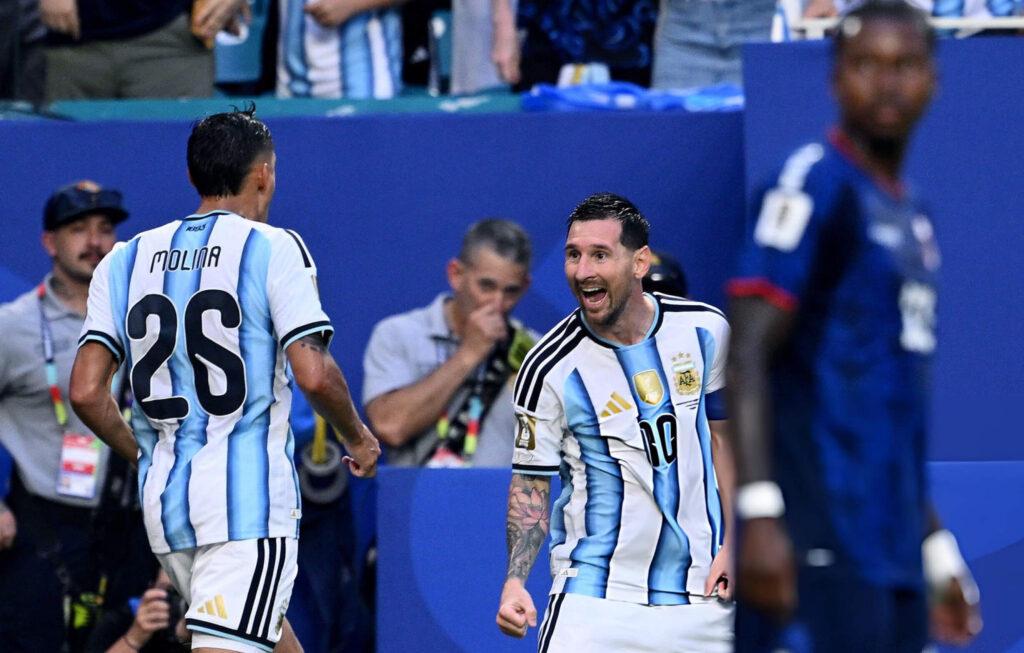
Argentina controlled 66% of possession and held a 4-1 edge in shots. More telling is the expected-goals split: 0.41 to 0.04. That is not a noisy half-hour sample; it tracks with what unfolded on the pitch. Lionel Messi finished the half’s defining move in the 29th minute after Lisandro Martínez stepped forward to break Cabo Verde’s first defensive line. One big chance, one conversion — efficient rather than extravagant.
The passing ledger reinforces the picture. Argentina completed 361 of 385 attempts; Cabo Verde managed 170 of 200. Final-third entries landed at 32 for Argentina at 85% efficiency, against 18 for the islanders at 57%. When a team reaches the attacking third that often and converts those entries at that rate, the opponent spends most of the half defending around its own penalty area. That is exactly where Vozinha and his back line have been stationed.
Scaloni’s 4-4-2 against a compact block
Structure has been the platform. Lionel Scaloni deployed a 4-4-2 that has dominated ball circulation against Cabo Verde’s 4-1-4-1, a shape built to stay narrow, stay compact and force Argentina to solve problems in tight spaces.
The breakthrough came from an intentional wrinkle in that plan. Cristian Romero and Martínez did not sit deep as passive outlets. Both carried aggressively into midfield, inviting the first press and then playing through it. Martínez’s vertical pass punctured the initial line; Messi drifted between markers, took the ball on the half-turn and applied a clinical finish. It was the kind of sequence Argentina have rehearsed for years — centre-backs as initiators, the No. 10 as the finisher in the pocket — and Cabo Verde had no second answer once the first line was bypassed.
Beyond the goal, Argentina’s control read as steady rather than explosive. They circulated with purpose, reached the final third consistently and limited transition moments against a side that still competed hard in duels. Cabo Verde’s work without the ball has kept the second half alive as a contest even if the chance map tilts heavily toward Argentina.
Centre-back progression set the tempo
Romero completed 61 of 63 passes and made three interceptions while also carrying for meaningful progression, frequently stepping past the first wave of pressure. Martínez matched that composure and added end product: 53 of 54 passes completed and the assist on the half’s only big chance created. Together they gave Argentina a base to keep the game in Cabo Verde’s half and reduce the counter threat that compact sides live on.
That pairing matters in context. Argentina enter this World Cup cycle ranked third in FIFA’s latest table at 1874.81 points, one place down from their previous listing but still among the elite. Cabo Verde arrive from 69th at 1366.13 points — a side that has leaned on organization in recent qualifying windows, including a run of drawn results in their latest competitive fixtures. Against that profile, asking centre-backs to beat the first line is less a gamble than a requirement.
Midfield balance and wide contributions
Rodrigo De Paul operated as the main distributor between lines, hitting all three of his attempted long balls and leading Argentina in expected assists at 0.38. That number signals where the second-half chances may come from if Cabo Verde drop deeper: switched play and balls over the top into runners behind a reshaped block.
Enzo Fernández added tempo through the middle and managed a shot on target, while Thiago Almada knitted combinations on the right. Full-backs picked their moments rather than flooding forward recklessly; Nahuel Molina completed 29 of 30 passes, keeping Argentina’s rest-defense intact even when the right side advanced.
The midfield trio did not need to dominate individually because the platform behind them was so secure. When Romero and Martínez progress, De Paul and Enzo receive on the front foot. Almada and Molina then have fixed reference points in wide areas. That is a chain Scaloni has refined across multiple tournaments, and the first half looked like a textbook execution against a low block.
Where Cabo Verde remain in the tie
Cabo Verde’s 33% possession share in broader match tracking and their willingness to contest duels explain why the score remains 1-0 rather than something more lopsided. They logged six shots in the wider dataset and kept fouls relatively disciplined, suggesting they are not panicking into cheap cards that would hand Argentina set-piece rhythm.
Their 4-1-4-1 has held its shape for long stretches. The issue is entry quality: 57% final-third efficiency against Argentina’s 85% means most of their possessions die before they become chances. At 0.04 xG through 45 minutes, they have not yet found a repeatable route to test Emiliano Martínez. Surviving the press in duels is one thing; turning that survival into a shot worth saving is another.
Second-half projection
If the first half is the sample, Argentina’s path is clear. Maintain centre-back progression, keep De Paul’s long distribution as a threat and hunt for a second goal before Cabo Verde commit extra bodies forward. A 1-0 lead against a compact side always carries risk — one set piece, one transition — but the underlying metrics argue Argentina are controlling both the space and the probability.
Cabo Verde’s best hope is to tighten the space between lines, force Argentina into rushed wide crosses and punish any loose touch on the break. They have shown enough defensive competitiveness to make that plan plausible for 15 or 20 minutes. Whether they can combine that with a genuine chance remains the open question.
At the break, Messi has done what Messi so often does in these settings: convert the one moment the structure creates. The data says Argentina deserve the lead. The second half will decide whether they convert territorial control into a result that removes doubt.