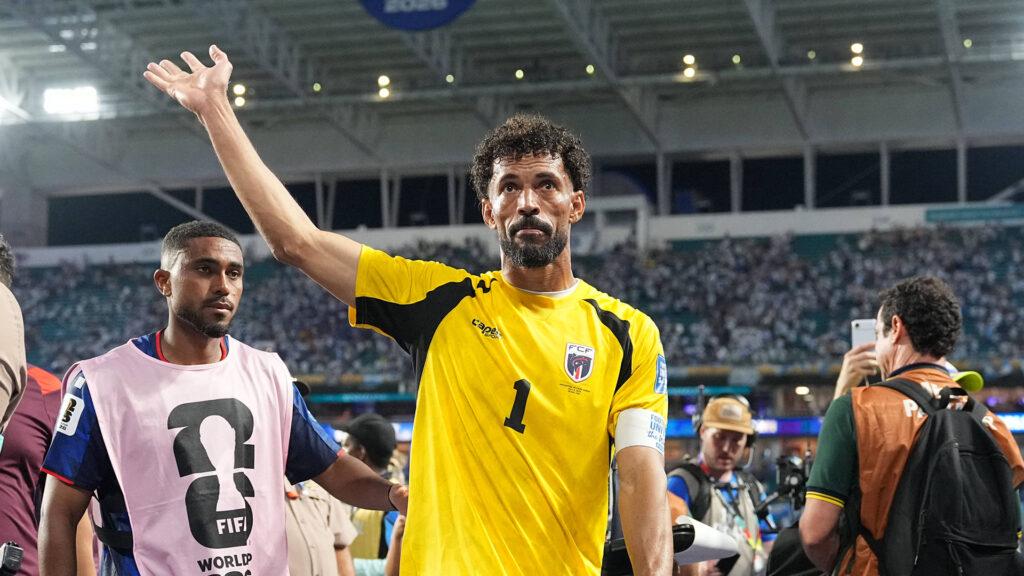









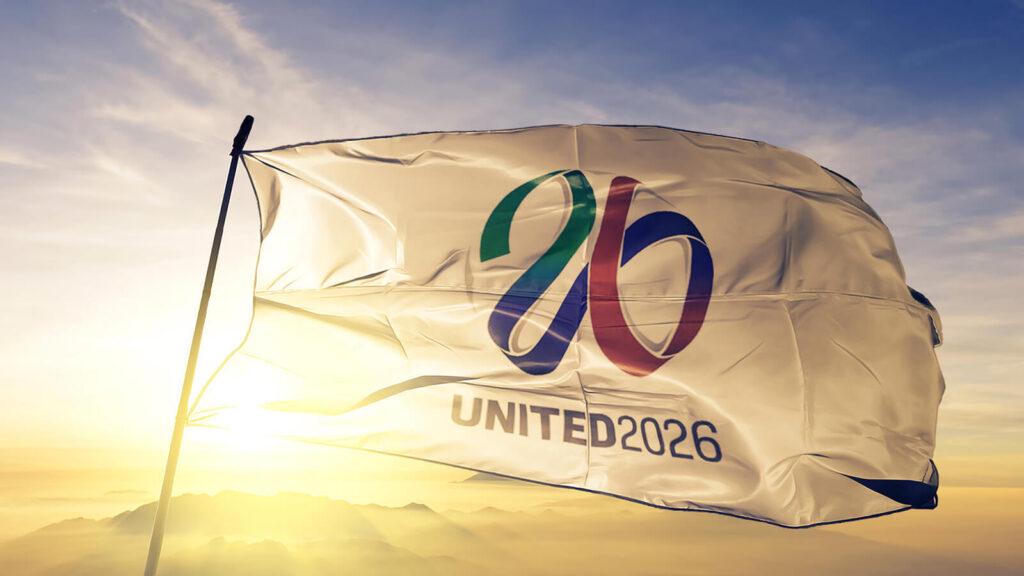
Since Uruguay hosted the inaugural World Cup on its own in 1930, world football has long grown used to a single-country hosting model—the 2002 Korea/Japan World Cup was the only exception until then. In 2026, the United States, Canada, and Mexico will break with that tradition, becoming the first World Cup in history jointly hosted by three countries. For the coaches and players caught up in it, this is not just a stretch across geography but a wholesale rewrite of preparation rhythms, logistics planning, and how teams gel.
From 2002 to 2026: Why Co-Hosting Is Back
The 2002 Korea/Japan World Cup aimed for as close to a 50-50 split as possible: the opening ceremony and third-place playoff were held in South Korea, the final in Japan. FIFA had initially favoured one of the two countries hosting alone before that unique dual-host arrangement was finally agreed. Yet co-hosting did not immediately become the norm—the World Cup quickly returned to single-country hosting, and joint bids were even explicitly barred for a time.
In 2016, FIFA announced that the 2026 World Cup would allow joint hosting, while also revealing that the tournament might expand to 40 or 48 teams. The larger the event, the more pressure a single country faces to shoulder venues, transport, security, and hospitality on its own. The United States, Canada, and Mexico each assessed the feasibility of going it alone, but with expansion expected, a three-nation bid was seen as the more realistic option. There has also been talk of whether 2030 could expand further to 66 teams—if that happens, the room for solo hosting would only shrink.
The Practical Impact of Three-Country Co-Hosting on Teams
From the coaching bench, joint hosting dilutes the idea of a “home” advantage, yet it also turns the World Cup into a sprawling test across North America. Climate, altitude, pitch conditions, and travel-related jet lag between cities all feed directly into training cycles and recovery planning. Using current FIFA rankings as a benchmark: Spain (2nd), Argentina (3rd), Portugal (5th), and Morocco (8th) remain in the top tier; Mexico (15th) and Japan (18th) are climbing steadily; Canada (30th) is gaining greater exposure as a co-host. Japan and South Korea have both ground out 0-0 draws in recent Asian qualifying—South Korea failed to win back-to-back games against Vietnam and the UAE, while Japan also played out a goalless stalemate with Qatar—a reminder that over long trips and packed schedules, how you manage fitness and mental stability often shapes results before on-paper strength does.
That is especially true for younger players. Coaching staffs need to build “mobile training bases” and recovery plans for inter-city travel days into their routines months in advance, not scramble after the draw. Joint hosting turns the World Cup from “spend a month in one city” into “fight on a sustained front,” which magnifies the value of long-haul, embedded preparation systems.
Will joint hosting become the new normal?
The answer may lie in how the next few editions unfold. The 2030 World Cup will push co-hosting complexity further: Spain, Portugal, and Morocco have been approved as joint hosts, with Uruguay, Argentina, and Paraguay each staging one match—the tournament will span Europe, Africa, and South America for the first time. The distance from Morocco to the Iberian Peninsula is short, but adding the three South American nations significantly widens the overall footprint. By contrast, the 2034 World Cup has been awarded to Saudi Arabia as sole host; the bidding process for 2038 has not yet opened, so the landscape remains to be seen.
From a tournament-hosting standpoint, co-hosting is the compromise between expansion and globalization: more teams take part and more markets are reached, while the trade-off is that managing logistics and competitive fairness grows harder in tandem. For coaches, the point is not to debate whether co-hosting is the right call, but whether they can turn uncertain travel into a routine the squad can actually live by—when the World Cup no longer belongs to a single city, whoever can make the group feel at home wherever they go is closer to that long road to the title.