
















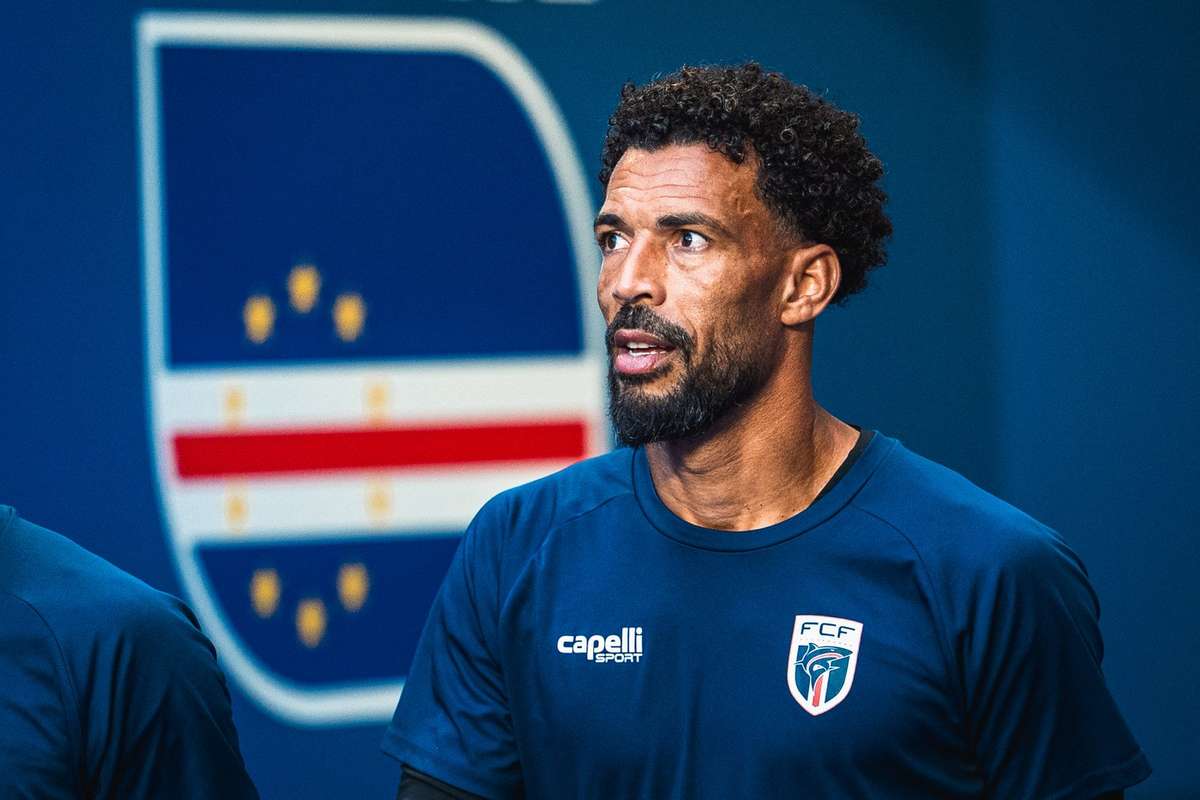
The global footprint of the 2026 World Cup continues to reshape club rosters far from the tournament’s host cities. Cape Verde goalkeeper Vozinha, whose performances helped turn a debut nation into one of the summer’s most compelling stories, is now on the verge of joining Colo-Colo in Chile.
Club official Mosa confirmed the framework of the deal ahead of Colo-Colo’s league fixture against Deportes Limache, telling reporters that Vozinha will travel to Chile in the coming days, complete the standard medical examinations, and be presented Monumental David Arellano — the 47,017-capacity home of one of South America’s most storied clubs.
From Portuguese Second Tier to Monumental
The path that led Vozinha to Santiago began before the World Cup. The veteran stopper left Chaves as a free agent, stepping away from the Portuguese second tier and the club’s 12,000-seat Estádio Municipal Eng. Manuel Branco Teixeira to focus on international duty with Cape Verde.
That decision proved pivotal. At 40, Vozinha was not merely filling a squad number for a nation making its first World Cup appearance. He became the backbone of a defensive unit that refused to bend under elite pressure.
World Cup Numbers That Changed the Conversation
Cape Verde entered the World Cup ranked 69th in the FIFA standings — two places lower than their previous position of 67 — yet the island nation played with the composure of a long-established football power.
Vozinha’s ledger from the tournament tells the story in hard terms:
Against eventual champions Spain, Cape Verde held firm for a 0-0 draw — a result that underscored how difficult it was to break down the Blue Sharks in open play.
In the round of 32, Vozinha pushed eventual runners-up Argentina into extra time before Cape Verde’s run ended — a sequence that left no doubt about the goalkeeper’s shot-stopping and organizational presence at the highest level.
Those displays resonated beyond the pitch. FIFA’s fan-selected World Cup dream team included Vozinha among its chosen XI, a public endorsement that reflected how widely his work was recognized during the tournament.
Why Colo-Colo Moved Now
Mosa did not frame the signing purely as a sentimental nod to a feel-good World Cup narrative. He pointed directly to Vozinha’s tournament performances as justification for bringing him to Chile, while also acknowledging the commercial dimension of adding a recognizable international figure to Colo-Colo’s roster.
That dual logic — sporting credibility plus visibility — fits a club whose identity is built on continental ambition and domestic expectation. Colo-Colo’s recent domestic profile includes stretches of controlled possession and high passing volume; in one recorded league outing this season, the side posted 62% possession, 542 passes, and an 88% completion rate in a 3-0 win with 16 shots and seven on target. A goalkeeper trusted to organize behind a possession-oriented back line brings a different kind of value than a purely reactive shot-stopper.
Vozinha’s experience managing low-block resistance against Spain and extended concentration against Argentina maps onto the demands of a club that often faces sustained pressure in high-stakes matches.
Medical, Presentation, and Final Steps
Although the agreement is in place, the transfer has not yet been fully finalized. The remaining procedural steps are familiar: travel to Chile, medical clearance, and an official unveiling at the Monumental.
Colo-Colo has already signaled the move publicly, teasing the signing on social media with imagery that appeared to reference the goalkeeper’s distinctive curly hair — a visual wink that generated anticipation before the formal announcement.
For Cape Verde, the deal closes a chapter defined by two recent international results — goalless draws in World Cup qualifying action — and opens a new one for a player whose age might have limited interest elsewhere but whose World Cup tape made him impossible to ignore.
A Regional League Story With Global Reach
The Vozinha-to-Colo-Colo thread connects three football worlds that rarely intersect in headlines: Cape Verde’s rising national-team profile, Portugal’s second-tier pipeline, and Chile’s demanding domestic landscape.
Chaves supplied the platform before the World Cup. Cape Verde supplied the stage that rewrote the narrative. Colo-Colo now offers a South American stage where a 40-year-old goalkeeper can prove that tournament heroics translate into club value.
If the medical goes as expected, Vozinha will soon walk out at the Monumental not as a curiosity, but as a World Cup-validated signing — one whose path from a 12,000-seat ground in northern Portugal to Chile’s most iconic club encapsulates how a single summer on the global stage can redefine a career long after most keepers have faded from the transfer market.