

















Group Stage Qualification and Current Situation
England completed their group-stage mission at the 2026 World Cup without incident: after beating Croatia, drawing with Ghana, and securing qualification with a final-round win over Panama, they advanced to the knockout stage. From the standings and qualification picture, the Three Lions have cleared the group-stage hurdle, but the front-line structural issues exposed in the last round are becoming an unavoidable focus as outsiders assess their knockout prospects.
England currently sit fourth in the FIFA rankings, unchanged from the previous edition; Croatia are eleventh, Ghana seventy-fourth with a slight recent drop, and Panama remain steady at thirty-third. Facing a relatively lower-ranked opponent in the final group match, England still failed to provide stable service to their key forwards, quickly heating up the tactical debate.
Final-Round Lineup Changes and Injury Impact
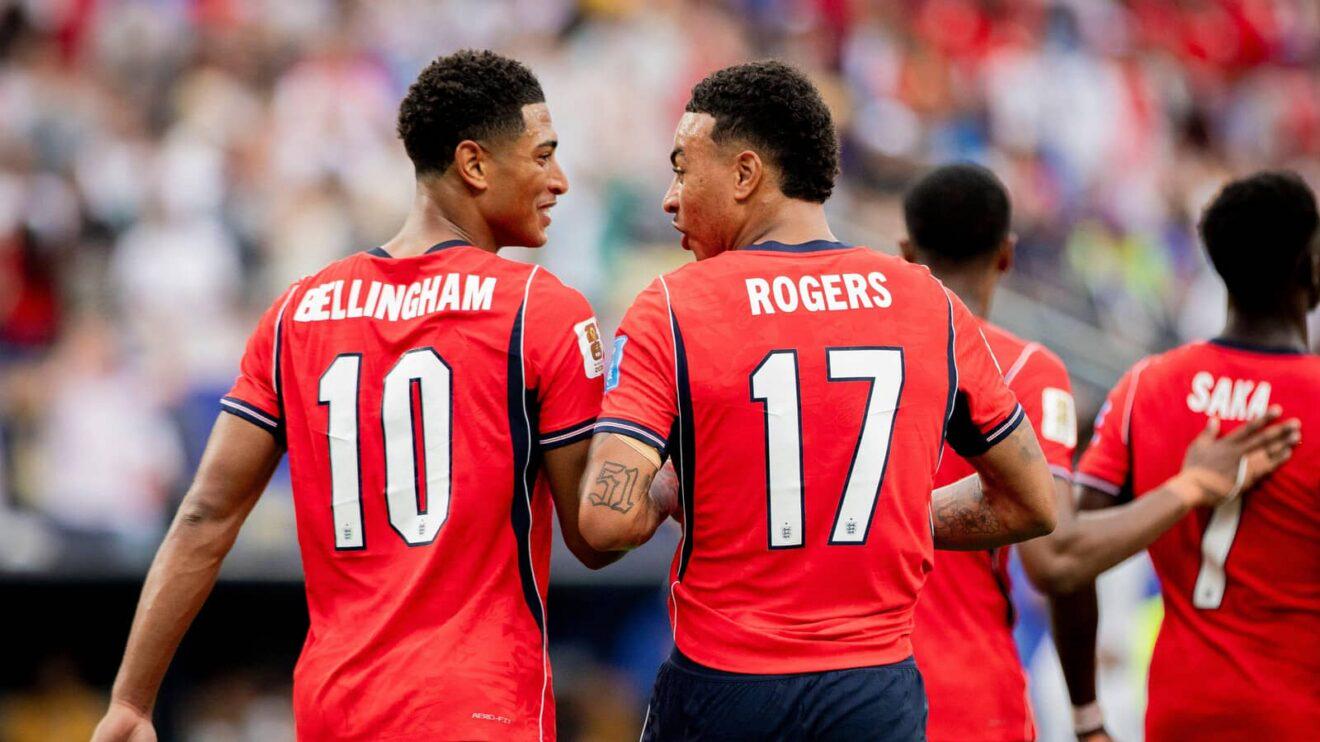
Against Panama, head coach Thomas Tuchel made five changes to the lineup, some of them directly linked to fitness concerns over Declan Rice and Reece James. With Rice absent, Bellingham dropped from his usual number-ten role into a deeper midfield position, while Morgan Rogers took over the number-ten duties.
Tuchel had previously designed an attacking shape in possession that approximated a “five-man front,” with the flanks built around triangular combinations between wingers, full-backs and advanced midfielders to progress play. With Rice and James unavailable, that system had to be reshaped for the final group-stage match, and the vertical structure in midfield and the link between wide support and the center began to wobble.
Kane’s touch data reflects squeezed space
The most immediate victim of the shift was captain Harry Kane. The versatile centre-forward is used to linking play by dropping deep to receive, but Rogers and Bellingham were repeatedly demanding the ball in nearby areas, objectively compressing his space. In the first half against Panama, Kane had only one touch inside the box; he managed just ten touches outside it in total. Against Ghana earlier, his overall touches for the match were only twenty—for a team’s most dangerous finisher, that level of involvement is clearly not enough to sustain output.
Beyond Rogers and Bellingham, Nico O’Reilly also drifted into the same zones at times; in earlier games, Rice had taken on similar advanced duties. With several players stacked in the same vertical band, Kane struggled to find clear passing lanes even when dropping off, and the line between the No. 10 and the centre-forward became blurred.
Carragher’s proposed tactical tweak
Liverpool legend Jamie Carragher argued that once Rice returns, Bellingham should give up the most advanced position to create depth for Kane and a true No. 10. One option he floated was a double pivot of Rice and Elliott Anderson, with Rice handling deeper defensive organisation to restore midfield’s vertical layers.
Carragher also pointed out that Panama were able to launch plenty of counters in the final match, and Anderson was repeatedly caught out in transition; against stronger opposition, England could pay for that. If Rice drops into one of the two holding roles, the link between Kane and Bellingham in the final third might flow more smoothly—but it would also mean Tuchel having to rethink an attacking plan built around flooding the front line with five players.
When Kane drops deep, wide players must take on more responsibility for driving directly into the penalty area. Carragher pointed to Kane’s Bayern Munich teammates Michael Olise and Luis Díaz as examples, stressing that elite wingers must push forward in sync when the striker drops off to create threat — and some of England’s wide players still have room to improve on that front.
Reassessing the system before the knockout stage
England have already qualified, but the problems exposed late in the group stage have a structural character: multiple attackers crowding the same areas, insufficient involvement from the centre-forward, and unstable defensive coverage in transition. The system Tuchel built for quick, direct wingers has real punch when the squad is at full strength, yet looks thin in structure when key midfielders and full-backs are missing.
Knockout opponents will not offer the same margin for error Panama did. If England cannot, after Rice returns, re-clarify the positional roles of Bellingham, Rogers and Kane and strengthen protection in the holding midfield zone, the Three Lions may repeat the group-stage finale problem of “the ball not reaching the captain” in decisive ties — even with a squad that looks strong on paper. Qualification is only the first step; the urgency of getting the system right is no less pressing than the next knockout match itself.