

















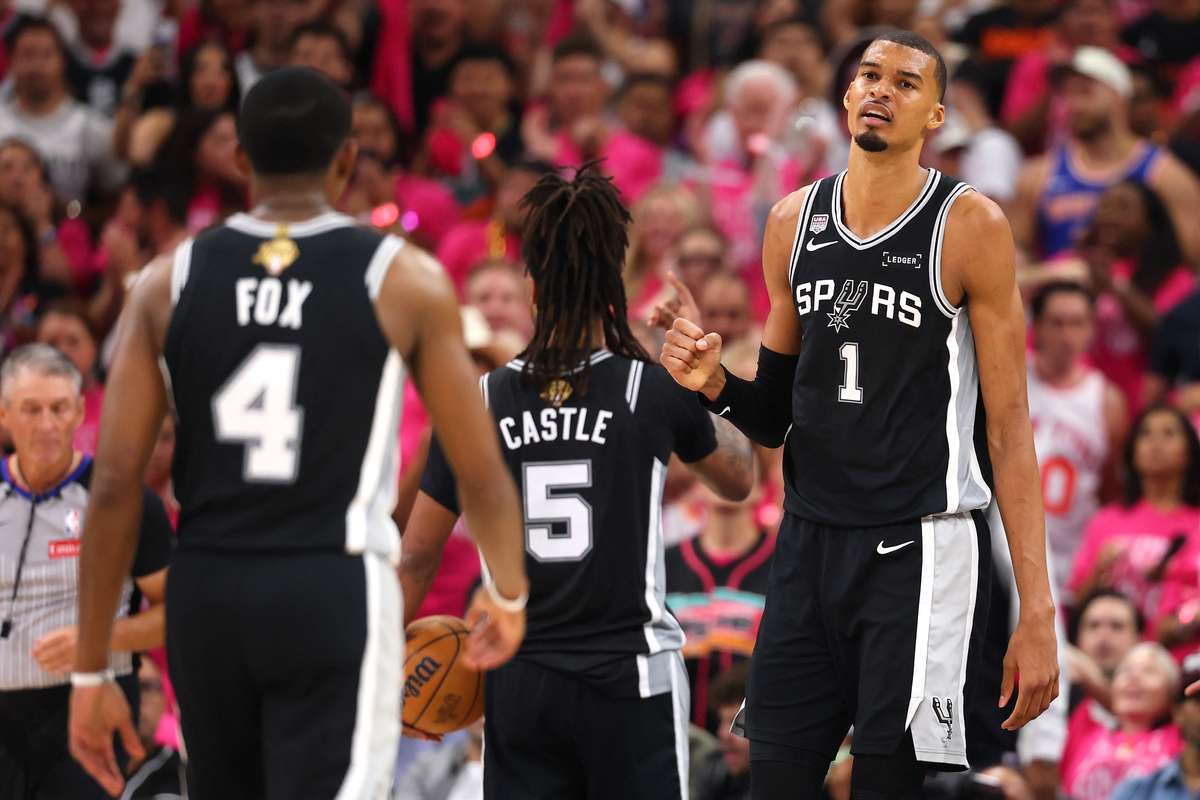
The San Antonio Spurs squandered a lead of as many as 14 points in the second half at home and lost Game 1 of the NBA Finals to the New York Knicks on Wednesday. A day later, as Victor Wembanyama prepared for Game 2, he said the team did not need to play “above themselves” on the Finals stage—they only had to get back to the basketball they had played all season.
Game 1 did not expose a talent gap
Wembanyama pointed first to mindset, not purely technical details, as the reason for the defeat. “I think we lost that game for reasons that weren’t even really technical,” he said. “We need to approach it with a better mental state. Just play our basketball and stay normal—we don’t need to do anything incredible.”
In his view, “normal” meant the details, trust, and collective buy-in that had helped the Spurs post the league’s second-best regular-season record and advance after a seven-game Western Conference Finals slugfest with defending champion Oklahoma City Thunder. He explained that the norm was trusting one another, trusting the game plan, and executing with conviction—not leaning too heavily on talent with forced shots or “one-man hero ball.” “That’s how we’ve played all season and how we’ve won all along. There’s no reason to suddenly change that approach once the Finals start.”
Personal shooting and the schedule gap
That did not mean Wembanyama, an MVP candidate and one of the leading Defensive Player of the Year contenders, would skip self-criticism. He went 6 of 21 for 26 points in Game 1 and said plainly that his performance was “awful.” On the schedule, playing Game 1 on Wednesday night and facing the media and prep on Thursday meant a Finals-intensity turnaround that was a real test of a young star’s focus and recovery—one less bout of emotional drain meant one more bit of room to execute the details in Game 2.
For the Spurs, every day between games in a seven-game series counts. Letting a home lead slip in Game 1, beyond the tactical side, can also breed the impatience of wanting to “finish the opponent in one rush”; the “normal” Wembanyama stressed was essentially about pulling the pace back to their season baseline under a compressed schedule, and avoiding unconventional hero ball to paper over swings in mentality.
Johnson: 16 assists is not what this Spurs team looks like
Head coach Mitch Johnson turned the focus to shot selection and passing. The Knicks’ tough defense forced plenty of poor decisions, and he wants his players to improve their shot choices and make the extra pass. “Sixteen assists doesn’t reflect the style of this program—not just since I’ve been coaching, but going back decades,” Johnson said. “From a team offense and brand standpoint, we didn’t pass enough and didn’t apply enough pressure inside, so it became a lot of ‘make or miss’—relying on talent in isolation rather than playing together and forcing the defense to make choices.”
He also gave credit to the opponent: “New York deserves a lot of praise.” Without complete advanced stats for this game in the database, based on the available information alone, 16 assists and Wembanyama’s 6-for-21 individual efficiency already sketch the outline of Game 1 on offense—more “talent bailing them out” than “system breaking down the defense”—and that is exactly the ledger Game 2 needs to correct.
Looking Ahead to Game 2
The series is still best-of-seven; losing the opener at home doesn’t end the suspense for San Antonio, but the window to adjust before Game 2 is short: getting back to a “normal” mindset and an offense built on sharing the ball and attacking the rim is the direction Wembanyama and Johnson are aligned on. The watch points are clear as well: whether Wembanyama can improve his shot selection while maintaining his defensive presence, and whether team assists and interior pressure can return to season-average levels.
From a rest-and-recovery standpoint, San Antonio’s real opponents besides the Knicks are the emotional bounce-back after a Game 1 loss and managing rotation energy. If Game 2 still sees offense at the 16-assist level become the norm, even elite talent will struggle to level the series under road pressure at Madison Square Garden—getting back to “normal” means treating the Finals like any other game, while responding with playoff-level execution.