

















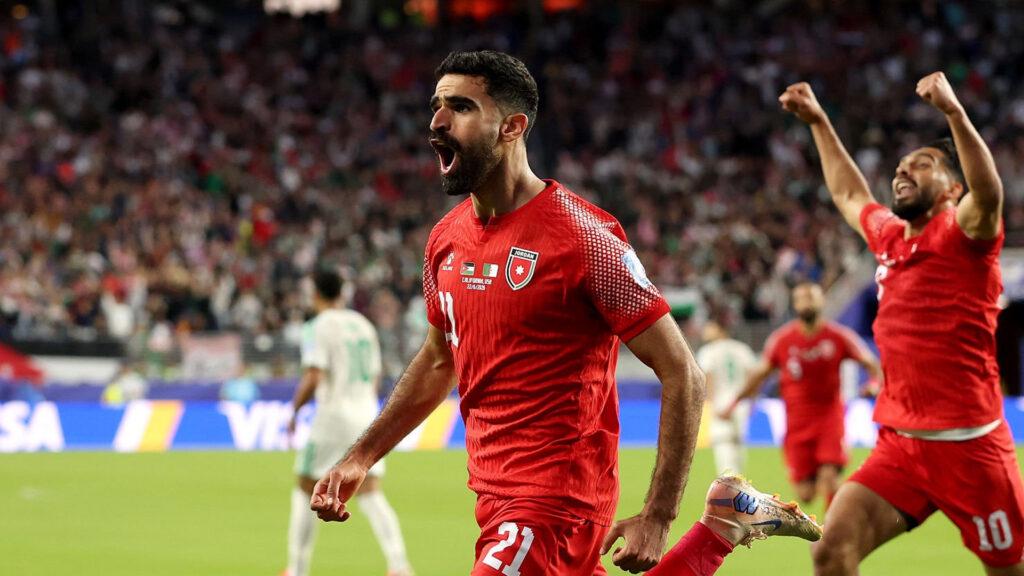
Jordan led Algeria 1-0 at halftime in Santa Clara, reshaping the World Cup Group J picture. In the 36th minute, Musa Al-Taamari delivered the key pass, and Nizar Rashdan finished the clearest attack of the match to break the deadlock. Halftime numbers showed a stark contrast between 26% and 74% possession and a 1-0 scoreline — a classic modern-football example of efficiency trumping possession.
Possession vs. Efficiency: Two Styles with Different Physical Demands
From a sports-science perspective, high-possession sides typically mean more short passes, more changes of direction, and greater sustained cardiovascular output; low-possession counterattacking teams tend to sit in a compact shape, cut down wasteful running, and concentrate their energy on a handful of high-speed transitions. Halftime statistics showed Jordan completed just 122 passes as a team, while Algeria completed 322 successful passes from 360 attempts, yet shots were 6-4 and shots on target 3-2 in Jordan’s favor. On expected goals (xG), Jordan had 0.54 and Algeria 0.57 — almost level in quality — but Jordan turned fewer touches into a higher share of shots on target and the only goal. In the FIFA rankings, Algeria sit 28th and Jordan 63rd; the gap on paper had not disappeared in halftime possession, yet Jordan erased it in the final pass and finish.
How Did 26% Possession Produce a Lead?
Jordan’s tactical logic was straightforward: they gave up the midfield battle and looked to threaten with long balls and quick transitions. The numbers back it up—22 long balls attempted with 9 completed, 3 crosses with 2 successful; 15 entries into the final third, well below Algeria’s 45, but 9 touches in the box, almost matching their opponents’ 10. That suggests every Jordan foray into the attacking third carried real intent—three of their six shots came from outside the box, showing the players were not wedded to patient build-up but instead shot decisively within their limited time on the ball. Rashdan had 2 shots, 1 on target and 1 goal, with a personal xG of 0.28, underlining a finish from a sensible position at a workable angle; beyond his assist, Tamari added 2 shots and shouldered much of the ball-carrying and progression work. Jordan’s recent World Cup outings paint a similar picture: against stronger sides they held just 28% and 37% possession yet stuck with a 3-4-2-1, posted 72%-73% passing accuracy, and consistently prioritized vertical pace over lateral recycling.
Algeria: Fluid in possession, but lacking the final product in the box
Algeria’s first-half problems lay not in build-up but in the finishing chain. Forty-five entries into the final third and passing accuracy close to 90%, yet only 4 shots all game, 2 on target, and none of 7 crosses successful. Two precise through balls showed the right idea—exploiting space in behind—but the final action repeatedly stalled, and their possession edge never translated into sustained pressure in the box. Riyad Mahrez posted the highest individual xG at 0.42 and the hosts’ only shot on target, making him their closest to scoring; Amin Gouiri managed 2 shots for a combined xG of just 0.10, with clearly insufficient room to operate inside the box; Faes Chaibi also had attempts but could not alter the scoreline. From a biomechanics and decision-speed standpoint, when defences sit deep the attack needs quicker touches and sharper shooting choices—Algeria spent the half wavering between one more pass and a direct threat.
Second half: Energy management and key risks
Leading Jordan face a dual test in the second half: first, whether they can maintain counter-attacking discipline after going ahead, avoiding being punished by the individual quality of players like Mahrez when their shape pushes too high; second, their fitness reserves—though a low-possession approach cuts down on some wasted running, the high-intensity sprints that core figures such as Tamari and Rushdan undertake in transition will accumulate fatigue as the game wears on. If Algeria are to keep up their high press, glycogen depletion among midfielders and wide players will only increase; if they shift to more direct wide thrusts, a first-half record of seven crosses with zero success suggests they need to improve cross quality and delivery selection. Data from our front-line correspondents show Jordan have ended their last two World Cup qualifiers 0-0, with defensive resilience and set-piece discipline the bedrock of their game; Algeria, for their part, must prove on the World Cup stage whether a No. 28 ranking on paper can translate into genuine scoring efficiency after 45 minutes.
A 1-0 lead at the break is no guarantee of victory, but Jordan have already backed it up with a set of hard numbers: in World Cup Group J, whoever makes better use of limited touches is closer to walking away with all three points.