

















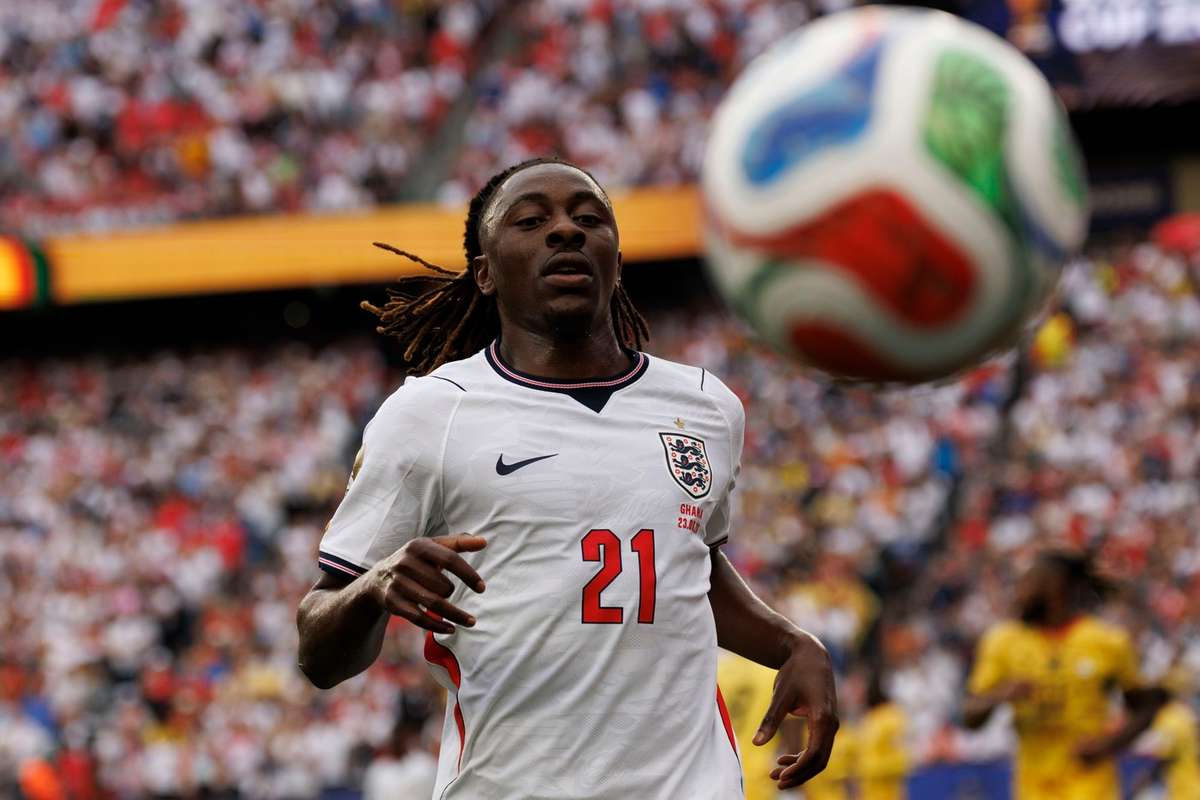
England played out a goalless draw with Ghana at Boston Stadium. Their group-stage qualification picture has not slipped out of control, but the pressure for the final round is already impossible to ignore. Midfielder Eze, who made his World Cup debut on Tuesday, spoke to the media immediately after the match—his tone calm rather than rattled. He wanted to help the squad pull focus away from off-pitch noise and back to Saturday's do-or-die clash with Panama.
The first words after a debut
Eze said the negative reaction to the 0-0 result was "perfectly normal"—on the biggest stage, every pass gets magnified and picked apart. But he kept stressing that the team could not afford to waste time on "people who didn't play, who weren't on the pitch." "We know what we're doing, and we believe in what we've worked on in training—that's the only thing that matters."
That message was not just empty talk at this second group-stage checkpoint. After two games, England still hold the initiative on points and can secure top spot in Group L with a win in the final round; yet one dull draw was enough to swing the narrative—who should start, why the attack went quiet, and whether they will stumble again in the last game. Eze tried to cool the dressing room with the idea that "there's still a long way to go": you cannot let a draw go to your head, and you cannot let a failure to score shatter your confidence.
Dominating the numbers, yet the scoreline would not budge
If you look at the technical statistics alone, England were in almost total control. Our database shows the Three Lions recorded a possession rate of 79% in this match, with 19 shots and 3 on target, plus nine corners; Ghana, meanwhile, dropped deep, using a tight block to turn the edge of the penalty area into a congested grey zone. Since complete records began at the 1966 World Cup, it has been rare for a side to dominate possession at nearly 80% yet fail to score — this felt more like a contest where England "won the process but not the scoreline."
Captain Harry Kane came close to changing the game on two occasions: once hitting the post, and once firing wide in stoppage time. Kane's two moments neatly summed up England's "just short" night — dominant in possession, progression and attempts, but lacking precision with the final pass and shot. Eze also conceded that Ghana were "very solid, very compact," making it difficult for England to find clear openings at times. "We controlled a lot of the game and didn't take our chances in the key areas, which is a shame, but we can't let that affect our mentality."
On the rankings front, England have 1,825.97 FIFA points and remain fourth, unchanged from the last update; Ghana have 1,346.31 points and sit 74th, down two places. The gap on paper is undeniable, yet knockout tournaments have never been about "the higher-ranked team always wins" — Ghana's clean sheet has forced England's hand: they must take all three points in their final group game.
Key psychological junctures
From a mental resilience standpoint, the real test of this draw for England is not inside the 90 minutes, but in the 48 hours that follow. Eze cut to the heart of it: the court of public opinion will always be louder than the dressing room, but what decides top spot in the group is execution against Panama in the final round—not social-media starting XI speculation. He said the team "will still have winning as its only objective" and believes the training and match rhythm built along the way "will put us in first place in the group."
On Ghana's side, preparations have been tightly packed of late—database records show back-to-back fixtures before and during the 2027 Africa zone qualifiers against Somalia, Ivory Coast and others. Multiple 0-0s suggest the defensive shape is still settling, but in major tournaments they have already shown they can drag stronger sides into a slow, grinding battle. If England keep creating chances without finishing in the final round, qualification may still be secure, but a knockout-round mentality could start carrying extra weight early.
Final Round vs Panama: Battle for Top Spot
Saturday's fixture pits Panama, ranked 33rd by FIFA with 1,540.64 points, against England—a tier apart. Site data shows Panama previously deployed a 5-4-1 low block in World Cup qualifying, with 36% possession and just one shot in a single match—a style similar to Ghana's: no interest in winning the possession battle, just waiting for counter-attacking openings. If England still want to enter the knockout stage as group winners, they must pass the test of turning dominance into goals in the final round.
Eze's comments were essentially about helping young internationals and established starters build a shared mental firewall: outside noise can exist, but it must not reach the tactical execution layer. For England, 79% possession and 19 shots already show the attacking system can function; what remains is how Kane and company turn "close" into "goals." Win the final round and top spot is theirs; produce another 0-0 and the initiative on qualification passes to others—that line is harder than any off-pitch commentary.
Our take: England need not abandon their overall direction after a drab draw, but they have no margin for error against Panama in the final group game. Three key areas to watch: set-piece efficiency, decision-making on the final pass in the final third, and whether they can maintain their tempo without growing rash once ahead. The “block out the noise, trust the process” message Eberechi Eze sent on his debut only truly lands when it is converted into three points.