

















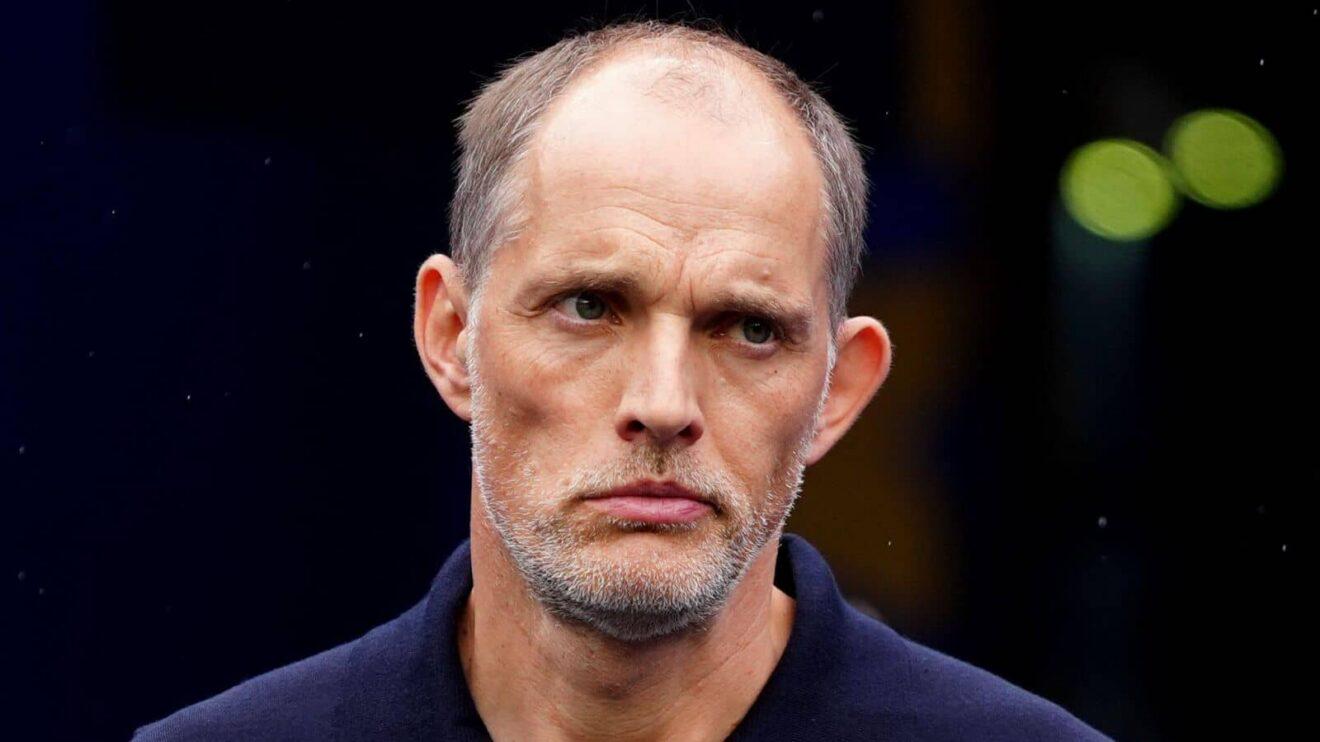
On the final night of the World Cup group stage, England face not only an arithmetic puzzle on the standings table, but also a personnel jigsaw that requires constant weighing between injuries and the schedule. According to multiple media reports, head coach Thomas Tuchel will make five changes to his starting lineup against Panama—compared with just two from the second match against Ghana, a margin that itself shows the team is not in its most complete competitive shape.
From the group picture, England still need to watch the result of Ghana vs Croatia in the same group and aim to secure top spot in Group L with a performance no worse than their rivals'. But at this critical juncture, Tuchel has clearly chosen a more cautious path: using rotation to protect key players and limited minutes to test squad depth, rather than betting everything in the final round on the assumption of full health.
Injuries are an unavoidable keyword in this round’s lineup debate. In recent days, multiple sources have confirmed that Reece James, Declan Rice and Elliot Anderson all carry varying degrees of physical concerns. Among them, James’s situation is considered the most difficult—he has already been ruled out of starting this match, and reports suggest his injury could affect England’s team selection in the Round of 32. For a full-back who has long shouldered heavy responsibilities in attack and defense on the flank, missing the final group match may be only a short-term cost; what truly needs to be taken seriously is the balance between recovery timeline and availability for the knockout stage.
For a defensive midfielder central to the tactical design, an appropriate spell of rest is sometimes closer to acting in the team’s long-term interests than a forced appearance.
The five players expected to start include Marcus Rashford, Morgan Rogers, Jarrad Quansah, Nico O’Reilly and Bukayo Saka. Reporter David Ornstein also confirmed some of the changes on social media: Rogers and Quansah are set to start—the former returns to the lineup after playing a key role in qualifying; Quansah may replace the absent James at right-back. Rashford will make his first start of this World Cup—for a striker who has experienced ups and downs at club level, a starting opportunity on the big stage is often both a sign of trust and a window to prove his worth again.
In midfield, despite hip tightness, Anderson is still expected to retain his place. Ornstein also noted that the 23-year-old Nottingham Forest midfielder is expected to undergo a medical examination after returning to Kansas City with the squad, in preparation for his impending transfer to Manchester City. The convergence of physical signals and a professional transfer at the same juncture adds another layer of “fulfilling his duties within limited time” to his appearance.
Based on reports from various sources, England’s expected starting lineup is: Pickford; Quansah, Konsa, Guehi, O’Reilly; Anderson, Bellingham, Rogers; Saka, Kane, Rashford. Tuchel had also publicly expressed dissatisfaction before the match over lineup integration issues, but at least within this England squad, the atmosphere in training has not seen the more intense internal tensions that appeared among opponents Panama—in circumstances where the shadow of injuries and qualification pressure coexist, maintaining dressing-room stability is likewise one of the invisible tasks.
Former England great Alan Shearer had previously analysed that Tuchel would need to make at least four changes for this match. Now five changes have emerged, responding both to the demands of the standings and to the coaching staff’s prioritisation of players’ physical condition. For England, the result against Panama is certainly important, but whether they can enter the knockout stage in a relatively healthy and relatively orderly state may be the longer-term equation Tuchel is truly calculating.