

















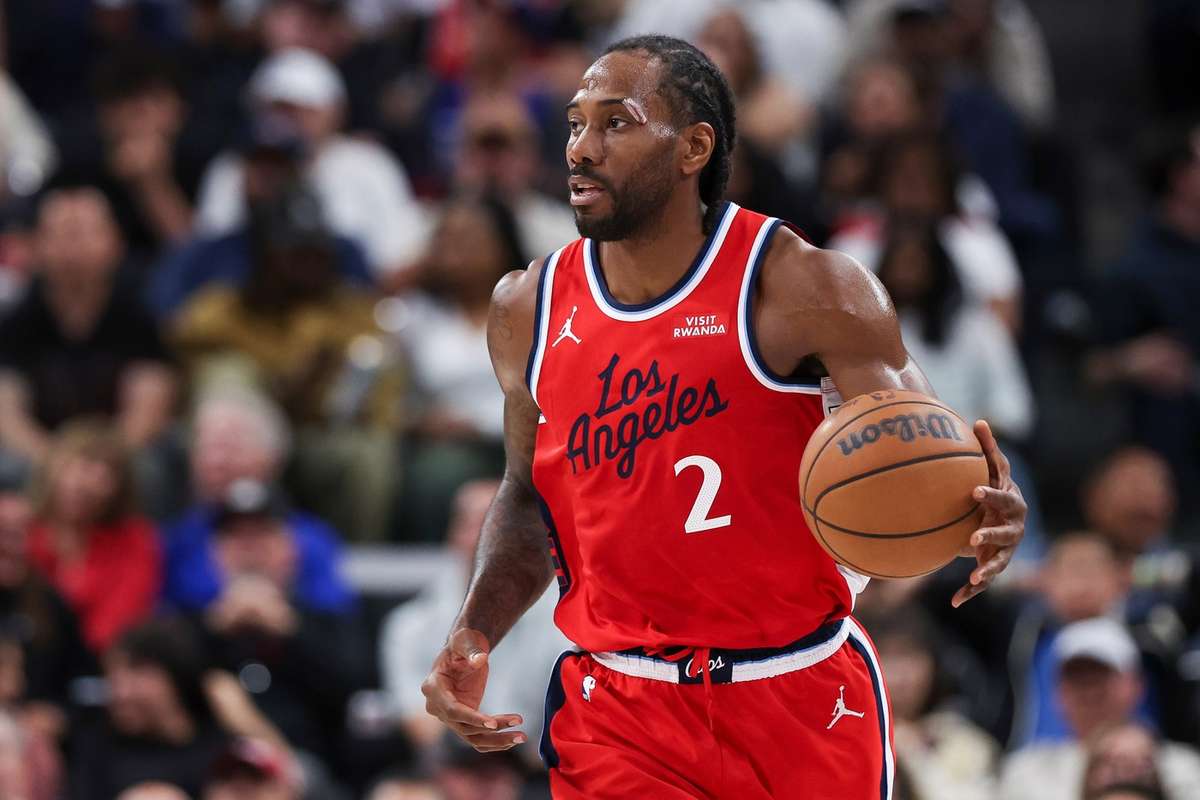
The Toronto Raptors have reacquired Kawhi Leonard from the Los Angeles Clippers in a stunning trade that sends one of the league's most efficient two-way stars back to the city where he authored the franchise's only championship run. For a roster that finished fifth in the Eastern Conference at 46-36, the move is less about nostalgia than about compressing a title window around a player who just posted a career-high 27.9 points per game at age 34.
Why the numbers point back to The 6
Leonard enters the final year of his current contract with a $50.3 million salary before unrestricted free agency, assuming no extension. That timeline matters: Toronto is not buying infinite runway. It is buying one season—maybe two if negotiations go well—of elite two-way production at a price tag that still scales with star-level impact when measured against replacement-level wing defense and shot creation.
The statistical profile is straightforward even if the emotional arc is not. Leonard is a seven-time All-Star and seven-time All-NBA selection who has already lifted three franchises to championship-level credibility: San Antonio, Toronto, and the Clippers. His 2014 Finals MVP run with the Spurs—five games against the Miami Heat—remains the template for what Toronto is hoping to replicate in miniature: a defensively switchable star who raises floor spacing without surrendering matchup value on the other end.
After one year in Toronto during the 2018-19 title season, Leonard spent the past seven seasons with the Clippers as a Los Angeles native playing home. Now he returns to a conference that has reshuffled again following Toronto's earlier blockbuster involving Giannis Antetokounmpo heading to the Heat. The East is no longer a slow climb; it is a race among teams trying to stack star minutes before cap rules harden rosters in place.
Leonard's 2025-26 peak and what it costs to defend him
At 27.9 points per game, Leonard set a new personal scoring high this past season. That figure is not empty volume. It reflects a player who has learned to live inside mid-range efficiency while still generating free throws and corner threes at a rate that keeps help defenders honest. For Toronto, the immediate question is fit: who initiates when Leonard sits, and who guards the opponent's best wing when he sits?
Those lineup questions are where championship teams win or lose two to three possessions a night. A 46-36 team is usually a play-in-to-second-round profile unless star minutes carry disproportionate weight. Leonard's track record suggests he can supply that weight—his Spurs and Raptors runs both featured regular-season records that looked good but not historic, then playoff scaling that looked like a different sport.
The Clippers, meanwhile, absorb the inverse calculation: seven years of star equity gone in one transaction, cap flexibility altered, and a need to re-rate their own ceiling without a player who has been their defensive identity since arrival.
Ingram and Dick: the roster math Toronto still has to solve
Brandon Ingram remains one of the most stable scoring profiles in the league, even as the roster around him changes again. The 28-year-old forward is coming off just his second All-Star season in a 10-year career, posting 21.5 points, 5.6 rebounds, and 3.7 assists per game. He has averaged more than 20 points per game in each of the last seven seasons—a level of scoring consistency that is harder to find than the highlight reels suggest.
One number stands out for analysts more than for casual viewers: Ingram has logged exactly 12.1 two-point shot attempts per game for three straight seasons. That kind of flat-line repetition is rare in modern basketball, where role shifts usually show up in attempt curves within a few weeks. It signals a defined offensive identity—mid-range and paint touches at a fixed rate—regardless of surrounding personnel. For a Leonard-led team, that can be complementary if spacing gaps are managed; it can be congested if both stars operate in similar mid-band zones without elite shooting around them.
Ingram also finally delivered a healthy season, playing a career-best 77 games after years of injury interruptions. Availability is its own metric, and for Toronto it may be as valuable as any per-game average. He is under contract for two more seasons at $40 million this year and $41.9 million next year with a player option attached—structured money that gives the front office planning clarity even as the competitive picture shifts.
Gradey Dick tells a different developmental story. The 22-year-old former 13th overall pick in the 2023 NBA Draft averaged 14.4 points over 54 games—all starts—during the 2024-25 season, then saw his role reduced to a bench piece in 2025-26, slipping to 6.0 points in one start across 76 games. That kind of year-over-year collapse in usage and production is exactly what front offices weigh when deciding whether a young scorer is a future core piece or a tradeable contract on a timeline that no longer matches a win-now star reunion.
Dick has one year remaining at $7.1 million—a manageable number that keeps him movable or retainable depending on how Toronto views Leonard's window.
What the trade means in Eastern Conference probability terms
Reacquiring Leonard does not automatically convert 46 wins into 56. It does change the distribution of outcomes in a conference where Miami has added Giannis and other contenders are still stacking two-way wings. Toronto's path likely runs through improved defensive switching, cleaner late-clock offense, and health—Leonard's availability has been the hidden variable in every post-Spurs chapter of his career.
The Spurs chapter still matters analytically. Drafted 15th overall in 2011, Leonard spent his first seven seasons in San Antonio, developing the low-error, high-leverage game that later traveled to Toronto and Los Angeles. Teams trading for him today are not buying potential; they are buying a known playoff multiplier with a finite contract clock.
For the Clippers, the stunning part of the deal is less the return package—still unfolding in public reporting—and more the decision to move a franchise face after seven seasons. For the Raptors, the stunning part is willingness to re-center the brand on a player who already once delivered the ultimate outcome and left.
Bottom line for bettors and believers alike
If you translate this trade into plain predictive language, Toronto is exchanging long-term roster optionality for a concentrated star year with one of the few players who has proven he can bend postseason series without requiring a perfect supporting cast. Ingram's scoring stability and Dick's developmental swing add secondary variables: one offers proven offense if health holds, the other represents either future value or movable salary.
Leonard at 34 with a career scoring high is not the same asset as Leonard at 27 with a chip and a one-year prove-it deal—but it is still an asset that moves Eastern Conference power rankings more than a five-win regular-season bump would suggest. The Raptors are not just bringing a native son home. They are buying a data set with a championship receipt attached, and betting that The 6 still knows how to read it.