




The latest World Cup 2026 Team of the Day is built on a straightforward selection rule: one fixed formation, one matchday of evidence, and player ratings on a 10-point scale where perfection sits at the top. The result is a 4-3-3 that reads less like a highlight reel and more like a structural snapshot—two 9.3 anchors, a midfield cluster in the eights, and a back line where every starter cleared the seven mark.
That framework matters because tournament football rarely rewards chaos across 90 minutes. Coaches want repeatable first passes, width that holds, and a front line that can both stretch and combine. This XI checks those boxes on paper, and the underlying numbers explain why.
How the XI Is Assembled
Team of the Day selections at a World Cup are not popularity contests. The baseline is positional fit inside a 4-3-3, then match ratings from the relevant fixtures. A 10.0 represents a flawless individual performance; anything above 9.0 signals elite influence in multiple phases. Midfielders in the 8.0 range typically reflect strong distribution and positional discipline, while defenders in the mid-7s usually point to security rather than headline-grabbing risk.
Applied to this lineup, the spread is tight by design. Four nations—Argentina, Switzerland, Colombia, and Egypt—supply the starters. That geographic mix is common in a global group stage: different opponents, different tempos, and one shared standard for who actually controlled their role.
Goalkeeper and Back Line: Stability First
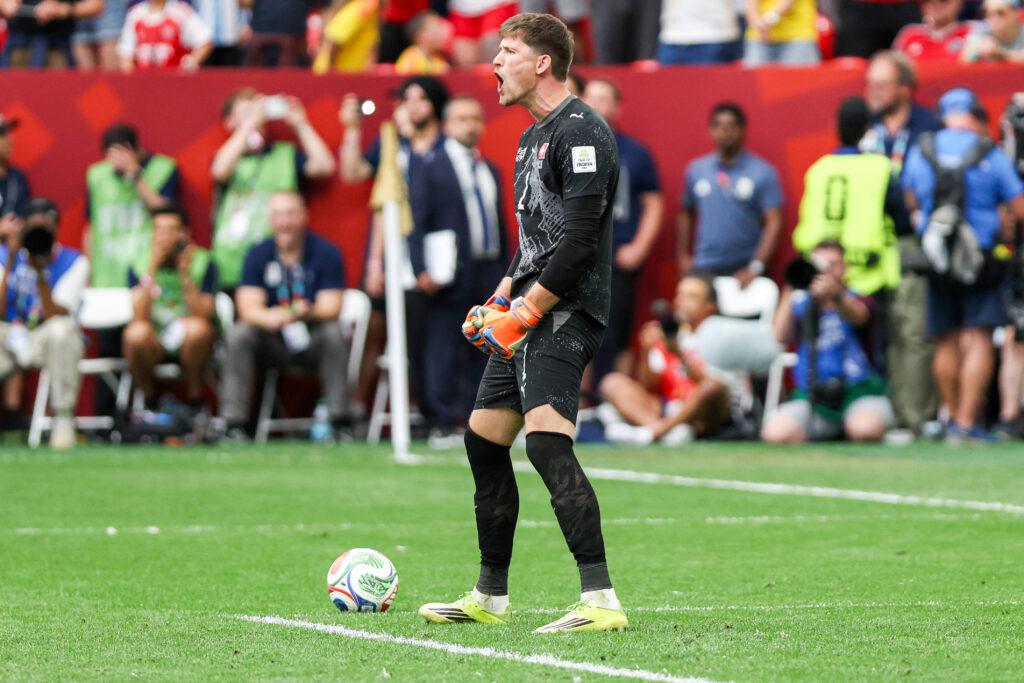
The safest foundation belongs to Gregor Kobel, whose 9.3 rating leads the defensive third. For a goalkeeper, that figure usually reflects shot-stopping efficiency plus command in buildup—exactly the profile a back four needs when the midfield pushes higher.
In front of him, the center-back pairing pairs Cristian Romero at 7.7 with Nico Elvedi at 7.4. Neither number screams dominance; together they signal control. Romero’s rating aligns with a tournament defender who wins duels without forcing the team into emergency defending, while Elvedi’s mark suggests calm progression from the back.
On the flanks, Johan Mojica posts 7.6 on the left and Y. Ibrahim checks in at 7.3 on the right. Four defenders with solid sevens is a useful benchmark: it often translates to longer stretches of territorial balance, which in turn gives the midfield license to step forward. In a World Cup week where margins are thin, that stability is a feature, not a limitation.
Midfield Trio: Tempo, Range, and First Passes
The engine room is where this XI separates itself from a purely defensive selection. Leandro Paredes leads the midfield at 8.3—the highest mark among the three—and that typically maps to top-tier distribution and positioning under pressure. Enzo Fernández follows at 8.0, reinforcing Argentina’s central influence in a lineup that already includes Romero up the spine.
Granit Xhaka completes the trio at 8.0 for Switzerland, a rating that fits his role as a shape-keeper: secure recycling, line-breaking when the picture allows, and enough physical presence to protect the center backs. Three eights across midfield is rare on a single matchday; it explains why the wingers could maintain width without the team losing its base.
From a tactical standpoint, that profile is what most coaches describe as “dependable control.” Secure first passes, range in the middle third, and a platform for the front three—without a single obvious weak link in the rating stack.
Front Three: Star Power With Structure
Up top, Lionel Messi shares the day’s peak 9.3 with Kobel. For a forward, that joint-high mark is a statement of meaningful attacking involvement—not just a goal tally, but creation, combination, and the ability to tilt phases in Argentina’s favor. Argentina’s recent international form supports the broader context: a 3-0 win with 64% possession, 19 shots and seven on target reflects the kind of control Messi-era sides can impose when the structure behind him holds.
To his right, Juan Fernando Quintero registers 7.7, a steady creation figure that signals reliable service and link play. On the left, M. Ziko clocks 7.6 to round out a front three that can both stretch and combine. A 9.3 focal point flanked by two reliable sevens is a classic efficient-attacking blueprint: enough star power to decide moments, enough structure to keep the ball.
What the Numbers Mean in Tournament Context
FIFA ranking data adds another layer without replacing the matchday evidence. Argentina sit third globally (1874.81 points), down one place from second—still elite, but a reminder that even top sides face ranking pressure in a crowded cycle. Switzerland are 19th after a one-spot drop, Colombia have climbed to 13th, and Egypt have moved up two places to 29th. None of those tables pick the Team of the Day, but they underline why four different football cultures can still produce a coherent XI when individual performances spike on the same day.
Bottom Line
This World Cup 2026 Team of the Day is best understood as a ratings-led 4-3-3: Kobel and Messi at 9.3 set the ceiling, Paredes at 8.3 defines the midfield standard, and a back line of sevens projects control over long stretches. It is not the loudest possible lineup on name value alone—it is the one whose match evidence best fits the selection rules for a balanced, tournament-ready eleven.