
















Atlanta Stadium did not feel like a stage built for panic on Wednesday. The air was warm, the crowd restless in that particular World Cup way — half celebration, half suspense — and for most of the afternoon England moved the ball with the calm authority of a side ranked fourth in the world.
Then the script cracked.
A Shock That Shook the Three Lions
Seven minutes in, Brian Cipenga struck for DR Congo. The Leopards, FIFA-ranked 46th and carrying the weight of a continent’s hope, had landed the first blow in this Round of 32 tie. England, for all their possession and pedigree, were trailing in a knockout match they were expected to control.
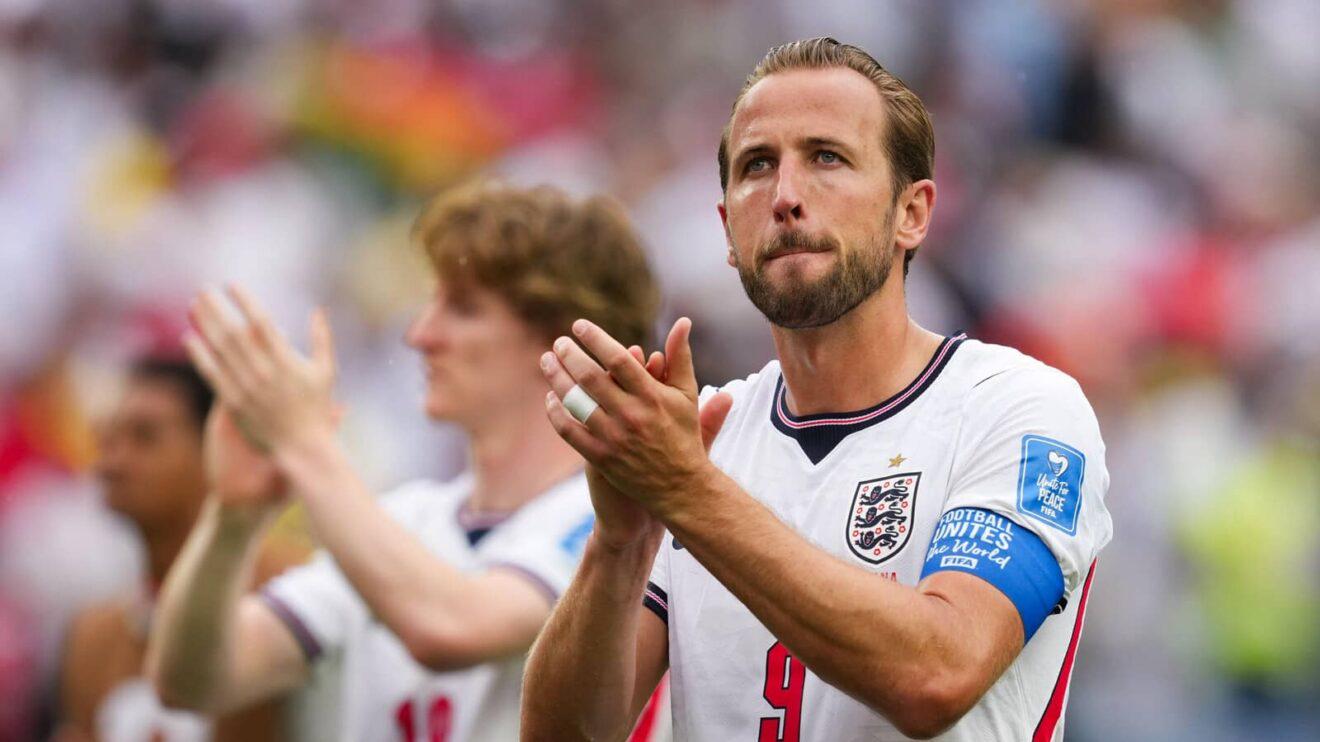
The moment carried more than a single goal. England had entered this World Cup with familiar ambition and familiar questions — could their generation finally convert promise into something permanent? Could Harry Kane, the captain who has carried the national team’s emotional ledger for a decade, still bend a tournament to his will?
For seventy minutes, those questions hung over Atlanta like humidity.
The Long Wait and the Header That Changed Everything
DR Congo defended with discipline. Lionel Mpasi, their goalkeeper, grew into the match with every save, every command of his area, every refusal to let England’s pressure become inevitability. England finished with sixteen shots and seven on target according to the official match data, yet the scoreboard stayed frozen.
Declan Rice pushed down the right. Anthony Gordon recovered the move, lifted a delicate ball into the box, and there — again — was Kane.
In the 75th minute, the England captain met the cross with a header that finally broke Mpasi’s resistance. It was Kane’s twelfth World Cup goal, drawing him level with Pelé on the sport’s most hallowed scoring chart at the finals. Not a statistic for the footnotes. A statistic for the history rooms.
Former England striker Alan Shearer, working on co-commentary, did not reach for understatement. Kane’s movement, he said, had been “brilliant.” The build-up — Rice’s run, Gordon’s touch — was exactly the kind of interconnected football England have promised for years. Even Mpasi, who had been excellent for most of the match, was left with little chance on the header.
Twelve Goals and the Weight of Tradition
There is a particular cruelty to World Cup knockouts: one slow start can erase years of work. England knew that better than most. Kane knew it better than anyone in the squad.
His first goal did not merely level the score. It reattached England to their own narrative — the comeback, the captain’s intervention, the sense that when the lights are brightest, the man wearing the armband still answers the call.
That answer came again eleven minutes later.
The Strike of a Killer Marksman
Gordon and Kane linked once more in the 86th minute. At the top of the DR Congo penalty area, with defenders closing and the afternoon’s tension compressed into a few square yards, Kane did what great centre-forwards do when instinct overrides geometry.
He shot.
No right-foot shuffle. No elaborate disguise. Just power, angle, and the cold certainty of a player who has spent a career turning half-chances into decisive ones. The ball climbed into the roof of the net. England led 2-1. DR Congo’s brave resistance was over.
Shearer called it “the strike of a killer marksman.” Give Kane half a yard, he warned, and there is every chance the outcome will be exactly what unfolded in Atlanta — a goal that felt less like luck and more like inheritance.
For DR Congo, the defeat will sting. Cipenga’s early heroics had given them a genuine foothold in a tie against one of football’s established powers. Their 40 percent possession and organized 4-3-3 shape suggested a team that belonged on this stage even if the final score did not.
For England, the relief was immediate and profound.
From Munich to Atlanta: Kane’s Crossroads Season
Context matters when judging a World Cup performance, and Kane arrives at this tournament carrying a club season that already reshaped his reputation. After winning the Bundesliga title with Bayern Munich, the forward entered the summer not as a curiosity abroad but as a player who had proved he could dominate in a new league without losing the old ruthlessness.
That ruthlessness was on full display against DR Congo — first with the header that rescued England from their worst fears, then with the late strike that sealed passage to the next round.
Former England goalkeeper Paul Robinson, following the match from the stadium, went further still. In his view, Kane’s display was not simply match-winning. It was Ballon d'Or-winning.
That is a bold claim in any year. It is bolder still in a World Cup summer when individual awards are usually argued across club form, national-team heroics, and the intangible glow of the moment. Yet Robinson’s logic is not hard to follow: a captain who drags his country through a knockout scare with two goals in fifteen minutes is exactly the kind of player voters remember when December arrives.
What England Take Forward
\n
The numbers tell part of the story. England’s 2-1 win came with 60 percent possession, 517 passes at 91 percent accuracy, and the structural control expected of a top-four nation. DR Congo’s response — one goal from seven shots, twelve fouls, a goalkeeper who nearly stole the night — tells the rest.
Knockout football is rarely clean. It is often a test of who survives the first shock and who has a leader capable of rewriting the ending.
England survived. Kane rewrote it.
There will be louder tests ahead if the Three Lions are to go deeper in this tournament. Spain, fresh rivalries, and the accumulated fatigue of a World Cup summer still await. But on a Wednesday in Atlanta, with the Round of 32 suddenly feeling like a referendum on nerve as much as talent, Harry Kane provided the answer England needed.
Twelve World Cup goals. Level with Pelé. Two strikes when defeat felt closer than anyone in white wanted to admit.
Sometimes a match is just a match. Sometimes it is a line in the national story. This one felt like the second kind.