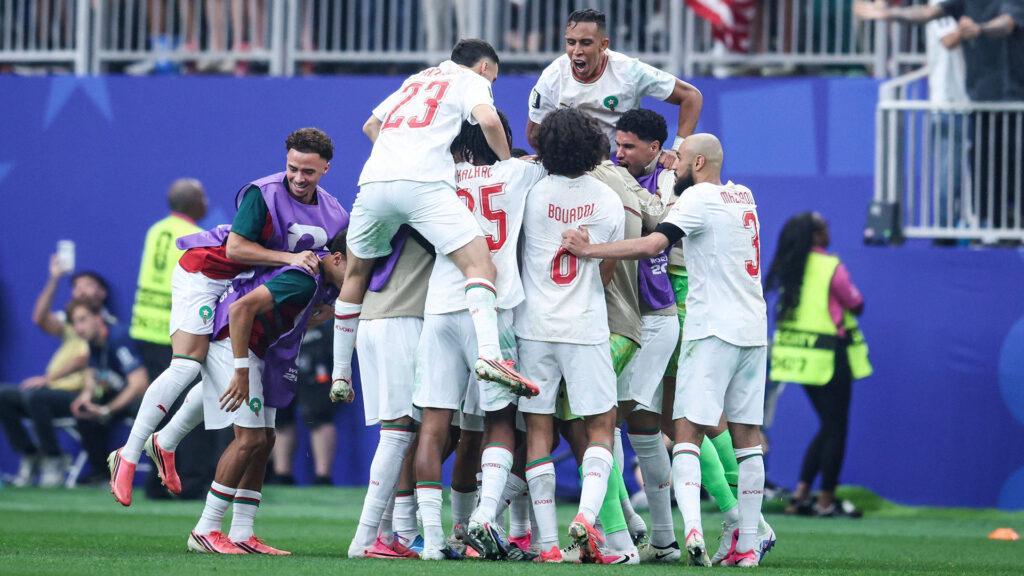















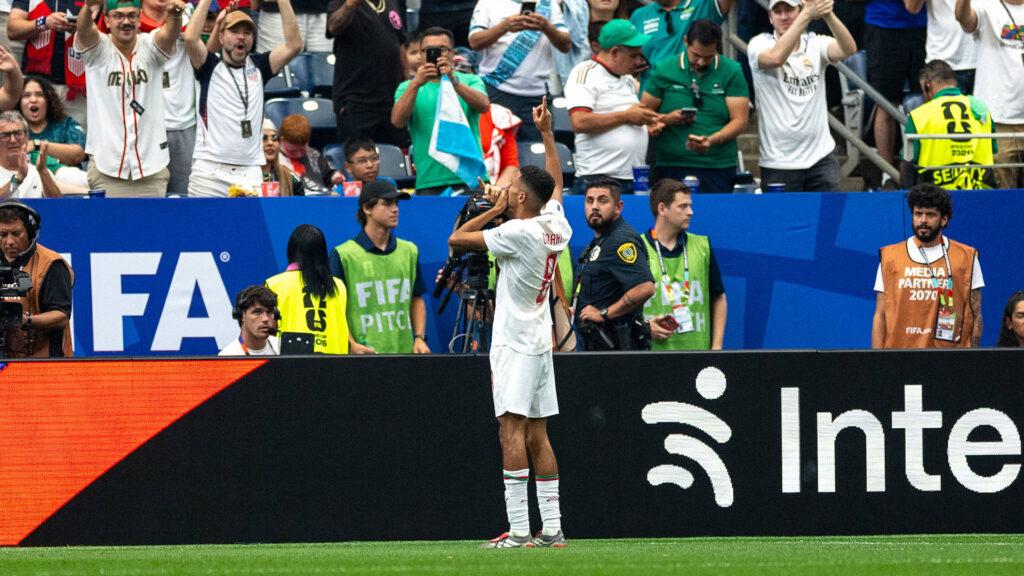
Azzedine Ounahi did not need a volume night to define a knockout tie. In a 3-0 Round of 16 win over Canada at NRG Stadium in Houston, the Morocco midfielder converted both of his shots on target and sat at the center of nearly every phase that separated the sides. For a team ranked eighth in the world against a Canadian side sitting 30th, the scoreline already carried weight. What made the performance stand out was efficiency: two attempts, two goals, and a broader midfield profile that looked controlled rather than chaotic.
The match itself told a familiar World Cup story in reverse. Canada finished with more attempts and more corners, yet left without a goal. Morocco, operating in a 4-2-3-1 and holding 55 percent of possession, needed only five shots and four on target to produce three goals. That gap between volume and quality is where Ounahi's night becomes the analytical anchor. He was not merely present in a winning team; he was the player whose decisions most clearly turned territorial advantage into a result Canada could not recover from.
Why the Scoreline Flattered Canada's Effort but Not Their Threat
Canada's box numbers looked competitive on paper. Eleven shots, three on target, eleven corners, and 45 percent possession suggest a team that stayed in the fight. In a different match, those figures might imply a narrow defeat or even a late rally. Here, they mostly underline a structural problem: Canada created activity without creating conviction.
Morocco's defensive spacing held Canada's wide entries to manageable service, and when the North Americans did work the ball into dangerous areas, the final action lacked the sharpness Morocco showed at the other end. The 0-3 score from July 5 reflects that imbalance. Canada had moments to breathe in the match, but not moments that forced Morocco into sustained panic.
That context matters because Ounahi's goals were not the product of a stretched, open game. Referee Michael Oliver oversaw a tie with plenty of contact — Canada committed 24 fouls to Morocco's 14 — and the tempo carried the edge of a knockout fixture. Ounahi handled that environment calmly. In a match where possession changed hands often and duels were genuinely contested, he kept his decision-making largely safe while still arriving in the box at the right times.
Clinical Finishing in a Role Built for More Than Goals
Ounahi's brace came from the kind of night forwards dream about and midfielders rarely deliver. Two shots on target, two goals. His expected goals figure sat at 0.23, while expected goals on target climbed to 1.43. That split is the statistical shorthand for what viewers saw: modest chance volume, exceptional execution once the ball left his foot.
For a central midfielder, that conversion rate reads less like luck and more like positioning discipline. Ounahi did not force the issue from distance or chase the game into low-percentage attempts. He mixed tidy passing with timing in the penalty area, arriving where Morocco's best sequences naturally ended. That is the difference between a player who scores in a blowout and a player who defines one.
His distribution backed the finishing. In 87 minutes, Ounahi recorded 65 touches and completed 33 of 42 passes. The split by half was instructive: 22 of 25 in Morocco's defensive and middle thirds, then 11 of 17 in Canada's half. That profile suggests a player comfortable recycling possession when the game asked for patience, but willing to play forward when the structure opened. He also connected on his only cross, went 2 for 4 on long balls, created one big chance, and added a key pass. The end product matched the scoreline because the chance quality did, not because Morocco flooded Canada with endless final-third entries.
What the Match Data Says About Morocco's Control
The team-level picture reinforces Ounahi's role. Morocco completed 472 passes at 82 percent accuracy, compared with Canada's 357 at 76 percent. Morocco's lower shot count was not a sign of passivity; it was evidence of selectivity. They did not need to win by volume because their best actions carried higher value.
Canada's 11 corners and higher foul count show a team chasing the game for long stretches, especially after Morocco established control. Yet the North Americans never turned pressure into a breakthrough. Morocco's back line and midfield screening limited clear-cut chances, and when Canada did find openings, the final ball or finish failed to match the urgency of the buildup.
That pattern fits Morocco's broader tournament arc. A 1-1 draw with the Netherlands in the group stage showed they could dominate possession — 70 percent in that match — without always converting dominance into multiple goals. Against Haiti, they scored four. Against Scotland, they won 1-0. The Canada performance sits in that same lane: measured, professional, and increasingly difficult to break down when the stakes rise.
More Than a Goalscorer: Ounahi's Complete Midfield Map
The goals will dominate the headlines, but the underlying activity explains why Morocco looked comfortable for most of the night. Ounahi registered 14 ball carries covering 146.3 meters, including a progressive carry of 42.6 meters and a best single burst of 34.9 meters. Those are not cosmetic numbers. They show a midfielder willing to accept responsibility for advancing play, not just connecting safe passes in front of the back line.
Without the ball, he still contributed. Three clearances and two recoveries reflect a player engaged in both phases, not a luxury No. 10 waiting for service. He drew four fouls and committed only one, a useful ratio in a match with 38 combined fouls. That contact profile helped Morocco slow Canada's attempts to force tempo through the middle third.
The duel record was honest rather than dominant: six wins and seven losses, with three aerial contests going against him. Ounahi was dispossessed twice and had three unsuccessful touches, which is normal in knockout football. What mattered was that those losses did not cascade into Canadian chances. He stayed involved, won two of three listed ground contests, and kept his choices mostly secure in Morocco's half even when the game grew physical.
That balance is exactly what Morocco needed from the position. The Atlas Lions entered the Round of 16 with legitimate ambitions after strong group-stage results, and this was the kind of individual performance that elevates a team from "hard to beat" to "hard to ignore." Ounahi offered creation, progression, defensive work, and the two moments that made the scoreboard safe.
Canada's Knockout Exit and the Gap That Remains
For Canada, the night ended a tournament run that had included competitive moments, including a 1-0 win over South Africa and a narrow 2-1 loss to Switzerland. Reaching the Round of 16 was itself an achievement for a program still building top-level consistency. But against Morocco, the difference in final-third quality was too large to overcome.
Canada's 11 shots suggest ambition, yet only three on target reflects the central issue: they could not repeatedly test Morocco's goalkeeper at the level required in a knockout match. The foul count and corner tally show effort and territory at times, but effort without precision rarely survives the last 32 at a World Cup.
The 0-3 defeat also highlights the distance between being competitive in group play and being ready to punish a top-ten side over 90 minutes. Canada arrived ranked 30th in the world, one place lower than their previous position, and their performance did not close that gap on the night that mattered most. Morocco looked like a team built for deeper runs. Canada looked like a team still learning how to convert progress into knockout-round threat.
What This Result Means for Morocco's Path Forward
The clearest conclusion from Houston is that Morocco no longer need to rely on a single star moment to win when the stage grows brighter. Ounahi's brace provided the defining image, but the team performance around him was structured and mature. Controlled possession, selective shooting, and enough defensive organization to absorb Canada's pressure without surrendering control — that is a template that travels well in knockout football.
Ounahi's form at club level with Girona FC has already shown he can perform in demanding environments, and this display carried that same composure into the national team setting. In front of 68,777 spectators, he played like a player who understood the assignment: do not overcomplicate the night, make the box count, and keep Morocco ahead of the game mentally as well as on the scoreboard.
The statistical story and the eye test aligned. Morocco were not the louder team in every metric, but they were the sharper one where it counted. Canada had activity; Morocco had authority. In a Round of 16 tie, authority wins more often than activity, and Ounahi supplied both the goals and the midfield tone that made that authority visible.
Bottom Line
Morocco's 3-0 win was dominant in outcome and disciplined in method. Azzedine Ounahi turned a modest shooting profile into a match-defining performance, and the team data around him supports the broader verdict: the Atlas Lions look ready for the next round, while Canada leave with proof of progress but also a clear picture of the finishing gap they still must close at this level.
If Ounahi maintains this blend of efficiency and involvement, Morocco will not just be a team to watch in the knockout stage — they will be one of the sides capable of shaping it.