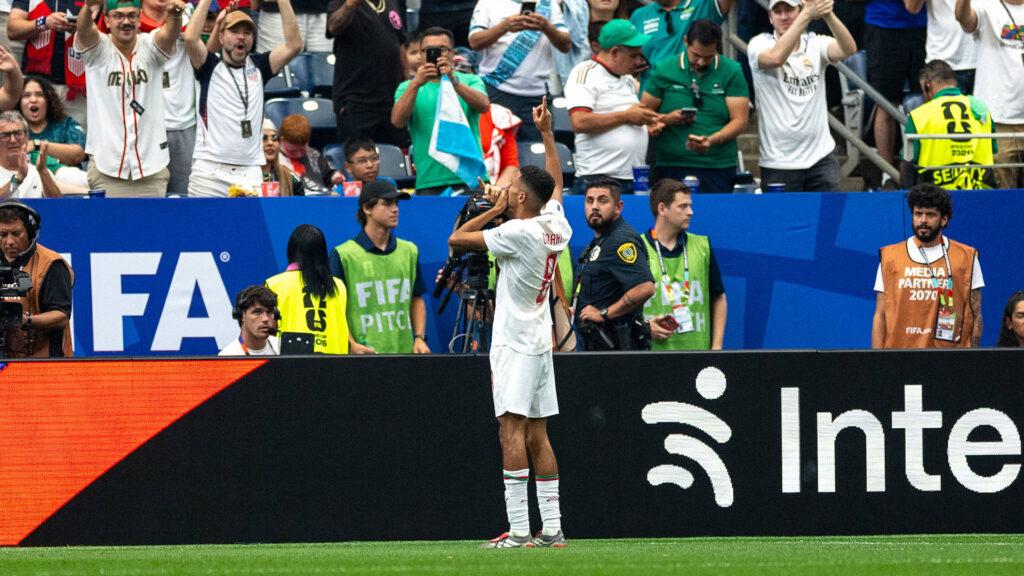

















Morocco are into the World Cup 2026 quarterfinals after a 3-0 win over Canada at NRG Stadium in Houston. The Round of 16 tie stayed goalless through a chippy first half, then flipped in the second as Azzedine Ounahi scored twice and Soufiane Rahimi sealed it in stoppage time. With 68,777 in the building and Michael Oliver on the whistle, the Atlas Lions looked compact for long stretches and ruthless when the game finally opened.
For viewers tracking knockout-stage traffic, this was the classic contrast between territory and conversion. Canada carried more of the raw volume. Morocco carried the moments that actually move a scoreboard.
How the Scoreboard Shifted After Halftime
The first 45 minutes ended 0-0 after six minutes of added time, but the shape of the contest was already visible. Morocco settled into a 4-2-3-1 and found rhythm down the right. Canada matched the physical side of the tie in a 4-4-2 and had the best first-half look through Tani Oluwaseyi, who worked Yassine Bounou but could not beat him.
The breakthrough arrived in the 50th minute. Achraf Hakimi surged down the right and slipped a pass inside for Ounahi, who finished with his right foot to make it 1-0. Canada responded with sustained second-half pressure, loading the box on set pieces and pushing numbers forward. Jayden Nelson and Jacob Shaffelburg added width after the interval, yet the final touch kept slipping away.
Morocco’s back line won the duels that mattered most. In the 82nd minute, Brahim Díaz, on from the bench, threaded another precise ball into Ounahi, and the midfielder guided in his second of the night. Stoppage time brought the exclamation point: Díaz combined again and Rahimi converted left-footed from inside the area for 3-0.
Oliver booked four Canadians and four Moroccans across both halves as fouls stacked up. Morocco managed the closing stretch with smart fouls, clearances and substitutions. Eight minutes of second-half added time did nothing to dent a lead that had already been secured.
Why the Numbers Favor Morocco Despite Canada’s Volume
The box score is where this tie stops looking close. Canada out-shot Morocco 11-5 and led touches in the penalty area 32-10. They also won the corner battle 11-1 and sent in 29 crosses, eight of them accurate. On paper, that profile usually belongs to the team forcing a breakthrough.
Instead, Morocco won the efficiency fight. Shots on target landed 4-3 in their favor despite taking fewer attempts overall. Bounou made three saves and handled the aerial traffic Canada generated from dead-ball situations. Morocco finished with 55% possession, completed 82% of their 472 passes and needed only one corner to produce three goals.
Canada’s 45% share of the ball came with 357 passes at a 76% success rate. They committed 24 fouls to Morocco’s 14 and picked up four yellow cards, the same number as the Atlas Lions. The data line that best explains the 3-0 scoreline is simple: Canada had more entries and more service, but Morocco had cleaner chances and better finishing when the tie was still alive.
Ounahi, Díaz and the Bench Impact That Changed the Tie
Ounahi was the central figure once the game opened. His brace arrived from different phases of attack — the first built off Hakimi’s right-side surge, the second off Díaz’s threading pass from open play. That combination gave Morocco two goals from two high-value sequences after a scoreless opening half.
Díaz’s influence off the bench was just as decisive. He supplied both assists that unlocked Ounahi’s second strike and Rahimi’s late finish. In a Round of 16 environment where margins are thin, that kind of substitute output is exactly what separates a quarterfinal ticket from extra time.
Hakimi’s role should not be reduced to one assist. His runs down the right repeatedly stretched Canada’s back line and created the width Morocco needed to break a stubborn first half. Rahimi’s stoppage-time goal did more than pad the scoreline — it removed any late set-piece anxiety for a side that had already absorbed heavy Canadian pressure.
What the Result Means on the World Cup Stage
Morocco move on with momentum built around knockout-game control rather than open-play dominance. Their Round of 16 win followed a group phase that already showed they can win tight games and survive spells without the ball. Canada exit after a performance that will frustrate their camp: enough pressure and enough dead-ball opportunities to suggest a different outcome was possible, but not enough quality in the decisive moments.
From a rankings and attention standpoint, the gap in the pre-tournament picture held on the pitch. Morocco entered the tournament as the higher-ranked side at No. 8 in FIFA’s table, while Canada sat at No. 30 after a one-place drop. The 3-0 scoreline reflects that separation in finishing and game management more than raw territorial control.
For broadcast and schedule followers, the takeaway is straightforward. Morocco have booked a quarterfinal spot and will carry the profile of a side that wins when chances arrive, even if they do not always win the volume categories. Canada leave Houston with numbers that suggest competitiveness and a scoreline that tells a harsher story about what actually decides knockout football.