

















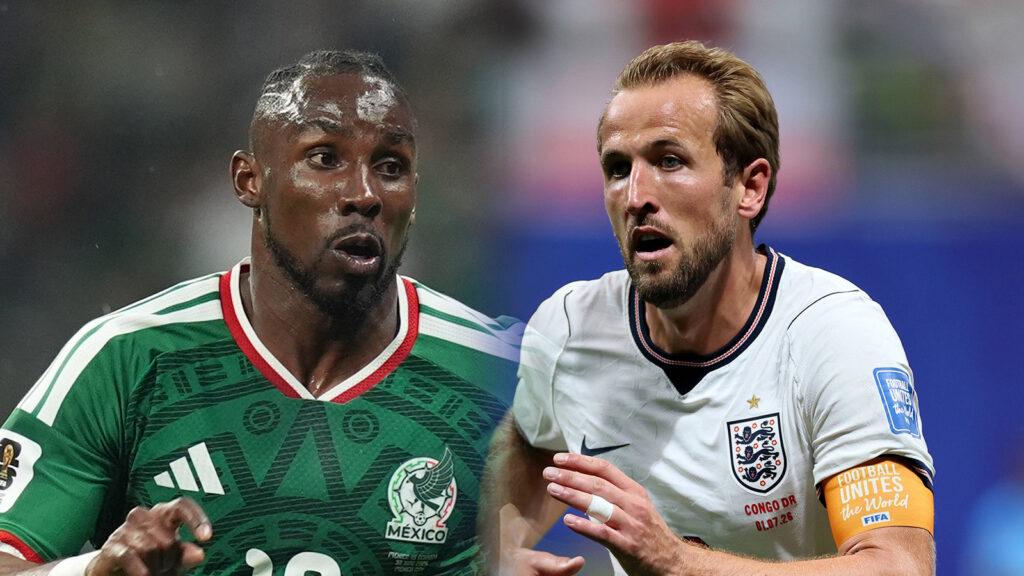
Knockout football at Estadio Azteca is never just a scoreline waiting to happen. It is a test of habits — the small choices teams repeat when the margin for error disappears. On Sunday, Mexico and England meet in the World Cup 2026 Round of 16 at a venue built for noise, history, and nights that outlive the final whistle. Mexico City expects a full house. Referee Alireza Faghani, familiar with high-stakes evenings, will oversee a tie that pairs two sides with identical goal totals but wildly different paths to this stage.
That contrast is the heart of the preview. One team has treated the group phase like a discipline project. The other has treated it like a laboratory for chance creation. Both arrive with eight goals scored. Only one arrives without a single goal conceded.
Two blueprints for surviving pressure
Mexico’s numbers read like a lesson in restraint rewarded. Across four matches, they have scored eight and conceded zero, stacking four clean sheets behind a compact structure. Their attack has been direct without being reckless: 50 shots, 16 on target, 11 big chances created, and 33 attempts from inside the box — with every goal finished from close range. Average possession sits at 48.5 percent, backed by 84.5 percent passing accuracy, which suggests a side that picks its moments rather than chasing the ball for its own sake.
Defensively, the hosts have cleared danger 104 times, won 56.4 percent of aerial duels, and kept their discipline tidy with only two yellow cards and one red across the run. They have not needed set-piece goals to advance, and their transition threat remains real — two fast breaks and one fast-break goal already on the board. Goalkeeper Raúl Rangel embodies the calm at the base of that record. He has faced just six shots on target all tournament while helping Mexico preserve that spotless defensive ledger. In knockout football, that kind of consistency is not flair. It is compound interest.
England’s profile points the other way. They too have eight goals, but three conceded reveal the cost of living higher up the pitch. The Three Lions have fired 74 shots with 27 on target, created 20 big chances, and missed 15 — a gap between volume and conversion that Round of 16 nights rarely forgive. Possession averages 64.5 percent with 89.4 percent pass completion, and crossing has been a clear weapon: 111 attempts, 26 accurate, plus 29 corners won. Out of possession, they have kept two clean sheets and won 58.1 percent of aerial duels, suggesting they can handle the direct pressure Mexico may invite.
FIFA’s latest snapshot adds context without writing the script. England remain fourth in the world rankings, steady at the top of the European pecking order with 1825.97 points. Mexico sit fifteenth, up one place on 1681.03 points, carrying home support and the belief that efficiency can matter as much as reputation when the lights are brightest.
The people who turn structure into story
Tournaments are often remembered by forwards, but they are frequently decided by the players who absorb stress without applause. For Mexico, Rangel’s workload tells its own story: six shots on target faced across four games is not luck — it is organization, positioning, and the trust of a back line that has learned to recover together rather than chase individually.
For England, Marc Guéhi has anchored the defensive line when the tempo spikes. Centre-back work rarely trends on social feeds, yet it shapes everything that follows — the extra yard that closes a cross, the voice that resets shape after a turnover, the composure that prevents one mistake from becoming two. Against a Mexico side that finishes from close range, that composure may matter more than any headline attacking stat.
Midfielder Elliot Anderson’s contribution shows up in the running. He has covered nearly 40 kilometers across the campaign so far, a figure that captures more than fitness. It reflects willingness — to press, to recover, to bridge the space between England’s possession phases and the moments that follow when the ball is lost. In a tie this tight, those invisible meters often decide whether a cross becomes a chance or a clearance.
England’s attacking load has been shared, but the broader theme remains familiar: they have built pressure in volume. Whether that pressure becomes a knockout advantage depends on the finishing detail Mexico’s defensive record has forced every opponent to confront.
What this tie teaches before kickoff
Sport at this level is rarely about discovering a secret tactic on the day. It is about which team’s daily habits survive contact with the other’s strengths. Mexico’s path rewards patience, verticality, and defensive unity — habits that mirror personal growth more than highlight-reel football. England’s path rewards territorial control, wide service, and the bravery to keep creating even when chances go begging — a reminder that effort and outcome do not always arrive together.
That is why this Round of 16 meeting feels larger than a single fixture. Azteca will amplify every pause, every challenge, every restart. Faghani’s appointment underlines the stakes. Mexico will lean on a crowd and a defensive identity that has not cracked yet. England will lean on ranking, depth, and a possession game that has produced chances in abundance — if not always the final touch.
The lesson for anyone watching is simple and transferable. Knockout rounds do not always reward the loudest talent. They reward the team whose repeated choices hold up when the schedule runs out of second chances. Mexico have bet on zero tolerance at the back. England have bet on volume and control. One habit will advance. The other will become a hard note in a notebook — the kind athletes and teams keep long after the flight home.
When the first whistle blows in Mexico City, the question is not merely who scores. It is which philosophy survives the night — compact discipline or sustained pressure — and whether the players holding the line can turn months of preparation into ninety minutes of clarity.