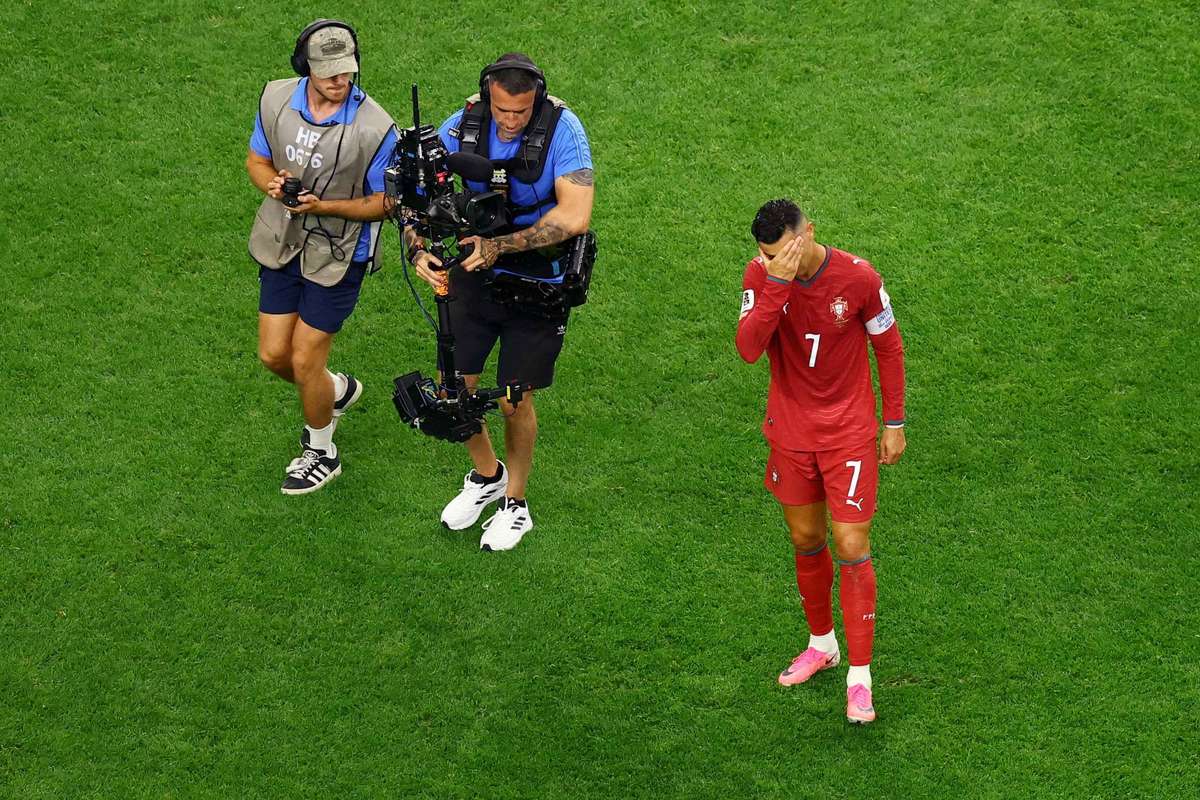




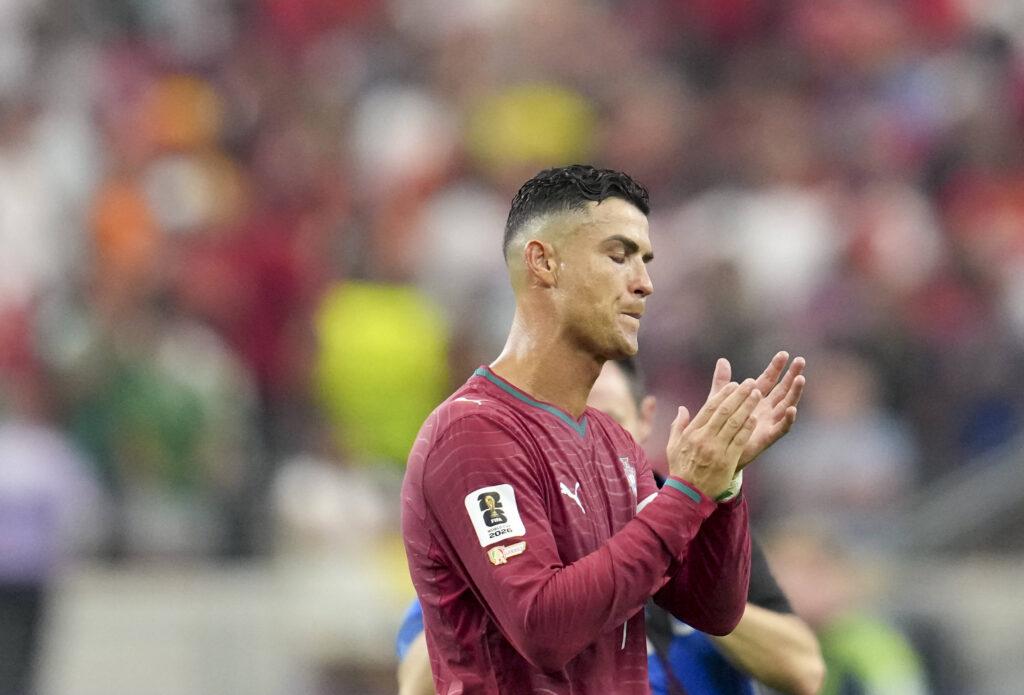
The walk to the pitch carried weight before the first whistle. Cristiano Ronaldo stepped into what may have been his last World Cup appearance with twenty years of tournament memory behind him, and the night unfolded less like a routine knockout fixture and more like a chapter closing in real time. For Portugal, that is never just about one player. For Ronaldo, it has always been about the choice to remain decisive when the stage grows loudest.
That choice has shaped every World Cup he has touched since 2006. The 2026 campaign did not read like a farewell tour. It read like a leader refusing to drift to the margins, accepting more responsibility, and proving that the penalty area still answers to him when the team needs a tone-setter.
The 2026 Decision: Stay Central, Stay Dangerous
Ronaldo’s line at the 2026 World Cup tells a clear story about role and intent. Across five matches and 441 minutes, he scored three goals and maintained a steady level of involvement throughout the tournament. Those numbers sit above his 2022 return, when he logged the same number of appearances but only 291 minutes, one goal, and a noticeably flatter overall impact.
The jump in minutes is the detail that matters most. It signals a coaching staff still trusting him to carry meaningful stretches, not merely to appear for symbolic minutes. Ronaldo did not register an assist in 2026, yet his scoring rate matched the rhythm of a lead forward rather than a guest appearance. Three goals made this his second-best World Cup scoring run, trailing only the four he produced in 2018.
That comparison is not cosmetic. In 2022, the debate around Ronaldo was about fit, form, and whether Portugal could still build around him without slowing the collective. In 2026, the evidence pointed the other way. He stayed on the pitch long enough to influence tight phases, absorb pressure, and convert when the box opened. For a player often judged on whether he can still decide knockout nights, that is the decision line that defines the entire tournament.
What Three Goals Meant in Context
Goals alone rarely capture Ronaldo’s value, but in a World Cup setting they function as proof of continued relevance. His three strikes in 2026 were not scattered across dead rubbers. They arrived within a campaign that asked him to remain present when Portugal needed composure in advanced areas. That is the difference between a legend making a cameo and a veteran still willing to carry the emotional load of a nation’s expectations.
The absence of assists does not diminish that profile. Ronaldo’s role in 2026 leaned toward finishing and occupying defensive attention, creating space even when the final pass did not land on his boot. Portugal’s system still bent toward him in key moments, and that bending is itself a leadership outcome. Teams do not keep allocating minutes to aging stars unless those stars still alter the behavior of opponents.
Two Decades, One Pattern: Show Up and Score
Zoom out across six World Cups — 2006, 2010, 2014, 2018, 2022, and 2026 — and the arc becomes unmistakable. Ronaldo has now played 27 World Cup matches, totaling 2,206 minutes, with 11 goals and 2 assists. That works out to roughly 82 minutes per appearance, a figure that hints at how often he stayed on the field when matches remained unresolved.
The spread of goals across editions is equally telling. Ronaldo scored at least once in every World Cup he played, a rare line of consistency for any forward over such a long span. His biggest hauls came in 2018 with four goals and in 2026 with three. The other four tournaments added one goal apiece, building a total sustained as much by endurance and availability as by isolated bursts of brilliance.
That endurance is the hidden leadership trait in the raw numbers. World Cups punish players who cannot recover between emotional peaks. Ronaldo’s ability to remain physically present deep into tournaments — and to convert that presence into goals in every edition — explains why Portugal kept returning to him even as the squad around him changed generations.
2018 and 2026: Two Effective Profiles, One Standard
Ronaldo’s most explosive single World Cup remains 2018. He played four matches, scored four goals, and delivered his highest tournament-level performance across all six editions. That version of Ronaldo ran hot from the opening whistle, blending volume shooting with clinical moments in a way that felt immediate and overwhelming.
2026 offered a different but equally meaningful profile. Rather than a short burst of peak firepower, he produced consistent contributions over more minutes. The end products differ, yet both campaigns answered the same underlying question: can Ronaldo still move a World Cup team forward when the margins tighten?
In 2018, the answer came through explosive efficiency. In 2026, it came through sustained involvement. For a player whose critics often demand one narrow definition of greatness, that flexibility is itself a form of leadership. Ronaldo did not need to replicate 2018 exactly to remain essential. He needed to choose a role Portugal could trust, then execute it across five matches without disappearing when the lights sharpened.
The Minutes Tell the Truth About Trust
Minutes are the most honest language in tournament football. Coaches can praise veterans in press conferences, but they only extend playing time when they believe those veterans still change outcomes. Ronaldo’s 441 minutes in 2026 represent more than a statistical bump from 2022. They represent a renewed commitment from the bench to the dressing room that he would not be managed as a ceremonial figure.
That trust carries consequences. When a star plays deeper into matches, he absorbs fouls, defensive attention, and the psychological pressure that would otherwise fall on younger teammates. Ronaldo’s willingness to accept that burden — and to keep finding the box — is why his final World Cup chapter felt historic even before anyone confirmed it was final.
A Night That Felt Like a Farewell, Whether or Not It Was
The atmosphere around Ronaldo’s possible last World Cup game was impossible to miss. The performance capped a 2026 campaign that revived his scoring touch and reminded audiences why the No. 7 still moves crowds. Whether this was truly the end may remain unanswered for months or years. What is already settled is the shape of the story.
Ronaldo arrived at the 2026 World Cup with questions hanging over him and leaves the tournament with a cleaner statistical bookend than many expected. Five matches, three goals, increased minutes, and a scoring return second only to his 2018 peak within his World Cup career. That is not the line of a player who merely attended one more tournament. It is the line of a player who made the decision to remain central and then backed it with output.
Legacy as a Series of Choices
Leadership in football is often reduced to armbands and speeches. Ronaldo’s World Cup record suggests a different definition. It is the choice to keep showing up across six editions. It is the choice to score in every one of them. It is the choice in 2026 to play more, risk more, and remain in the frame when Portugal needed a reference point.
If this was his last World Cup night, it closed a career-long pattern rather than breaking from it. The farewell feeling came from the weight of history, not from a sudden collapse in influence. Ronaldo did not exit as a passenger. He exited, or may yet continue elsewhere, as a player who still altered how opponents organized and how Portugal approached decisive phases.
That is the thread that runs through the entire arc: not whether Ronaldo can still play, but whether he still chooses to matter when the tournament narrows. In 2026, the answer was yes often enough to make the night feel like history — and to make the broader World Cup story read as one of the most durable individual narratives the competition has carried in the modern era.