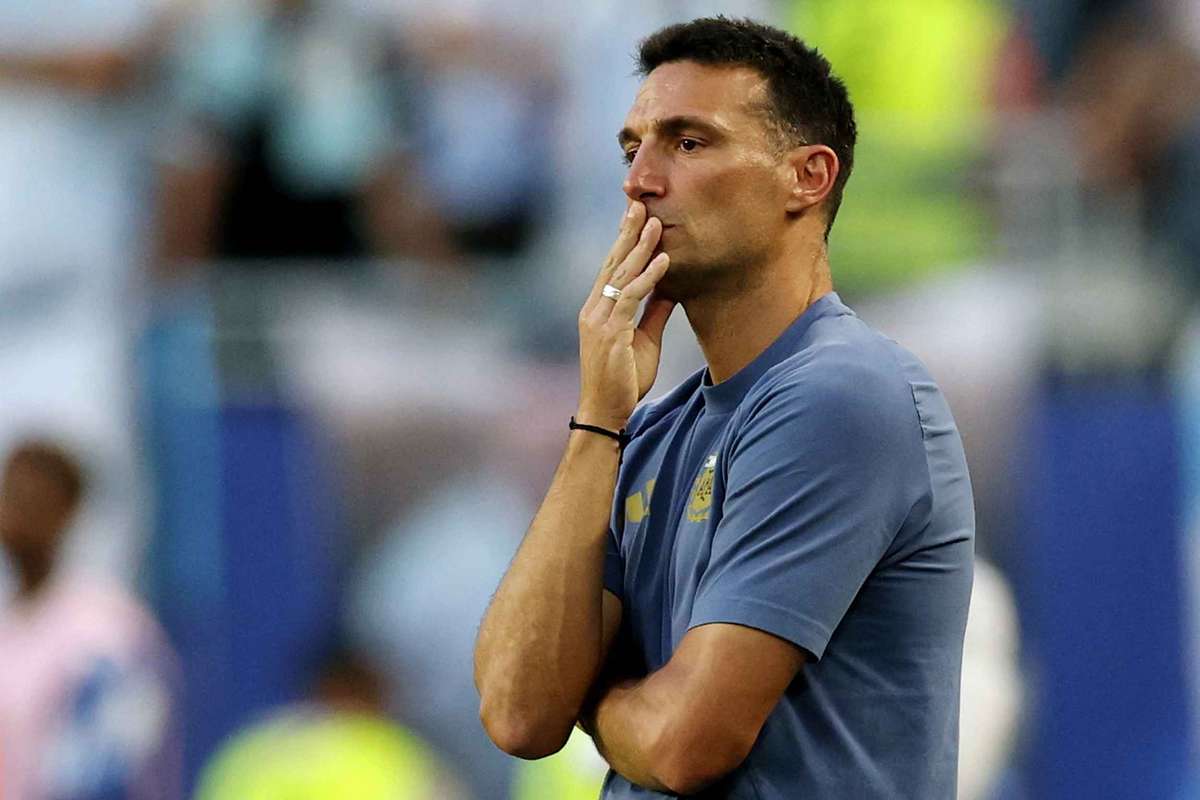













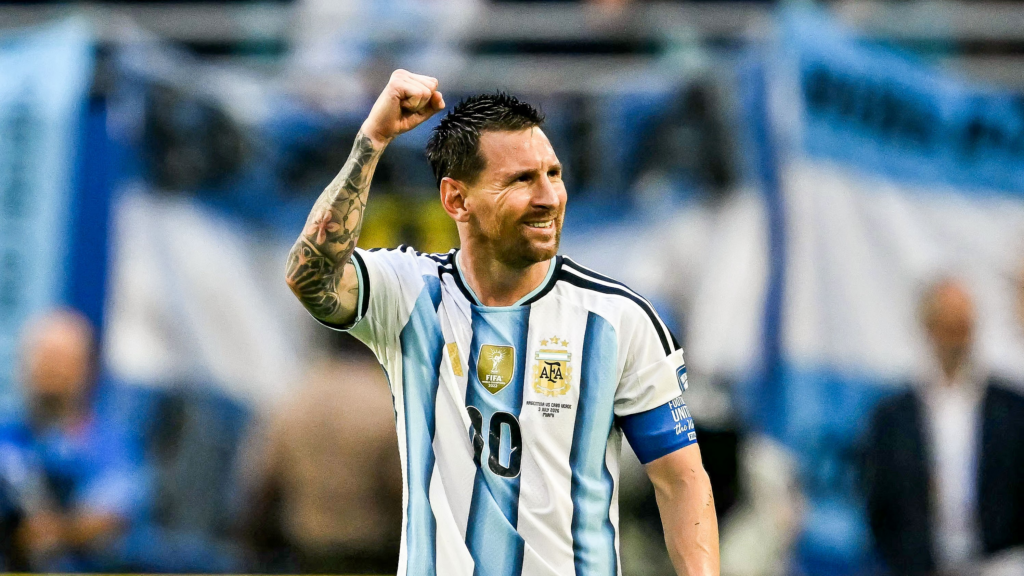
Lionel Messi did not merely appear at the decisive moments — he occupied them. Across 120 minutes at Hard Rock Stadium in Miami Gardens, before 64,478 spectators, Lionel Messi carried Argentina through a Round of 32 tie that refused to settle until extra time. The final score read 3-2 to the Albiceleste after AET, and the broader picture matched the margin: one team leaned on a single conductor to keep the tempo high, the other fought in bursts until the pressure finally told.
For Argentina, ranked third in the FIFA standings, this was the kind of knockout display that blends volume with precision. Cabo Verde, sitting 69th globally, arrived with compact structure and enough counter punch to stay level deep into the night. What separated them was not a single flash of genius alone, but the cumulative weight of Messi’s involvement — finishing, passing, carrying, and reappearing in the half spaces whenever the match threatened to drift.
The Numbers Behind a Knockout Performance
Strip the emotion from the result and the raw output still tells a coherent story. Messi finished with nine total shots, six on target, one goal, two blocked, and one off target. His expected goals figure landed at 1.26, a number that reflects how consistently he found dangerous areas rather than how many clear-cut chances he converted. Expected goals on target reached 1.74, suggesting the attempts that did test the goalkeeper carried real bite in placement and power.
One big chance went begging, yet in a tie that extended beyond 90 minutes, that miss did not derail the broader arc. Argentina’s team numbers reinforced the individual portrait: 22 shots, 10 on target, 64 percent possession, and 849 passes at a 92 percent completion rate in a 4-4-2 shape. Cabo Verde, lined up in a 4-1-4-1, answered with 16 attempts, five on target, and two goals from 36 percent of the ball — enough to keep the contest honest, not enough to absorb the late waves indefinitely.
Shot Volume as a Structural Weapon
In knockout football, frequency matters as much as efficiency. Messi kept presenting himself in and around the box, always a half-step ahead of the nearest marker. Cabo Verde’s back line had to absorb repeated entries, and across two hours that kind of sustained threat becomes a tactical problem in itself. The goal made headlines, but the rhythm of attempts — blocked, saved, recycled, repeated — was what kept Cabo Verde pinned during Argentina’s dominant spells.
The lone strike was earned rather than gifted. Messi’s movement between the lines and his willingness to arrive in the corridor between center back and fullback forced adjustments that opened space elsewhere. Even when the finish did not arrive immediately, the positions he took forced duels, recoveries, and rushed clearances. In extra time, when legs shorten and decisions slow, that kind of calibrated repetition separates teams that advance from teams that survive until they cannot.
Creative Supply and Territorial Control
Messi’s influence extended well beyond the final third. He attempted 43 passes and completed 36, a rate that looks modest until the pitch zones are considered. In the opposition half he went 29 of 35, providing the base for Argentina’s territorially dominant phases. Four key passes and one big chance created captured the value layer beneath the volume — not just circulation, but passes that shifted the defensive line or invited a first-time shot.
Crossing was part of the toolkit as well: nine deliveries, four finding their target. His expected assists figure of 0.72 mirrored what the flow of the match suggested — Messi was not only shooting, he was threading the attack together with selective width and cutbacks. Tempo control showed up in the finer details: short combinations to reset pressure, then longer deliveries when the half space opened. He completed one of three long balls, hardly a headline stat, yet in context it reflected a player choosing risk only when the picture demanded it.
In Argentina’s own half, Messi went seven of eight with the ball, keeping circulation tidy when the game needed a breather. Eighty-three touches across 120 minutes may not sound overwhelming in isolation, but the locations mattered — deep right channels, half spaces, and the edge of the box where a single touch can change the scoreboard. That is the difference between involvement and impact.
Carrying Meters and Progressive Intent
With the ball at his feet, Messi carried it 33 times for a total of 264.06 meters. Of that distance, 132.42 meters advanced play — a ratio that speaks to intent rather than sideways comfort. Six progressive carries punctuated those runs, each one designed to eliminate a line or drag a defender out of shape. In a match where Cabo Verde sat in organized blocks, those carries were how Argentina converted possession into territory when passing lanes tightened.
The duel layer completed the portrait. Messi did not simply glide through untouched; he engaged, absorbed contact, and still found the next pass or shot. That blend of low center of gravity, close control, and decision speed under fatigue is what makes a 120-minute shift credible at 38. By the final quarter of extra time, when both teams had spent their fresh legs, his ability to receive on the half turn and still accelerate one beat remained the most reliable outlet Argentina possessed.
Cabo Verde’s Resistance and the Cost of Late Pressure
Credit belongs on both sides. Cabo Verde’s two goals were reminders that compact defending and direct transitions can punish even favored opponents in a single-elimination setting. Their 476 passes at 86 percent accuracy and eight corners showed a side willing to compete for set-piece territory even without majority possession. For long stretches they made Argentina earn every inch, and the 3-2 scoreline reflects a contest that was competitive rather than ceremonial.
Yet the structural gap showed in the closing movements. Argentina’s 64 percent possession was not sterile control — it was control with direction, funnelled repeatedly through Messi’s zones. Cabo Verde’s 36 percent share became increasingly defensive as the extra period wore on, and the shot map tilted toward the Albiceleste goal end with growing frequency. In knockout terms, surviving that imbalance for 90 minutes is admirable; surviving it for 120 is another task entirely.
What the Round of 32 Result Signals
Advancing after extra time rarely leaves a team untouched, but Argentina will take the trade. A third-place FIFA side that wins a chaotic 3-2 on the biggest stage has answered questions about temperament as much as talent. Messi’s goal was the exclamation point, yet the fuller reading — nine shots, 1.26 xG, 0.72 xA, 264 meters carried — describes a player who still defines the team’s attacking grammar.
The road ahead will demand fresher legs and perhaps a deeper rotation, but the template from Miami Gardens is clear. When the margins shrink and the clock runs past 90, Argentina still have a conductor who can bend rhythm, find the last pass, and carry the ball into the areas where knockout ties are decided. Cabo Verde depart with pride intact; Argentina move on with the sense that their No. 10 remains the most reliable variable in the tournament’s knockout bracket.