

















There is a particular kind of silence that settles over a knockout ground before a first meeting. Not the silence of emptiness, but the silence of calculation — two nations who have never stood across from one another in elimination football, each carrying a distinct idea of how a World Cup survives beyond the group stage.
On Wednesday, that silence breaks at Mercedes-Benz Stadium in Atlanta. England, ranked fourth in the world and built to dominate the ball, confront DR Congo, FIFA's 46th-ranked side and a team that has climbed two places on the back of stubborn, direct football. It is Round of 32 business — win or go home — and the numbers suggest a contest shaped less by reputation than by rhythm.
The Weight of a First Knockout Meeting
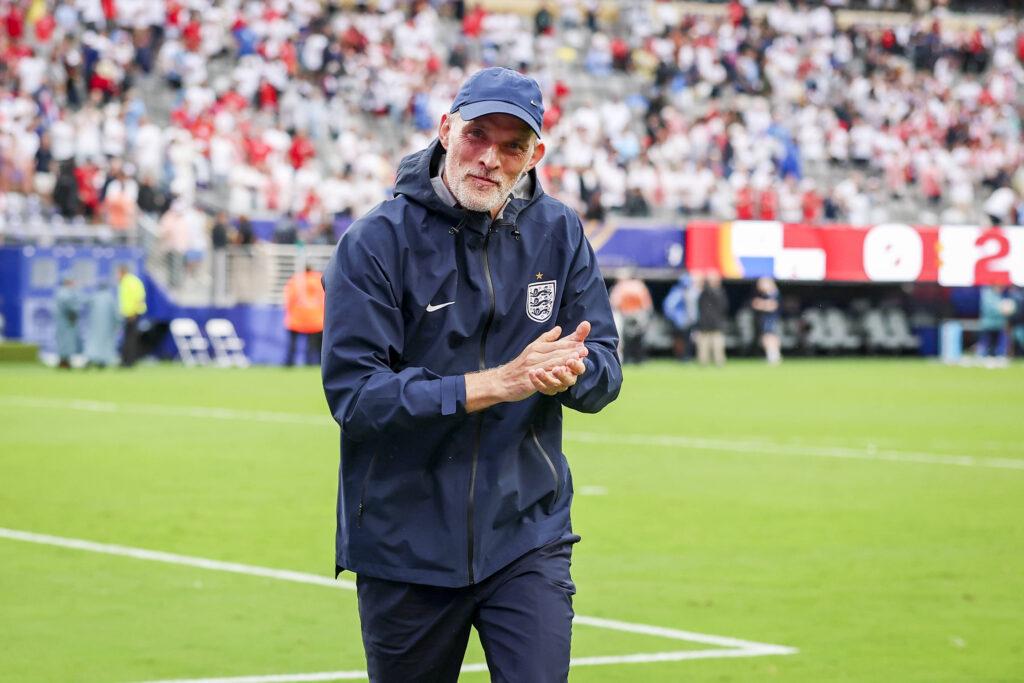
History between these nations is blank. No shared scars, no rehearsed tactical answers, no inherited psychological edge. That emptiness matters. Thomas Tuchel arrives with a side that has learned to treat possession as both weapon and shield. Sebastien Desabre brings a DR Congo outfit that treats defensive organization as the foundation for vertical speed.
The contrast is not abstract. In their most recent World Cup meeting on record — a 2026 group-stage fixture — England prevailed 2-1 while holding 60 percent of the ball, completing 517 passes at 91 percent accuracy against DR Congo's 365 attempts at 82 percent. England registered 16 shots and seven on target; DR Congo managed seven shots and two on target. The story was familiar: one team lived inside the opponent's half, the other waited for the diagonal that changed the geometry of the pitch.
Yet knockout football rarely repeats group-stage logic cleanly. DR Congo have since shown they can flip the script when space opens — a separate World Cup fixture in 2026 saw them win 3-0 with 58 percent possession and 19 shots, evidence that Desabre's side is not permanently married to low-block survival.
England: Steady Hands and Early Strikes
England's recent form reads like a team that understands tournament pacing. They are unbeaten in five matches and have kept two clean sheets across their last three in this competition. Low-scoring patterns follow them — under 2.5 goals in seven of their last nine — but that restraint should not be mistaken for caution. They tend to seize initiative early, scoring first in eight of their last ten outings.
That opening goal carries tactical weight for a side averaging 66 percent possession in this tournament. When Harry Kane leads the line in a 4-2-3-1, the early strike often becomes a structural advantage: opponents must chase the game against a team engineered to circulate the ball at 89 percent passing accuracy across 1,665 total attempts in the competition.
The personnel picture reinforces the control narrative. Jude Bellingham occupies the central attacking role behind Kane, threading the space between Rice's double pivot and the wide thrust of Bukayo Saka and Marcus Rashford. Elliot Anderson partners Declan Rice in midfield, a pairing designed to recycle possession without surrendering verticality. At the back, Djed Spence, Ezri Konsa, John Stones and Nico O'Reilly form a line in front of Jordan Pickford — a goalkeeper whose distribution has become part of England's build-up identity under Tuchel.
There is a team news complication worth noting. Reece James is unavailable with a hamstring injury, removing a full-back option whose overlapping runs have featured in Tuchel's wider attacking plans. Jarell Quansah is doubtful with an ankle issue, adding a layer of uncertainty to central defensive selection even as the broader shape holds.
DR Congo: Resilience Without Clean Sheets
If England's narrative is control, DR Congo's is persistence under pressure. They have not kept a clean sheet in four consecutive matches, conceded first in four of their last five, and still scored in every game of this tournament — four goals from three fixtures. That is the profile of a team that absorbs discomfort and answers anyway.
Desabre's preferred 5-3-2 can slide into a back three when full backs advance, a flexibility England's wide players must respect. Aaron Wan-Bissaka and Arthur Masuaku operate as active wide defenders, while Axel Tuanzebe, Chancel Mbemba and Steve Kapuadi anchor the central trio. In midfield, Noah Sadiki and Samuel Moutoussamy handle the destructive work, with Nathanaël Mbuku providing link play between lines.
Up front, Yoane Wissa partners Cédric Bakambu, a pairing built to stretch horizontal space and punish transitional moments. DR Congo have averaged 39.7 percent possession in this tournament — a number that undersells their threat. They hunt field position through long diagonals and quick counters, a directness that can bypass England's structured build-up if the first pass after recovery is sharp enough.
Their recent competitive record beyond the World Cup underscores organizational discipline. Four consecutive 0-0 draws in 2027 qualifying fixtures against varied opposition suggest a side comfortable defending deep for extended periods — a habit that could frustrate England's chance creation if final-third precision wavers.
Tactical Chess: Where the Match Turns
The central tactical question is deceptively simple: can England's possession translate into sustained pressure against a five-man defensive shell, or will DR Congo's counter-attacking triggers — particularly through Wissa's runs and Bakambu's hold-up play — force Tuchel's side into the kind of open transition game where underdogs thrive?
England's 4-2-3-1 is designed to overload wide areas. Saka and Rashford's width should pull DR Congo's wing-backs into uncomfortable decisions: step forward and leave channels behind, or sit and concede crossing territory. Bellingham's movement between lines becomes the pivot — his ability to arrive late into the box or drop to create overloads in midfield may determine whether Kane receives service in high-value zones.
For DR Congo, the plan likely begins with compactness. Sadiki and Moutoussamy must shield the back five, denying Bellingham the half-spaces he prefers. When possession turns over, the first pass forward — often targeting Wissa's pace or Bakambu's physical presence — must be immediate. Delay invites England's rest defense to reorganize, and against a team completing over nine of every ten passes, delay is expensive.
Set pieces could tilt the balance. England's corner count in their 2026 World Cup win over DR Congo stood at five; DR Congo's at three. In a fixture where both sides lean toward under 2.5 goals — DR Congo have hit that mark in six of their last eight, England in seven of their last nine — a dead-ball moment may carry disproportionate weight.
What the Numbers Whisper Before Kickoff
Strip away the names and formations, and the statistical portrait remains clear. England enter as the team that creates more, keeps more, and starts faster. Their World Cup 2022 group-stage loss — 16 shots, 57 percent possession, yet a defeat — serves as a reminder that dominance without conversion is fragile at this level.
DR Congo enter as the team that scores when it matters in this tournament, even when defensive records fray. Their FIFA ranking climb from 48th to 46th reflects incremental progress, not revolution — but knockout rounds have always rewarded teams that understand their identity under pressure.
The Verdict in a Single Frame
Picture the opening fifteen minutes. England circulate, Rice and Anderson knitting passes across the back line, Saka and Rashford pinning wide defenders. DR Congo sit, absorb, and watch for the loose touch or the overcommitted full-back. The first goal — if it comes early, as England's recent history suggests — will not merely change the scoreboard. It will dictate whether this Round of 32 fixture becomes a chess match of patience or a sprint through open grass.
Atlanta awaits a first knockout chapter between two nations who have never written one together. The numbers lean toward English control. The counter-narrative — Bakambu's finishing, Wissa's acceleration, Desabre's defensive discipline — insists that lean is not a verdict.
That is the beauty of a debut elimination meeting. No inherited assumptions. Only ninety minutes, two tactical philosophies, and the slow, deliberate logic of a knockout night where every pass carries the weight of a season.