













The 2026 World Cup delivered a milestone and a warning in the same breath for Asian football how Asia prepares, protects, and projects itself on the global stage.
From a performance-analytics perspective, the gap was not primarily about raw squad value. Several Asian nations arrived with credible FIFA rankings, established European-based players, and increasingly professional domestic environments. What separated survivors from early exits was repeatable match control: defensive organization under sustained pressure, decision quality in transition, and the ability to protect leads across three high-intensity games in a compressed schedule.
Volume Without Conversion
Eight qualifiers created the widest Asian footprint the World Cup has ever seen. That alone is progress. Qualification pipelines in Japan, South Korea, Saudi Arabia, and Australia have matured through better scouting networks, more standardized youth curricula, and heavier investment in sports science.
Yet tournament football punishes inconsistency more than qualification football rewards it. Group-stage survival is a systems problem: set-piece defending, rest-to-performance ratios, in-game risk management, and squad depth when rotations are forced by heat, travel, and recovery windows. Across the continent's representatives, the data story was familiar—moments of competitiveness followed by structural lapses that opponents converted at low volume but high efficiency.
South Korea: Talent Density, Defensive Fragility
South Korea entered as one of Asia's most decorated modern generations, built around captain Son Heung-min, centre-back Kim Min-jae, and creative outlet Kang-in Lee. The squad's athletic profile—pace, pressing endurance, and vertical transitions—matched the identity that carried them to the round of 16 in Qatar four years earlier, including a famous group-stage win over Germany.
The 2026 campaign followed a different arc. A 2-1 opening comeback against Czechia suggested the attack could still bend games late. But back-to-back 1-0 defeats to Mexico and South Africa exposed the central issue: South Korea created enough phases of control to compete, yet conceded decisive moments through positional breakdowns rather than overwhelming opponent dominance.
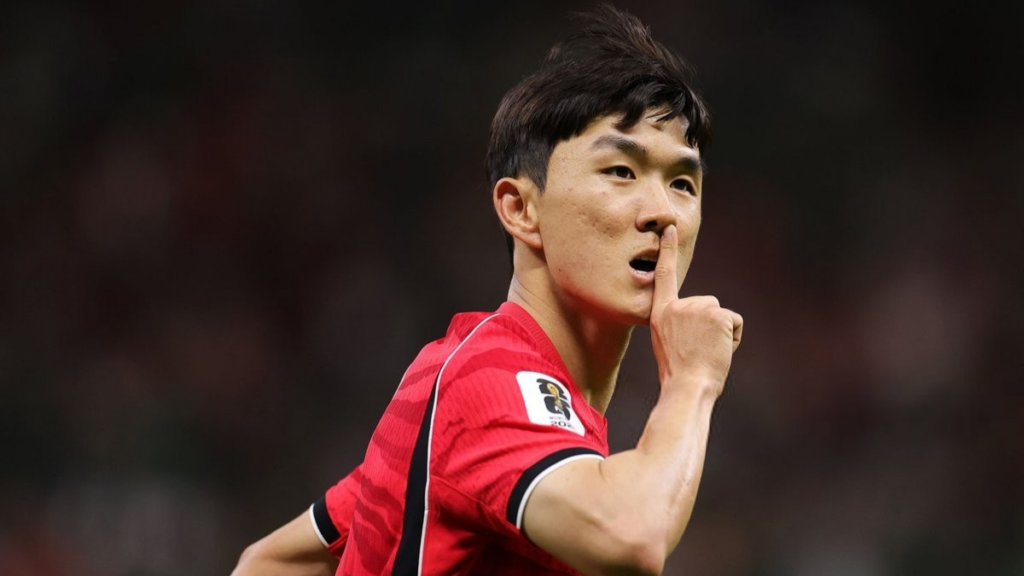
Midfielder Hwang In-beom emerged as the clearest individual bright spot, contributing a goal and an assist in the Czech offering the kind of progressive passing profile that stabilizes transitions. His output underscored a—South Korea's technical floor remained high, but the defensive ceiling collapsed under tournament stress.
Off-pitch turbulence also mattered. A media standoff tied to the captain disrupted the communication environment teams rely on to that channel fractures, preparation continuity suffers even if on-field minutes look unchanged.
South a side often compared to its 2002 generation, the lesson is not a lack of must-win phases against varied styles.
What the Numbers Suggest
For the next cycle, the priority is not discovering new talent—this remains a golden-generation window—but hardening defensive automation: rest-defense triggers, compactness metrics in the final third, and set-piece assignment clarity. Those are trainable, measurable, and increasingly standard among teams that consistently convert group-stage survival into knockout equity.
Qatar: Historical First, Structural Ceiling
Qatar arrived with a different benchmark. Excluding the automatic berth as 2022 hosts, this was the nation's first World Cup qualification on merit. Placement alongside Switzerland, Canada, and Bosnia and Herzegovina offered a realistic a decade of infrastructure investment had produced exportable competitive habits.
A draw against Switzerland delivered Qatar's first World Cup point earned through open qualifying—a genuine milestone for a program built from a narrow player pool. But finishing last in the group after losses in the remaining fixtures confirmed a persistent gap: Qatar can organize and frustrate for isolated phases, yet struggles to sustain defensive concentration and attacking efficiency across 90 minutes against physically layered opponents.
For a country that has invested heavily in academies, performance centers, and national-team centralization, the World Cup data points to the next frontier: expanding the base of players who can execute under global tempo, not just in regional competition. Without that depth, even smart tactical plans degrade when rotations and fatigue accumulate.
Japan and the Continental Middle Tier
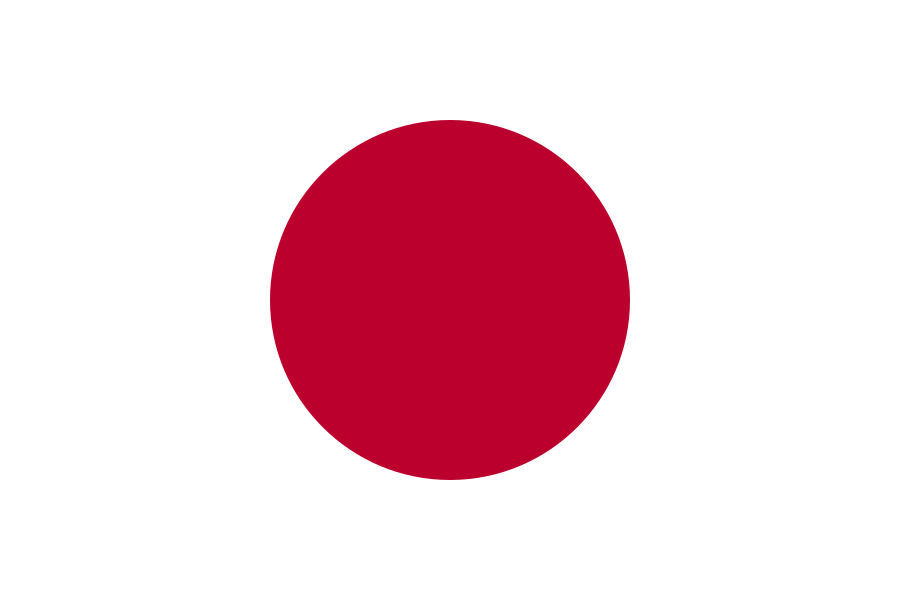
Japan remains Asia's most consistent developmental model, ranking 18th in FIFA's latest list with upward momentum. The Samurai Blue's structural advantage—coherent youth-to-senior pathways, positional training from adolescence, and heavy emphasis on technical repetition—continues to produce sides that travel well. At this World Cup, Japan again represented the continent's highest floor, even if the ultimate knockout return did not match the program's long-term trajectory.
That distinction matters. Japan's system generates reliability. Other Asian nations are still converting investment into repeatable tournament behaviors rather than episodic highs.
Australia, Iran, and the Defensive Economy
Australia, ranked 27th globally, and Iran, sitting 21st, illustrate how ranking position alone does not guarantee group-stage survival. Both programs possess competitive individuals and clear tactical identities, yet World Cup groups punish defensive economies that leak even one high-quality chance per half.
Iran's slight ranking dip—from 20th to 21st—reflects fine margins at the top of the Asian hierarchy. Iraq, Jordan, Saudi Arabia, and Uzbekistan faced similar constraints: enough quality to disturb games, not enough consolidated structure to own them. Iraq's rise to 57th and Jordan's move to 63rd in FIFA's table show regional growth, but growth in qualifying tables and growth in knockout conversion are different metrics.
Training Systems, Not Just Star Lists
The continental takeaway is not that Asia lacks talent. It is that talent is not yet uniformly embedded inside defensive and decision-making frameworks that survive World Cup density. The teams that advanced did not necessarily possess more famous players; they executed clearer non-negotiables across three games.
For federations, clubs, and performance departments, the actionable agenda is increasingly technical:
Build Defensive Automation Early
Youth academies that prioritize only attacking flair produce players who struggle when adult football demands rest-defense discipline. Asia's next step is teaching compactness, scanning habits, and transition triggers as core curriculum items, not senior-team emergency fixes.
Standardize Load and Recovery Intelligence
Tournament schedules expose programs without robust sports-science stacks. Monitoring acute load, sleep quality, and neuromuscular readiness should be baseline national-team infrastructure, not a luxury for the wealthiest associations.
Convert Qualification Form Into Knockout Habits
Several Asian teams dominate long qualifying campaigns, then shrink under the shorter, higher-variance World Cup format. Simulating knockout pressure in preparation camps—limited recovery, opponent-specific game states, media intensity—is part of closing that translation gap.
Looking Ahead
Eight teams at the World Cup is a structural win for Asian football's visibility and development funding. Two group-stage survivors is a performance alarm. The continent's best individuals still elite club levels, and rankings for Japan, Iran, South Korea, and Australia confirm a competitive middle tier that is not easily dismissed.
But the 2026 data is unambiguous: Asia's next leap depends less on discovering one more star and more on installing shared defensive and decision systems that travel. Until those systems match the continent's growing player pool, record participation will continue to outrun record progression.