

















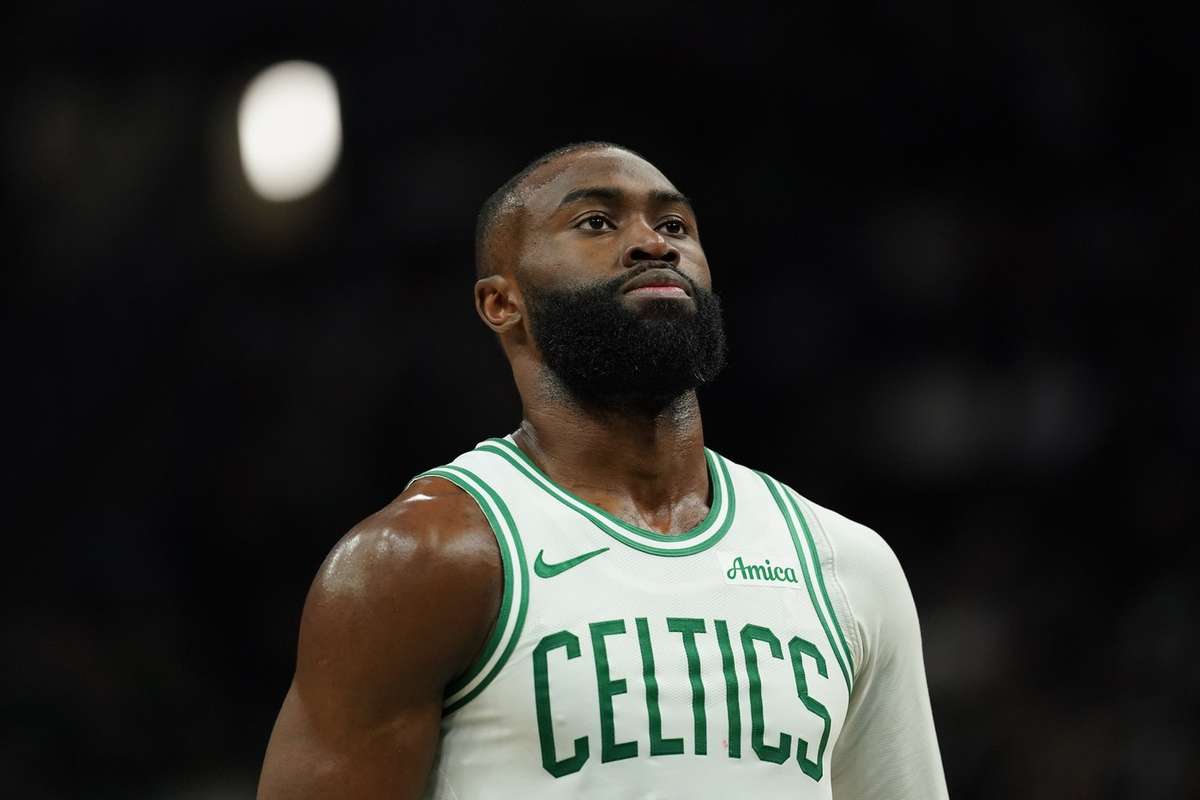
Championship basketball rarely rewards raw talent alone. It rewards players who can absorb pressure, expand their responsibilities, and deliver when a possession demands clarity. Jaylen Brown's recent playoff run with the Boston Celtics is not only a highlight reel of big moments. It is a working example of how developmental patience, defensive assignment growth, and shot-making under duress can turn a talented wing into the most valuable player on the sport's biggest stage.
For coaches, trainers, and front offices building long-term contenders, Brown's arc reads less like overnight stardom and more like a curriculum. The lesson begins in structure, continues through repetition, and only later reveals itself in one possession that changes a series.
The Possession That Reframes a Series
Late-game execution is one of the most teachable—and most unforgiving—areas in basketball development. With 8.5 seconds remaining in Game 1 of the Eastern Conference Finals, the Indiana Pacers led 117-114. Boston needed a three-pointer to extend the game.
The Celtics designed the possession around Brown getting free in the corner. The action worked, but not cleanly. Brown caught the ball with Pascal Siakam already closing out, denying an immediate look. That detail matters for anyone studying high-level offense: spacing is not the finish line. Decision-making under shrinking time and defensive length is.
Brown pump-faked, created a sliver of separation, leaned back, and launched a high-arcing shot. The ball dropped through the net. The arena erupted. Boston forced overtime and eventually won 133-128, taking Game 1 in a game that could have tilted the entire series emotionally.
Brown finished with 26 points, seven rebounds, and five assists. For development staffs, the broader takeaway is not simply that he made a difficult shot. It is that he stayed composed when the initial plan did not produce an open catch-and-shoot window. That adaptability is a trained skill, built through thousands of reps and competitive environments that simulate defensive disruption.
From Conference Control to Finals Responsibility
Boston did not stop at one dramatic opener. The Celtics carried momentum through the Eastern Conference Finals and swept Indiana 4-0. Brown remained central to the team's identity on both ends, earning the Larry Bird Eastern Conference Finals MVP Award.
That honor matters in a developmental sense because it recognized sustained impact, not isolated heroics. Conference playoff basketball tests whether a player can maintain efficiency, defensive discipline, and decision quality across multiple games against elite competition. Brown passed that exam repeatedly.
The NBA Finals presented a different classroom. The Dallas Mavericks leaned heavily on Luka Doncic, who averaged nearly 30 points per game in the series. Dallas had a singular offensive engine. Boston answered with collective balance—and with Brown assigned to the game's most demanding defensive task.
The Celtics won 4-1 and captured their 18th NBA title. Brown was named Finals MVP after averaging 23.9 points, 5.9 rebounds, 3.3 assists, and 1.2 steals per game in the playoffs while shooting 51.6% from the floor. The award reflected more than scoring. It acknowledged primary defensive responsibility against one of the league's most skilled creators, plus the offensive reliability required to close out a championship.
For player-development programs, that combination is the modern wing prototype: capable of generating offense, trustworthy in help schemes, and willing to accept matchup weight on the biggest nights.
Why Two-Way Growth Changes Team Architecture
Many contenders are built around offensive hierarchy. Championship teams, however, often win because their best perimeter players accept defensive burdens without surrendering efficiency. Brown's Finals performance illustrated that balance in practical terms.
Slowing Doncic is not a one-tool assignment. It requires physical endurance, anticipation, communication in switches, and the mental stamina to remain engaged after difficult possessions. Brown's playoff numbers suggest he carried that workload without becoming a one-dimensional role player on offense.
That is the kind of growth organizations hope for when they draft athletic wings and commit to multi-year skill layering. Shooting versatility, ball-handling under pressure, defensive versatility, and emotional steadiness do not arrive together in year one. They are installed gradually—often through uncomfortable stretches where expectations outpace immediate results.
Institutional Roots: From Berkeley to Boston
Brown's foundation helps explain why his late-career leap looks structured rather than accidental. Born and raised in Georgia, he entered college basketball as a five-star recruit at the University of California, Berkeley. In his lone season with the Golden Bears during 2015-16, he averaged 14.6 points, 5.4 rebounds, and 2.0 assists per game.
He was named Pac-12 Freshman of the Year and earned First Team All-Pac-12 honors. Praised for athleticism, motor, and shot-making potential, he declared for the 2016 NBA Draft after one collegiate season. The Boston Celtics selected him third overall.
That single-year college pathway is increasingly common among elite prospects, but it places immediate pressure on professional development staffs. Brown appeared in 78 games as a rookie and made 20 starts. Early playing time in a competitive organization is itself a developmental decision: reps versus refinement, opportunity versus role clarity.
From a training-system perspective, the question is never only whether a young player can score. It is whether the organization has a progression plan for defense, decision speed, leadership, and late-game poise. Boston's long investment in Brown's skill portfolio became visible when the stakes were highest.
Criticism, Response, and a New Chapter
Elite athletes in major markets often face public scrutiny long before their full skill set matures. Wings drafted for athletic upside are frequently evaluated on whether they can become primary creators, lock down top opponents, and deliver in closing moments—all at once. When progress appears uneven, criticism follows quickly.
Brown's playoff ascent can be read as a response built through work rather than rhetoric. The corner three against Indiana was a technical snapshot: footwork, balance, release under contest. The Eastern Conference Finals MVP was a process snapshot: consistency across four wins. The Finals MVP was a program snapshot: two-way excellence when the season's final exams arrived.
That progression offers a useful framework for coaches at every level. Development is rarely linear. Players may look ready in one domain—scoring, athleticism, effort—while still building in another. Public impatience often mistakes incomplete portfolios for permanent ceilings.
Brown's latest chapter reframes that conversation. The player once discussed primarily as a high-upside complement became the centerpiece of Boston's title run. For the Celtics, that shift strengthens roster flexibility. For the broader league, it reinforces a familiar truth: the most valuable playoff performers are often those who keep adding layers after the spotlight first finds them.
Lessons for Programs Building Championship Habits
Several principles emerge from Brown's journey that extend beyond one franchise or one postseason.
First, late-game preparation should include contested scenarios, not only clean looks. Players need reps against closeouts, switching defenses, and delayed catches. Second, defensive assignment growth should be treated as a core skill pathway, not a punishment for offensive inconsistency. Third, organizations drafting athletic wings should map a multi-year curriculum: shooting variance, ball security, communication, and emotional regulation.
Finally, redemption in team sports is rarely theatrical. It is statistical and behavioral. It appears in shooting percentages under pressure, in stops against elite creators, and in the willingness to take the next right action when the first option disappears.
Jaylen Brown's path from a celebrated freshman season at Berkeley to Finals MVP in the NBA is not just a personal milestone. It is a case study in how criticism can coexist with growth, how development systems can outlast impatience, and how an unexpected new chapter often begins with one possession executed with trained calm.