






The corridor outside the media room feels different this time. Four years ago in Qatar, Morocco arrived at the same stage as the story everyone wanted to tell — the first African nation to reach a World Cup semi-final, carrying a continent's hope on their shoulders. The applause was loud, sincere, and ultimately interrupted by France in a 2-0 defeat that ended the Atlas Lions' historic run.
On Thursday, the two sides meet again in a quarter-final that carries the weight of that night in Al Bayt Stadium. The setting has changed. The cast has evolved. What has not changed is the emotional gravity of a fixture that feels less like a routine knockout tie and more like a chapter waiting to be rewritten.
A Coach Who Refuses the Comfort of Compliments
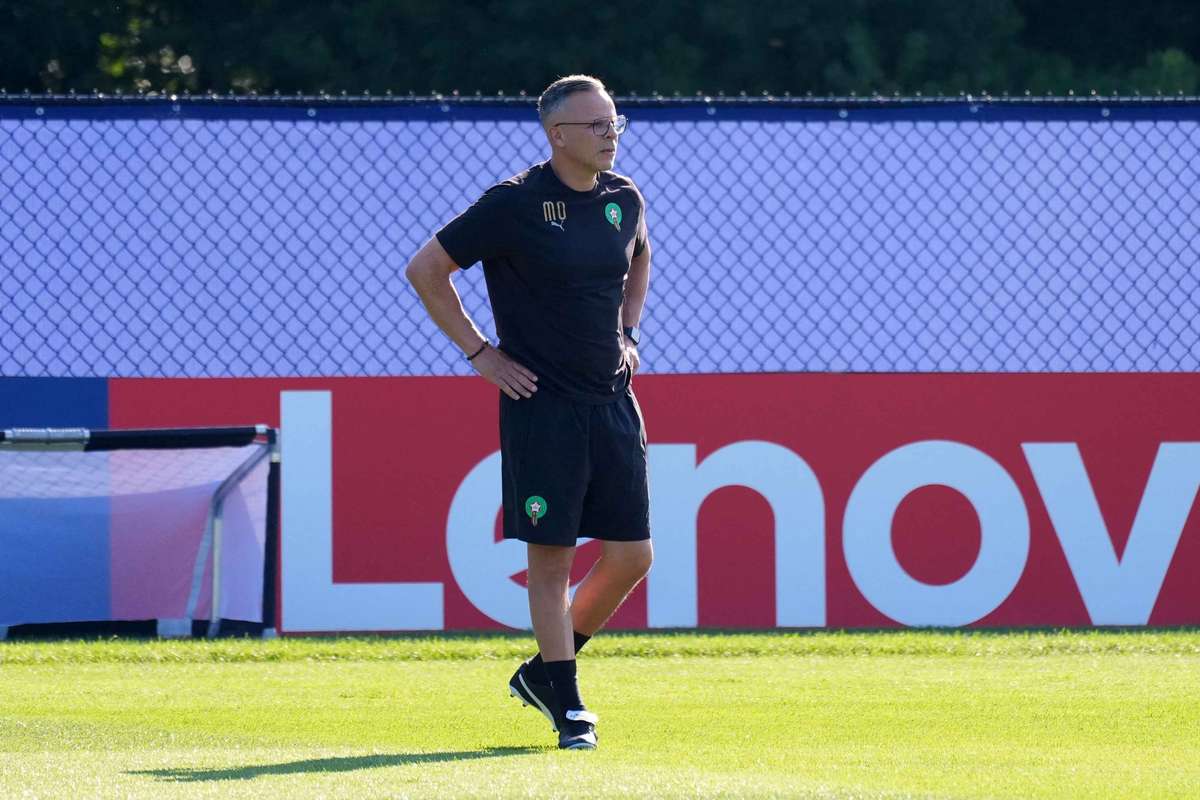
Walid Regragui Ouahbi stepped into the press conference with the measured tone of a man who has heard enough praise to last a lifetime — and decided none of it counts yet.
"We will take stock at the end of the tournament," Ouahbi said. "I will not say anything now because we can have more. We are not going to listen to people who will say what you have done up to now is wonderful."
That sentence lands differently when you consider where Morocco stand. They are no longer the surprise outsiders who stunned Belgium and Spain before falling to France. They eased through the group stage, eliminated the Netherlands and co-hosts Canada, and arrived at this rematch ranked eighth in the FIFA world rankings with a squad that speaks the language of genuine title contention.
Yet Ouahbi will not allow his players to hear that music.
"France are favourites, but we will do everything possible to win tomorrow and qualify for the semi-finals," he said. "I don't like this feeling that we have done well to get here and all the rest is bonus. No, the bonus is to win the World Cup. This is how we have come this far, and we will go further."
It is a philosophy rooted in tournament tradition: the World Cup does not reward beautiful journeys. It rewards the team still standing when the final whistle blows in the last match. Ouahbi is asking Morocco to treat every round as obligation, not ornament.
The Shadow of 2022 and the Mood of 2026
Football remembers semi-finals long after group-stage spreadsheets are forgotten. Morocco's run in Qatar was not merely a result line; it was a cultural moment that shifted how African football was discussed on the global stage. Supporters painted cities red. Families stayed awake across time zones. The semi-final against France became a referendum on belief itself.
This rematch arrives with a different emotional temperature. Morocco enter as a team that expects to be here. France enter as reigning champions from 2018, finalists in 2022, and the No. 1 side in the FIFA rankings — a football nation that treats deep tournament runs as inheritance rather than accident.
The contrast is part of the theatre. One side carries the memory of being stopped one step short of immortality. The other carries the burden of being expected to stop everyone else.
France's Forward Line and the Scramble Through Paraguay
France advanced from the round of 16 with a scrappy 1-0 victory over Paraguay, decided by a Kylian Mbappe penalty. It was not the kind of performance that silences doubters, but it was the kind that keeps a champion's campaign alive when margins tighten and nerves surface.
Mbappe has scored seven goals in the tournament, trailing only Lionel Messi of Argentina, who leads with eight. Behind Mbappe, Ousmane Dembele, Michael Olise, and Bradley Barcola give France one of the most dangerous forward combinations seen at a World Cup in years — a quartet built for speed, interchange, and the sudden acceleration that turns cautious defending into crisis.
France's path through the knockout rounds has not always glittered, yet their roster depth remains the benchmark against which every other contender is measured. Ouahbi knows that reputation travels onto the pitch before the first pass is completed.
Morocco's Evolution From Outsider to Believer
The numbers tell part of the story. Morocco's eighth-place FIFA ranking reflects consistency rather than a single hot fortnight. Their victories over the Netherlands and Canada were statements of control — the kind of results that separate teams happy to participate from teams convinced they belong on the biggest stage.
But Ouahbi is not interested in framing the fixture as a clash of assets or spreadsheets.
"It is not a question of assets," he said. "The Moroccan side is evolving as is France. The key is to play the match without regrets. There are things to improve tomorrow. We have to play at 2,000 percent and not think what we have done up to now is not bad."
That phrase — play at 2,000 percent — is the language of a coach trying to burn away complacency. Morocco have done enough to earn respect. Ouahbi is demanding they do more to earn history.
What Thursday Really Means
Quarter-finals are where World Cup narratives harden into legacy or regret. For Morocco, this is not a grateful return to the semi-final doorstep. It is a direct attempt to finish what began in Qatar when the world learned their name and France learned their resistance.
For France, it is another examination of whether a golden generation can convert talent into consecutive deep runs when every opponent arrives with a specific plan to slow Mbappe and disrupt their rhythm.
The atmosphere around the match will carry echoes of 2022 — the noise, the flags, the sense that something larger than three points is in play. Ouahbi's message cuts through that noise with deliberate simplicity: applause is for later. Semi-finals are for tomorrow. The trophy is the only conversation worth having.
When the teams walk out, the story will not be about how far Morocco have come. It will be about how far they are willing to go without looking back. In World Cup lore, rematches are rarely just rematches. They are second chances dressed in floodlights — and Ouahbi has made clear that his team did not travel this far to collect compliments.