


















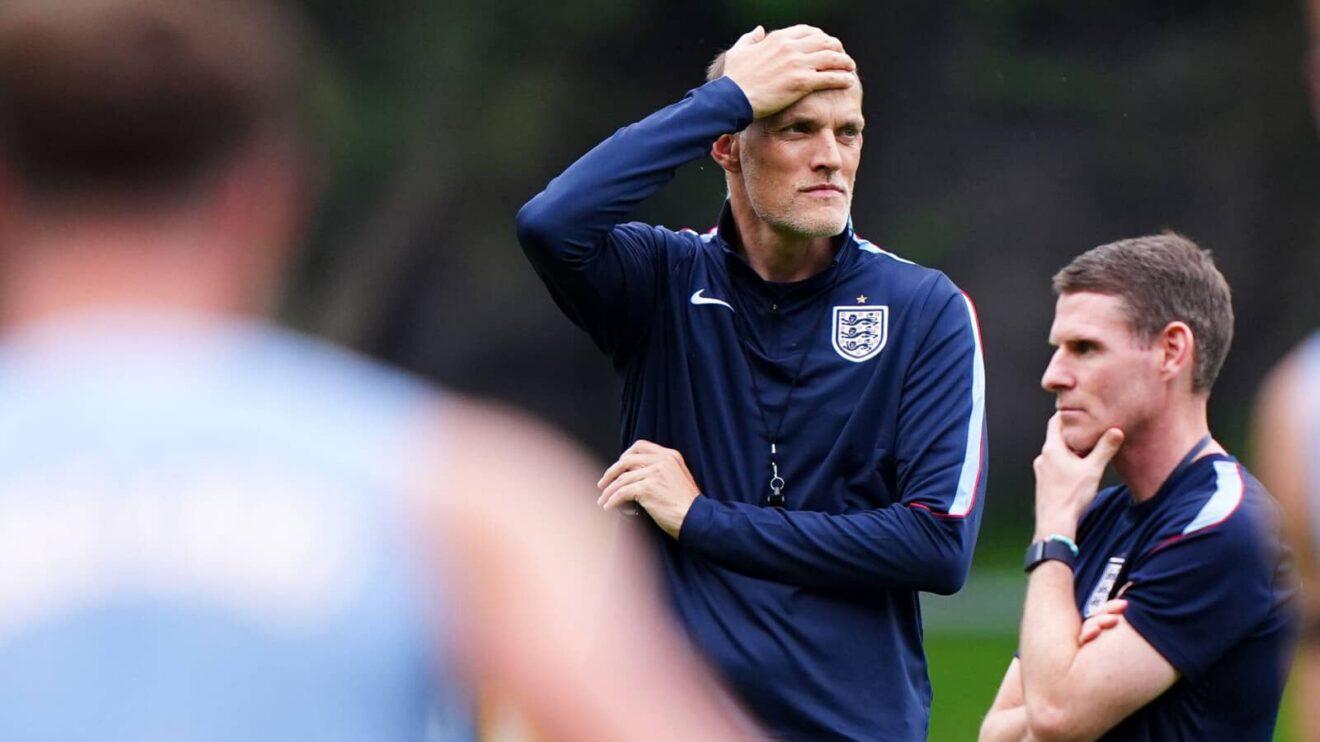
The air at the Azteca Stadium does not announce itself with drama. It arrives quietly — a thinner pull on each breath, a fractional delay in recovery between sprints, a subtle pressure behind the eyes that lingers long after the whistle. For Thomas Tuchel and England, that quiet pressure has already become the most tangible opponent before Monday's World Cup last-16 meeting with Mexico.
England touched down in Mexico City on Friday evening with barely a window to acclimatise. The fixture sits roughly 7,200 feet above sea level — high enough to alter oxygen uptake, heart rate and hydration patterns without changing a single tactical instruction on the whiteboard. Tuchel did not dress the issue up. He admitted he had felt a slight headache since arriving, slept a little worse than usual, and watched his squad register the same early-session heaviness that altitude routinely inflicts on visiting teams.
The Physics England Cannot Shortcut
At elevation, atmospheric pressure drops and the air carries less oxygen per breath. The body compensates almost immediately: pulse climbs, breathing shallows, sweat evaporates faster, and muscular fatigue arrives earlier than the clock suggests. Sports science calls it hypoxic stress. On a training pitch in Mexico City, it feels like running through gauze.
Tuchel was blunt about the timeline. "We feel it even if we don't train," he said. "I felt a slight headache through the day, for example. I didn't sleep as well as the days before, but nothing you cannot handle and that you cannot adapt."
That last clause matters. England cannot fully physiologically adapt in one or two days. Full acclimatisation typically demands weeks. What Tuchel can manage is exposure, hydration, pacing in training and match rhythm — the practical layer beneath the science.
His players felt the effect within the opening minutes of their first session, then settled as the work lengthened. That arc — sharp discomfort, gradual coping — is exactly the pattern Mexico have learned to weaponise across this tournament.
Mexico's Built-In Advantage
Mexico arrive at this stage without conceding a single goal at the World Cup. All four of their group and knockout ties have been staged at altitude: three at the Azteca and one in Guadalajara. They have lived inside this environment for weeks, training, sleeping and competing where oxygen is scarce and the first quarter-hour of play can feel like a separate sport.
Tuchel sees that rhythm clearly. "It is not a coincidence Mexico starts their matches strong and aggressively," he noted. "The first 15 to 20 minutes maybe the tougher. Once we overcome that, I think we are in a good place."
The observation aligns with what the data already hints at. In their World Cup 2026 opener, Mexico posted 15 shots and controlled enough of the transition moments to leave with a 2-0 win despite only 43% possession and a modest three shots on target. They do not need to monopolise the ball to dominate the feel of a game — they need to strike when visiting legs are still negotiating the air.
England, ranked fourth in the FIFA standings with 1,825.97 points, carry a different profile into the tie. Their recent World Cup performances underline a team comfortable dictating tempo: 60% possession and 517 passes completed at 91% accuracy in one group-stage win, 67% possession and 557 passes in another. Tuchel's side want the ball to do the heavy lifting. At altitude, that ambition collides with biology unless the opening phase is handled with discipline.
Reading the Opening Quarter
The tactical subtext is straightforward. Mexico will likely press high and run hard early, forcing England to defend transitions before lungs and legs find a sustainable rhythm. England's task is to survive that spell without conceding the kind of early goal that would let the hosts sit deeper and compress space.
Tuchel sounded confident once that bridge is crossed. "The players are kind of adapted — you know about the situation," he said. "We will take care of what we need to take care of. We need a strong performance and I feel we will have one."
There is a psychological thread here too. England's recent international results under Tuchel have leaned on control — multiple 0-0 draws in Nations League fixtures this autumn, followed by World Cup wins built on structured possession and selective verticality. The team know how to manage risk. Against Mexico, risk management begins with breath, not formation.
Mexico, 15th in the FIFA rankings after climbing one place on 1,681.03 points, will not apologise for the setting. The Azteca has always been more than a venue; it is part of the contest. England's preparation window may be narrow, but Tuchel's staff can still calibrate hydration protocols, session intensity and recovery blocks to limit the worst of the altitude shock.
Team News: James Assessed, Quansah Clears the Path
Selection adds another layer to the eve-of-match picture. Reece James missed England's final training session before the Mexico tie, and Tuchel confirmed the right-back would require a late fitness assessment before any decision on whether he can even make the substitutes' bench.
James remains one of England's most influential outlets when fully mobile — his crossing range, restart quality and ability to defend one-v-one give Tuchel vertical width that few alternatives replicate. Losing him, even as a starter, would ripple through the balance of the back line and the aggression of the right channel.
There was brighter news elsewhere. Jarell Quansah returned to full training after shaking off the hamstring problem that restricted him in the final group game against Panama. His availability restores depth at centre-back and offers Tuchel flexibility if he chooses to reshape the defensive line or manage minutes for players carrying knocks.
The contrast is familiar: one door narrowing on the eve of a knockout tie, another opening just in time. In a match where the first 20 minutes may decide emotional control as much as tactical shape, having trusted defenders ready could prove as valuable as any altitude briefing.
What Monday Demands
Strip away the headlines and the last-16 label still reduces to a few hard truths. England must absorb Mexico's early energy without panic. They must keep hydration and tempo aligned so passing sequences do not become survival clearances. And they must treat altitude not as an excuse but as a variable — one Mexico have already folded into their identity at this World Cup.
Tuchel's headache may be literal, but his messaging stayed composed. England cannot rewrite geography in 48 hours. They can, however, control how they start, how they breathe through the opening storm and whether they impose their possession game once the air stops feeling quite so thin.
At the Azteca, the ball will still bend and spin the same way. The touch on the pass, the timing of the press, the recovery run after a lost duel — those are the details Tuchel trusts. Mexico have home soil and altitude. England have rank, structure and a coach who already knows where the pain begins, and when it might fade.