




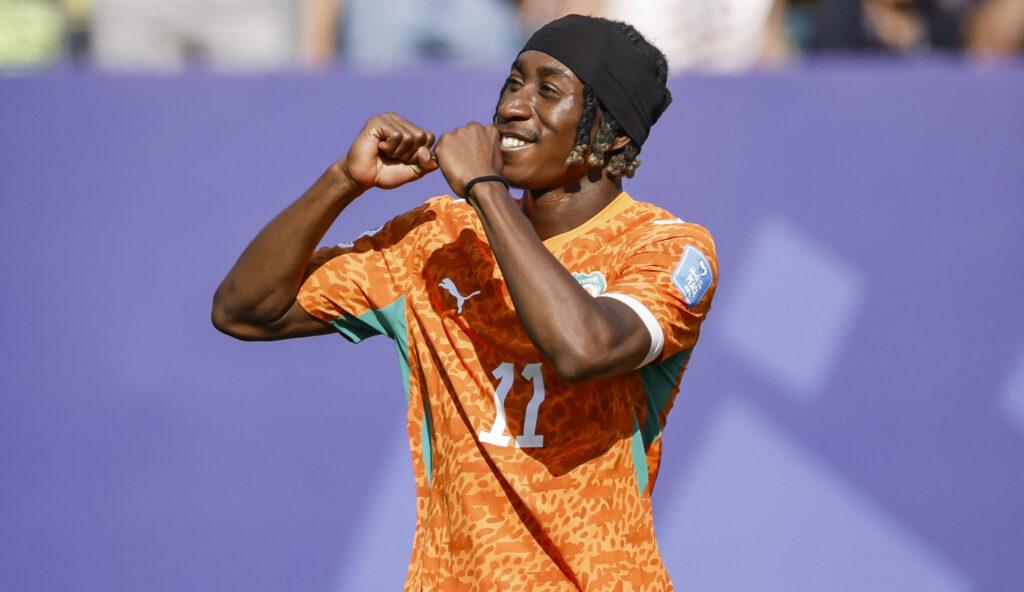
Yann Diodiamande’s 2026 World Cup has a clear through-line: he keeps driving forward with the ball, creating chances, and beating defenders one-on-one. The numbers don’t lie—so far, he is the only player in this tournament to cross all three thresholds. This isn’t hype; it’s a fact on the data map.
A Rare World Cup “Triple”
More than 15 progressive carries, more than 10 key passes, and more than 10 successful dribbles—each metric has players who meet it, a few can claim two, but at the intersection of all three, only Diodiamande stands alone for now.
This combination matters because it covers three phases of attack: progression carries the ball into more dangerous areas, key passes turn build-up into shots, and dribbles shift defensive spacing in live space. When a winger delivers across all three areas, the team becomes harder to read; defenders must decide which fire to put out first.
Progressive Carries: Turning Clearances into Platforms
Progressive carries measure how often a player brings the ball into more threatening zones. Breaking the 15 mark at World Cup level signals real ball-carrying responsibility and trust from teammates—the ability to escape pressure and find space between lines. Few wide players combine volume with consistent gains.
For Ivory Coast, every forward carry carries tactical value: clearances are converted into attacking platforms, midfielders can push up, and full-backs have time to overlap. The finish still depends on the final pass or shot, but repeated forward bursts set the stage first. On-site data shows the team’s FIFA ranking has risen to 34th (up three places from the previous update), and in the World Cup group stage they have also had high-control matches with 63% possession and 89% pass success—in games like these, wide progression is often the first link in breaking the deadlock.
Key Passes: Not Just a Runner, but the Final Passer Too
10+ key passes show vision and timing that hold up at World Cup level—it is the final pass before a shot, rewarding players who split open a shape with the right weight on the ball. Diomande’s numbers show he is not just a runner; he is also a reliable outlet in the attacking third.
That means the team no longer needs a dedicated “pure playmaker”: he can carry the ball and, after making runs, find the striker. Overcommit to shutting down the flanks and an inward cut with a diagonal pass will punish you; pack the middle and an early through ball can still break the structure. The scale of the numbers points to a steady flow of chances, not a one-day spike.
10+ successful dribbles are the bluntest footnote in one-on-one duels—they show defenders being beaten again and again in real duel space. It stretches the back line, drags out the holding midfielder, and creates better second-ball areas after tackles.
If a winger excels at only one of these, opponents can narrow in on it; with all three in place, defenses are forced into trade-offs: track the dribbling line and the center opens; shift to cover the cut inside and the flank gets hit over and over. That is what “one of a kind” means at the tactical level.
World Cup has always been the test of whether players can bring club habits to the big stage. What Diomande has delivered so far is a rare “full-function wide” sample: progression, creation, and breakthrough stacked on one player, each hitting tournament-level thresholds.
For a side like Ivory Coast, having a winger who can produce across all three attacking phases means the tactical board can stay simpler—no need to choose between a “pace type” and a “playmaker is still unfolding; finishing efficiency, knockout pressure, and how minutes and energy are managed will further test whether this data holds up—but at least for now, the intersection on the data map still has only one name on it.