











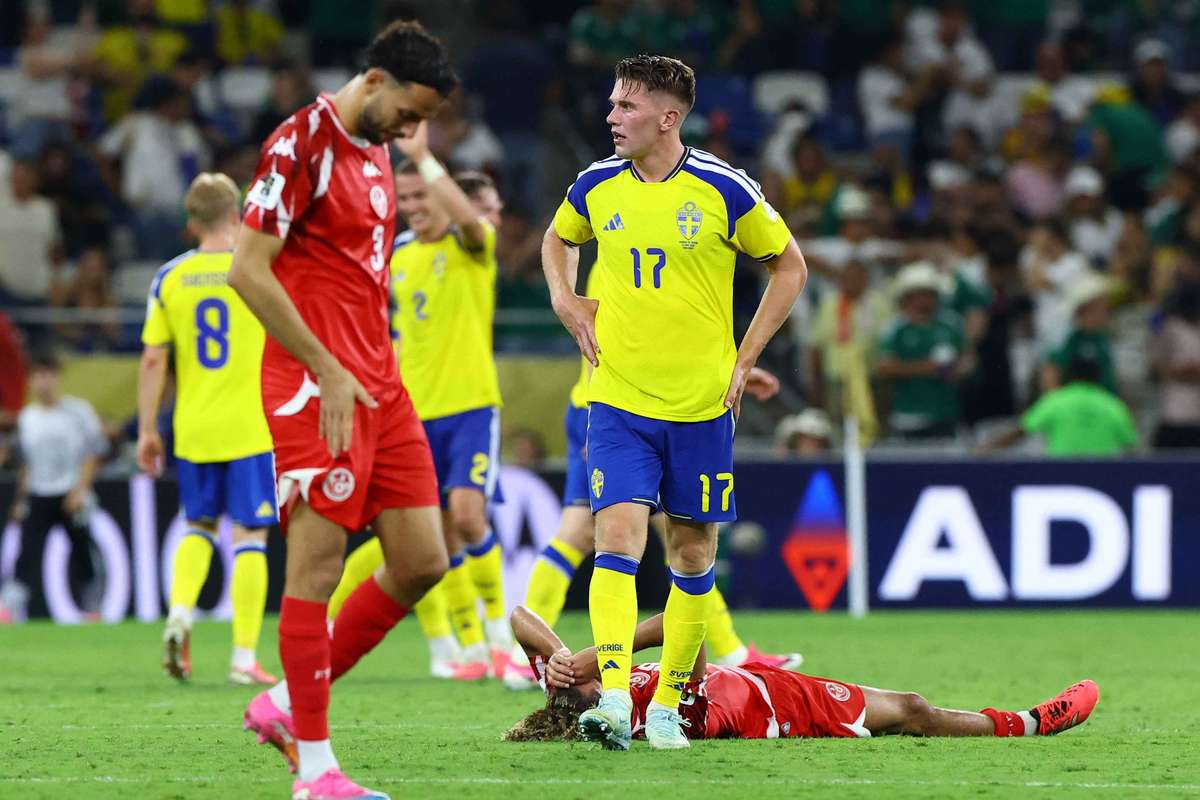
Monterrey, Mexico — Sweden opened their World Cup Group F campaign with a 5-1 rout of Tunisia. Yasin Ayari and Alexander Isak scored two goals apiece, while Viktor Gyökeres and substitute Mattias Svanberg also got on the scoresheet; Tunisia pulled one back through Omar Rekik's header. After the match, the two managers struck markedly different tones — one conceding a disastrous start, the other sensing their front-line chemistry was coming together.
Monterrey Under the Lights: Sweden Take All Three with Five Goals
According to our on-the-ground reporting, the match kicked off at Estadio Monterrey. Sweden lined up in a 3-1-4-2, with Tunisia responding in a low-block 5-3-2. In the first half, Ayari broke the deadlock with a long-range strike — the midfielder's father was born in Tunisia, lending his goal an added layer of nuance. Isak then doubled the lead off a Gyökeres assist, leaving the North African side on the back foot.
Before the restart, Tunisia briefly regained their footing. Hannibal Mejbri delivered a pinpoint cross, and Rekik headed home for his first international goal, pulling the score back to 2-1. But Sweden seized complete control after the break: Isak and Gyökeres combined again to extend the lead, Svanberg widened the gap shortly after coming off the bench, and Ayari added a late goal to put the result beyond doubt.
By the Numbers: Similar Possession, Huge Efficiency Gap
From a technical standpoint, possession was split almost evenly at 49% to 51%, with both sides posting identical pass completion rates of 79%—the match hardly looked like a one-sided affair on paper. The real dividing line was conversion efficiency: Sweden managed 13 shots, seven on target, and five goals; Tunisia mustered six attempts, two on frame, and just one goal. Corners finished 4-2, fouls 10-8, with Tunisia picking up one extra yellow card. For two sides targeting group-stage qualification, this gap between “close numbers, lopsided result” often points to systemic flaws in defensive organization and clutch-moment decision-making.
Against the pre-match backdrop, Sweden’s FIFA ranking had risen to 38th, up four places from the previous list; Tunisia sat 44th, having also climbed three spots. Both teams had produced a string of 0-0 draws in recent qualifying—an attacking “stalemate habit” that stood in sharp contrast to the scoreline here. Sweden’s emphatic win showed their front line now has genuine World Cup-caliber firepower.
Lamouchi: Too Many Errors, Opening Rout Hard to Stomach
When the final whistle blew, Tunisia head coach Sabri Lamouchi did not duck the scale of the defeat. He said afterwards that starting a major tournament with such a rout was “very difficult and very painful.” In his view, once his side kept making mistakes against Sweden’s two world-class strikers, clawing their way back became almost impossible: “We made too many mistakes. We have to react and show a better image.”
Breaking it down from a risk-management angle, Tunisia’s issues were not isolated errors but repeated disconnects between defensive positioning and ball distribution early on—space that Sweden’s front pairing exploited again and again. With only three group games, conceding five in the opener sharply narrows the margin for error in every match that follows. Next up is Japan, and the North Africans must cut out basic mistakes while rediscovering the discipline they showed when holding Denmark to a draw at the 2022 Qatar World Cup.
Potter: Strike Force in Sync, but Side Far From Flawless
Sweden head coach Graham Potter directed praise toward individual players, especially Isak and Gyökeres. He said plainly that both possess elite individual ability, but “it’s when they combine that they truly become a threat,” and they will only get better as they play more matches together. Potter also kept his composure: Sweden started in good control, but the overall operation is still not perfect—the front line needs the entire team to supply support.
That assessment makes for an interesting contrast with the scoreline—a 5-1 rout is a big win, but it does not mean the tactical system is fully polished. Group F still has tough opponents such as Japan ahead, and if Sweden want to go further on the World Cup stage, midfield control and stability in defensive transitions will be metrics worth monitoring more closely than goals in a single match.
Qualification Picture: Tunisia’s Seventh World Cup in Seven Tournaments, Still Yet to Break the Group-Stage Curse
After this match, Sweden claimed an opening victory in Group F, establishing dual advantages in points and goal difference for the competition ahead. For Tunisia, this marks the country’s seventh World Cup finals appearance (1978, 1998, 2002, 2006, 2018, 2022, and 2026)—yet they have never advanced from the group stage—and that curse looks even more glaring after this result.
Worth remembering, Tunisia remain the first African and Arab nation to win a match at the World Cup finals. At the 2022 Qatar tournament, they drew with Denmark and lost to Australia by a single goal, showing fierce resilience. The core tension now is that past glory cannot be converted into current points. The second group match against Japan is imminent, and the “must react” that Lamouchi spoke of leaves little room for trial and error.
On the Ground: Two Lines of Risk Behind the Rout
For Sweden, the biggest takeaway from this match is not just the three points and a plus-four goal difference, but confirmation of Gyökeres and Isak’s complementary qualities under high-pressure tournament football—Gyökeres linking play, Isak finishing—with substitute Svanberg also ready to slot in seamlessly. But the back line showed signs of loosening during Tunisia’s fightback; against faster opponents with sharper passing and movement, similar gaps could be exposed.
For Tunisia, the stakes are even more urgent: a heavy defeat in the opener not only dented morale but also means a goal-difference deficit could follow them through the entire group stage. With Japan up next, the team must strike a new balance between tactical discipline and attacking efficiency—otherwise, the familiar script of a seventh consecutive World Cup appearance ending in another group-stage exit could be written early at the 2026 tournament jointly hosted by the United States, Canada and Mexico.