















Mexico have faced South Korea three times on the World Cup stage and won all three. In 1998, 2018 and 2026, the scorelines and flow of play were different each time, but one thread has never broken: the green shirts are better at turning chances into goals. Our reporters on the ground break down all three meetings and compare the latest rankings and 2026 group-stage data for both sides to see why this perfect run is still going.
1998: Hernández Alone Changed the Course
South Korea started stronger in Lyon. Seok-ju Ha drew first blood in the 28th minute, and the hosts briefly raised the tempo. After the break, Ricardo Peláez levelled in the 51st minute and the match opened into an end-to-end contest. What decided it was Luis Hernández — two goals in the 74th and 84th minutes turned a 1-1 draw into a 3-1 win.
By the numbers, Mexico had 58% possession, 25 shots to Korea's seven, seven corners to two, 505 completed passes to 373, and created four clear-cut chances. Korea's goalkeeper made six saves; Mexico's needed only one. Hernández had seven shots and two key passes, making him the undisputed focal point in attack. For Korea, it was the first time they had been undone by a late surge in World Cup history against Mexico; for El Tri's forwards, it set the template of hitting Korea harder in the closing stages.
2018: Controlling the Game, Changing the Tempo — Javier Hernández Takes Over
Twenty years on, Rostov hosted another clash between these two sides—new faces, same underlying story. Carlos Vela converted a penalty to open the scoring in the 26th minute, Javier Hernández extended the lead on the counter in the 66th minute, and Son Heung-min scored a consolation in stoppage time. South Korea attempted 16 shots to Mexico's 13, but created zero clear-cut chances to Mexico's three; Mexico still controlled 58% of possession and completed passes more steadily, 458 to 332.
This was more like a textbook lesson in efficient football: South Korea could rack up attempts, while Mexico concentrated their threat on transitions and set pieces. Vela and Chicharito embodied a new breed of forwards, their roles stretching from the in-the-box finisher archetype of Hernández in 1998 to a dual nucleus built on penalties and fast breaks on the counter. Son was already South Korea's attacking figurehead by then, yet in this direct World Cup showdown he once again showed that individual brilliance cannot offset an opponent's ruthlessness in converting clear-cut chances.
2026: Control Without the Win—The Pattern Holds
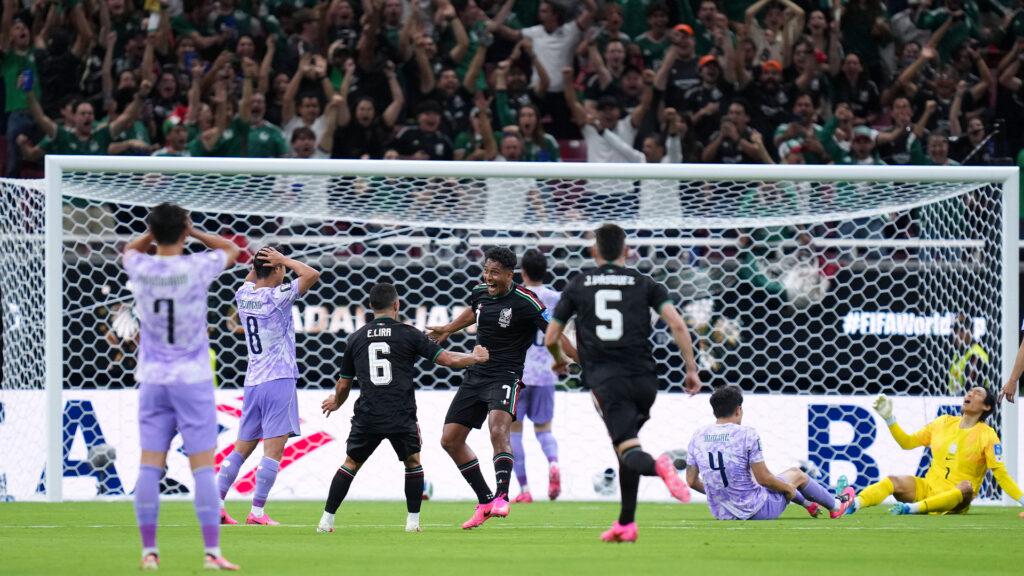
In the group stage of this FIFA World Cup across the United States, Canada and Mexico, the two sides met for a third time on the global stage. According to this site's database, South Korea deployed a 3-4-2-1 with 58% possession, nine shots and two on target, 579 passes at an 84% success rate; Mexico lined up in a more pragmatic 4-3-3, held just 42% of the ball but put four shots on target, and ultimately won 1–0. It was the familiar script: South Korea seeing more of the ball, Mexico proving deadlier.
As one of the host nations, Mexico entered without needing to navigate qualifying, with home scheduling and fan support already setting this apart; South Korea arrived with their ranking in flux—currently 25th in the FIFA rankings, three places down from the previous list at 1588.66 points; Mexico sit 15th, up one spot at 1681.03. A one-goal win is hardly enough to define an entire tournament, but it was enough to extend Mexico's perfect World Cup record against South Korea to three wins from three—a 100% success rate.
Evolution: From Individual Spark to Systemic Efficiency
If viewed through the lens of player development, Mexico's three wins were not the same personnel repeating their success, but different generations of forwards completing a changing of the guard against the same opponent: in 1998, Hernández defined "super-sub finishing" with a 30-minute brace; in 2018, Vela and Javier Hernández wrote penalties and quick counter-attacks into their DNA; and in 2026, with less possession, they secured points at minimum cost through the quality of their shots on target. On the Korea side, from Seok-ju Ha's early lead to Son Heung-min's stoppage-time goal to higher possession in 2026 yet an inability to break the deadlock, the question was not whether they could attack, but whether they could create and convert clear-cut chances in the key areas.
What to Watch Next
For Mexico, this World Cup record against Korea is both a psychological asset and a source of pressure—as the host, they must prove in every match that their efficiency edge is no fluke. For Korea, a slide in the FIFA rankings and failing to take points against Mexico in successive World Cups will push the next cycle to invest more heavily in young finishers. Should the two meet again on the 2026 knockout path, Korea will need more than possession—they must convert shot volume into clear-cut chances on the level of 1998 and 2018; Mexico, meanwhile, must continue to show that on the World Cup stage, El Tri still commands a premium that the raw data does not fully reflect.