















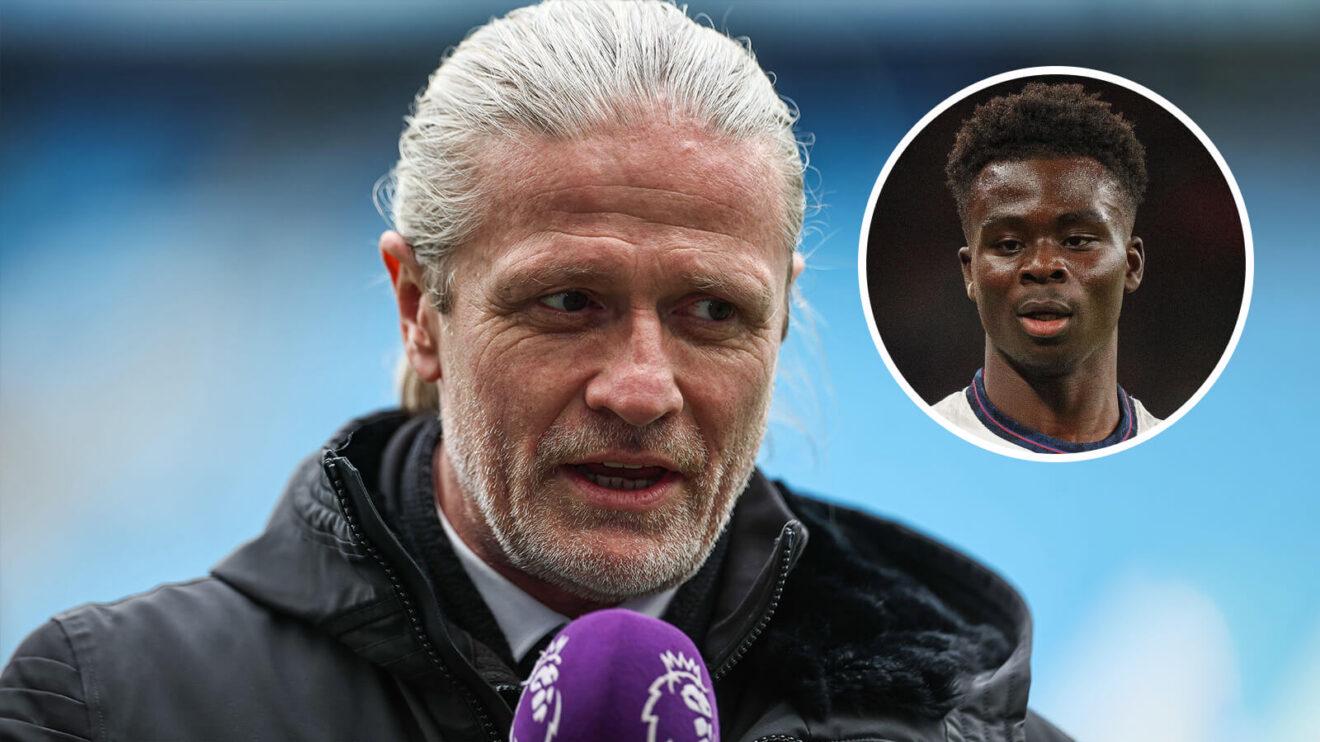
French World Cup winner and Arsenal legend Emmanuel Petit said publicly recently that even though England’s squad for the World Cup includes four Gunners, he does not believe Bukayo Saka “deserves” a place in the starting XI. With the World Cup approaching and the Three Lions still holding steady at No. 4 in the FIFA rankings, those remarks have put the spotlight squarely on whether Saka should remain England’s key attacking outlet on the right.
Four Gunners Head to North America with Premier League Title in Tow
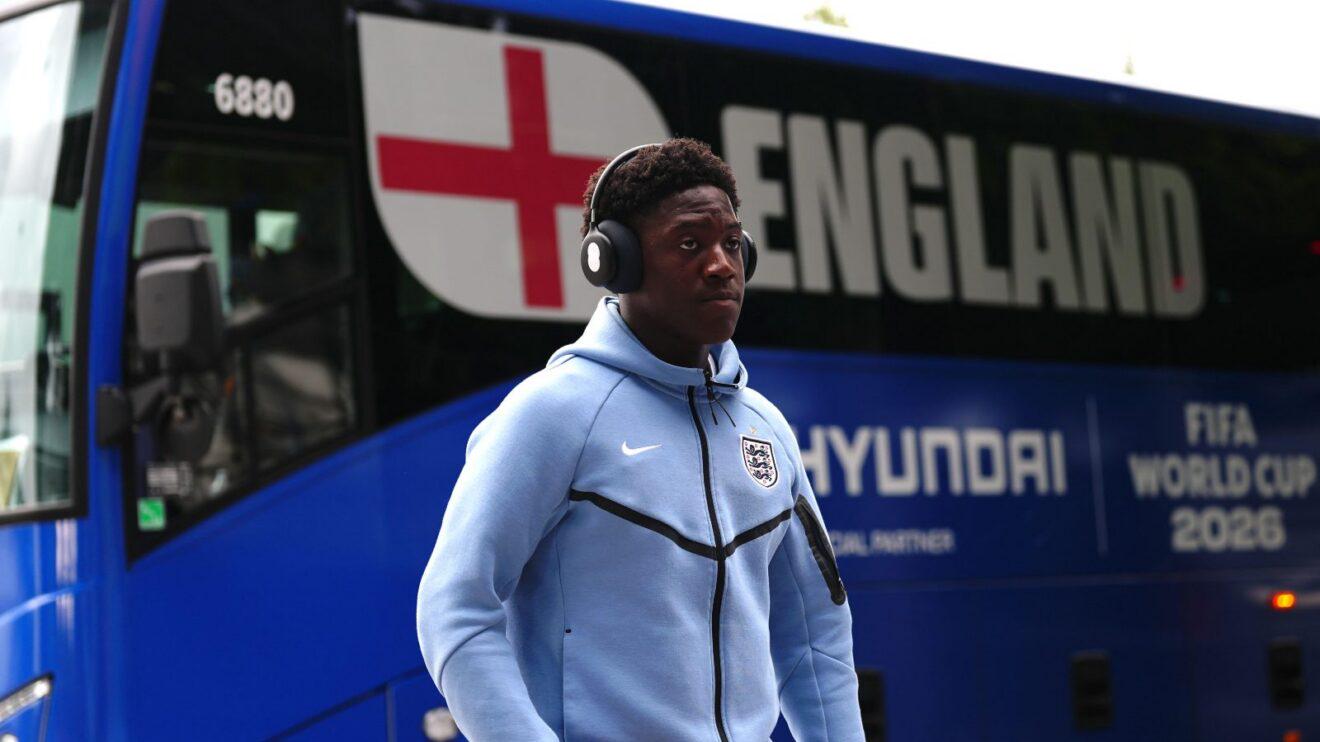
According to information available to us, four Arsenal players—Saka, Declan Rice, Eberechi Eze and Noni Madueke—will travel with England to the 2026 World Cup, jointly hosted by the United States, Canada and Mexico. If all goes to plan, they could be chasing football’s ultimate prize again just two months after lifting the Premier League trophy. Saka and Rice are widely expected to remain the most secure picks in England’s starting lineup if they are fit; Petit’s criticism cuts straight to the most sensitive part of that presumed selection.
Why the Arsenal Legend Has Turned His Fire on Saka
Pires said in an interview that although he is a "super fan" of Saka, he "has to be honest": Saka did not end Arsenal's season in convincing form, something that was laid bare above all in the Champions League final. "He no longer produces the decisive impact he once did, and I think there are others in the starting lineup who are more deserving of trust." He went even further, saying that if he were Saka's teammate, he "would not understand why he still has his place locked down"—because in Pires's view, England's attack and attacking midfield "still have far too many stronger and more gifted players."
Champions League Final: 83 Minutes and the Lowest Rating
Pires's case is not empty criticism. Saka played 83 minutes in that Champions League final, yet was the lowest-rated starter in the squad—6.1, 0.4 points below Mosquera and Lewis-Skelly, who also featured. For a winger known for dribbling, cutting inside and the final pass, going "invisible" on the biggest stage is enough to make any sharp observer wonder: when England need to break down compact defences in World Cup knockout ties, can Saka reproduce his three goals and one assist from Qatar 2022?
Form Curve: Last Four Outings vs May Highlights
Zoom in on the numbers and Saka has scored just one goal with zero assists in his last four appearances across all competitions, including a World Cup warm-up for England against Costa Rica in which he came on for only 28 minutes of extra time. That stands in stark contrast to his burst in May—two goals and two assists in four games, including the crucial strike against Atlético Madrid in the second leg of the Champions League semi-finals. What Pires has seized on is precisely the gap between a "short-term slump" and "long-term pedigree in big games."
Big-Tournament Pedigree Remains Saka's Ace in the Hole
However, if you focus only on his most recent run of games, it is easy to overlook Saka's track record on the biggest stage: at the last World Cup, he contributed three goals and one assist; at the European Championship, he registered an assist in the group stage and scored again in the quarter-finals. For a 24-year-old winger with 49 international caps and experience across three major tournaments, that kind of "big-game résumé" is not easily erased. Exactly who the "more talented alternative" Pett has in mind remains unnamed—leaving England's head coach room to manoeuvre tactically when it comes to the final 26-man squad and starting selections.
Three Lions' Right Flank: Problems, Pressure and What to Watch
\n
From a tactical standpoint, Pett's criticism touches on a real issue: in England's 4-2-3-1 system, the right side must provide width while also linking with Rice and Eze in the half-spaces; if Saka cannot consistently pose a threat, the attack's vertical progression suffers. Site data shows that England once deployed a 4-2-3-1 in a 2026-season fixture, controlling 81% of possession, taking 28 shots and winning with three goals—that was the template when the system clicked, and it underscores how individual form can raise the collective ceiling.
The pressure is clear: the World Cup schedule is unforgiving, and knockout football is never simple arithmetic of "whoever has the bigger name starts." Pett's broadside is less a verdict than a mirror, pressing the question of whether Saka can rediscover his semi-final-calibre form from May across North America's varied climates and pitches. For Rice, Eze and Madueke, whether Arsenal's quartet can go from "Premier League-winning teammates" to "World Cup-winning teammates" hinges largely on whether Saka can answer the moment when it matters.
What to Watch Next
Our correspondent reports that England’s pre-World Cup international break will remain focused on building cohesion and assessing personnel; whether Saka can produce assists and dribbling numbers again in upcoming friendlies will go a long way toward answering Petit’s criticism. For fans, what truly matters is not the war of words itself, but who will serve as the Three Lions’ primary attacking outlet on the right in high-pressure knockout football—and that may tell us more about England’s title aspirations at the 2026 World Cup than any pundit soundbite.