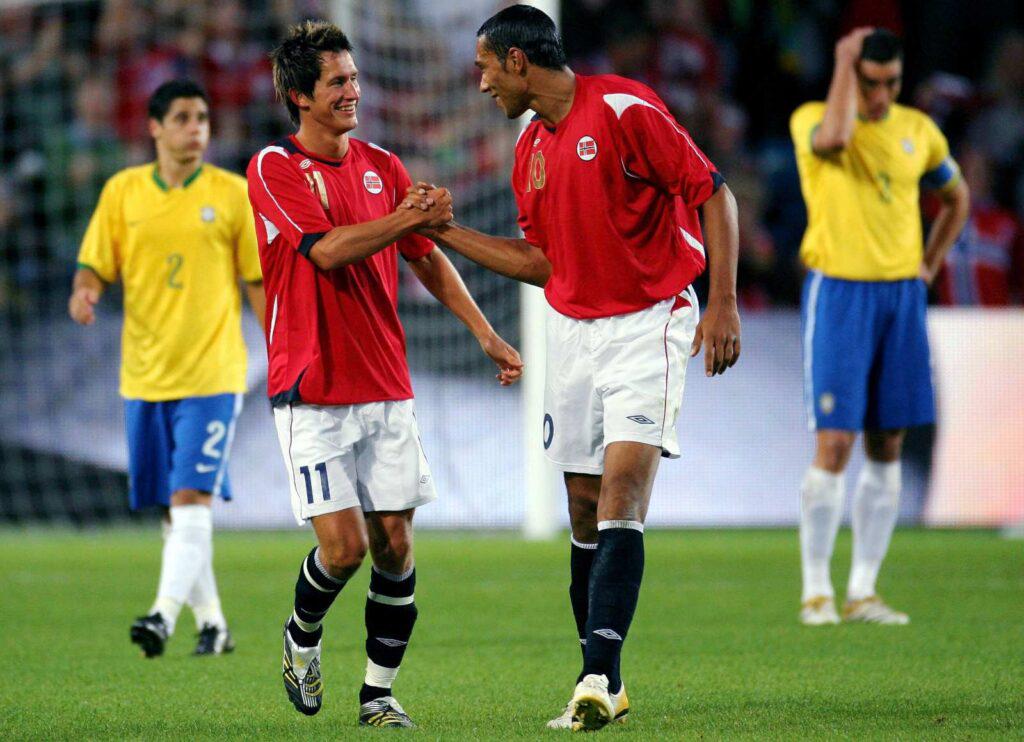

















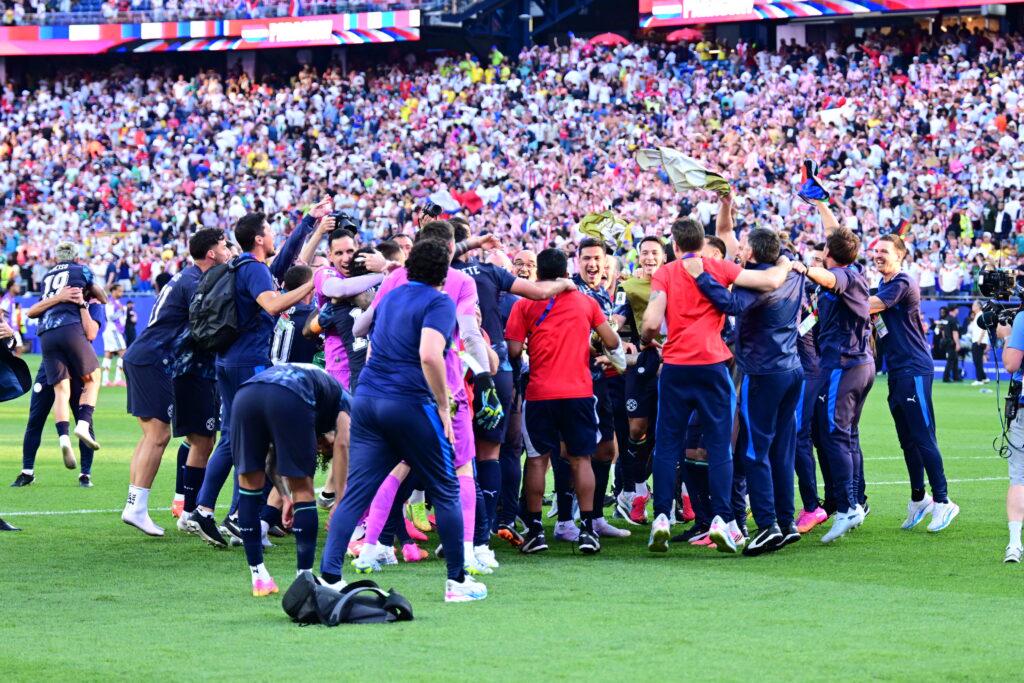
The Round of 16 knockout at the 2026 World Cup opened at Gillette Stadium in Foxborough, where Paraguay and Germany finished 1-1 after 120 minutes of hard-fought play before Paraguay won 4-3 on penalties to advance to the next round. Nearly 64,000 fans in attendance witnessed a classic knockout in which possession dominated the stats but the team with less of the ball had the last laugh.
How the match unfolded: Paraguay strike on the counter, Germany level before a stalemate
Paraguay broke the deadlock in the 42nd minute of the first half. Enciso finished after a pass from Galarza, scoring against the run of play as Germany pushed forward — a textbook counter-attacking goal that showed Paraguay were happy to surrender possession and instead look for space for that final pass and shot before the opposition had fully settled into shape.
Less than 10 minutes into the second half, Germany answered with a flowing move. Wirtz created the chance and Havertz finished to make it 1-1. From there it became a grind: Germany kept applying pressure in the box, while Paraguay held their line together with blocks, clearances and aerial duels. Nothing changed in extra time, so penalties decided it.
Penalty shootout mind games: the keepers made the difference
The shootout was dramatic from the first kick. Paraguay goalkeeper Gil saved Havertz’s opening penalty to give his side a psychological edge. After that, both teams traded successful spot kicks: for Paraguay, Gómez and Galarza converted; for Germany, Kimmich, Musiala and others kept them in it.
The turning point came in the middle of the shootout—Woltemade's penalty was denied again by Gill, and Sanabria's shot went wide of the frame, leaving Germany with a glimmer of hope. After Amiri converted, Neuer saved Valbuena's penalty, keeping the suspense alive until the final round. Tah's shot went wide for Germany, and Canale delivered the decisive blow as Paraguay advanced 4-3.
From a training perspective: penalty shootouts are not a matter of "luck"
On the surface, a penalty shootout looks like a game of probability; in reality, it is a contest of mental control and routine execution. Gill's consecutive saves show that he studied video of Germany's penalty order before the match and remained patient in his positioning on the goal line. On Germany's side, after the first penalty was saved, the following takers showed clear hesitation in their run-up rhythm—a classic sign of technical breakdown under pressure.
The tactical logic behind the numbers: possession ≠ threat
Looking at the full-match technical statistics, Germany achieved textbook-level control: 799 passes at a 90% success rate, 75% possession, 21 shots, 16 corners, and 127 entries into the final third. Yet their expected goals (xG) stood at just 1.49, with only two clear-cut chances—meaning much of their possession stayed in "safe areas" and never truly broke down Paraguay's defensive structure.
Paraguay's defensive system: compressing the space between the lines
Paraguay used a compact shape, deliberately narrowing the gap between midfield and the back line, forcing Germany to switch play wide before going for long balls or crosses. The numbers tell the story: Germany attempted 56 crosses with only an 18% success rate, and just 10 found a teammate; they took 10 shots from outside the box, with eight blocked. Germany had 41 touches inside the penalty area to Paraguay's 13, but many of their attacks ended in crowded areas, lacking a clear final pass.
Germany's Problem: Width Without Depth
Kimmich completed 141 passes with 129 successful for a pass accuracy of over 91%, but only 1 of 16 crosses found its target — after creating width out wide, Germany lacked the off-the-ball runs to attack the half-spaces or arrive in the box. This ties directly to Paraguay's man-marking coordination when switching between 5-4-1 and 4-4-2: whenever Germany played the ball wide, Paraguay's full-backs and midfielders recovered in sync, compressing the "wide" shape back into a "narrow" one.
Knockout Lesson: Elimination Football Is Not League Football
Paraguay took 7 shots with 3 on target, held 25% possession, and completed 257 passes — trailing across every core metric, yet pulled off an upset through more efficient finishing and a psychological edge in the penalty shootout. For Germany, this is another warning for possession-based football in the knockout stage: when an opponent cedes the midfield battle and organizes defensively to perfection, possession alone no longer equals winning probability.
By FIFA ranking, Germany sit 10th and Paraguay 40th, a clear gap on paper. But the nature of World Cup knockouts is that over 120 minutes, if you hold your structure and seize one counterattack, you can drag the match into a phase decided by psychology and fine margins. Paraguay did; Germany did not.