






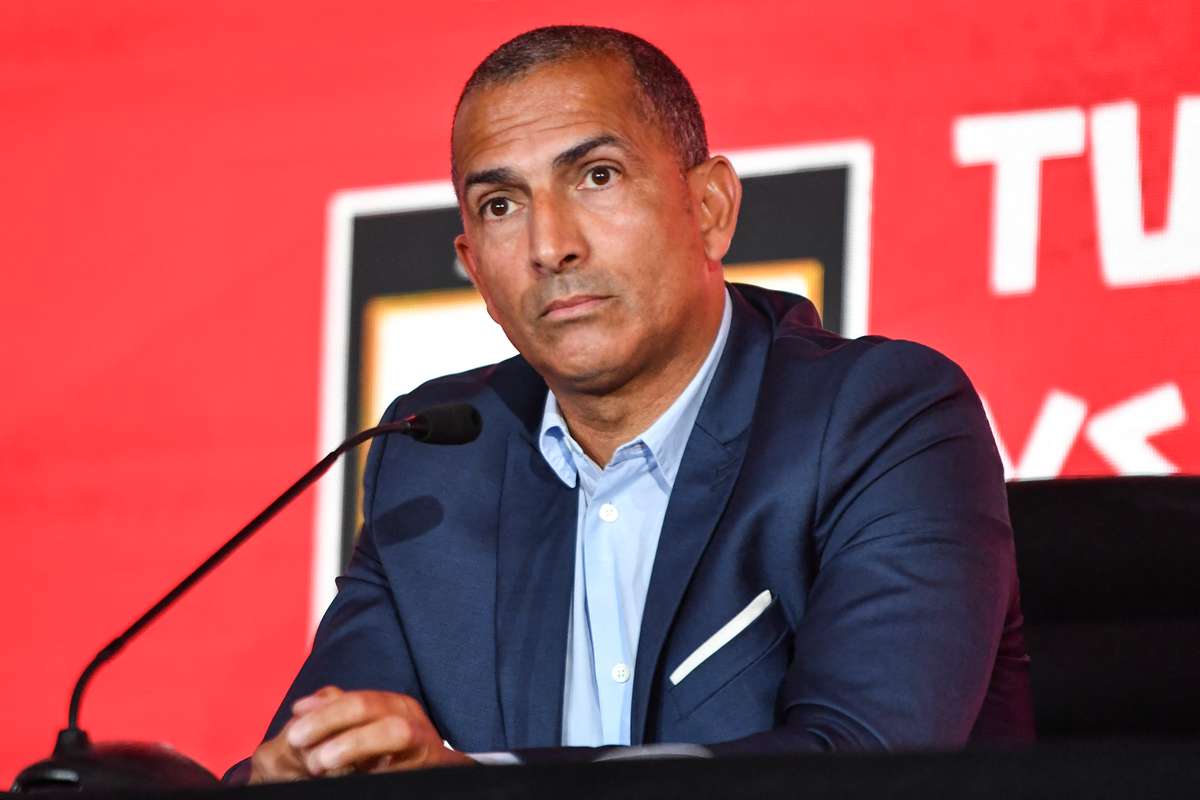
Tunisia head coach Sabri Lamouchi, in an interview with FIFA, set the core objective for Tunisia (the Eagles of Carthage) at the 2026 World Cup: reaching the knockout stage for the first time in the nation's history. He also made clear that winning the title is not a realistic option—the team must give everything they have, stay in the tournament as long as possible, and leave with no regrets.
Seven appearances, knockout stage still a blank
The Eagles of Carthage have qualified for the World Cup seven times (1978, 1998, 2002, 2006, 2018, 2022 and 2026), yet have never advanced beyond the group stage. African football already has precedents of Cameroon reaching the quarter-finals and Morocco making the semi-finals, while Tunisia is still waiting for its knockout-stage debut.
In 1978, they became the first African team to win a World Cup match, and the first Arab team to do so as well: a 3-1 victory over Mexico and a 0-0 draw with defending champions West Germany. At Russia 2018, a 2-1 win over Panama gave them their second World Cup victory in team history. At Qatar 2022, they pulled off a 1-0 upset against France, but still failed to advance—Lamouchi uses this to remind the squad that the World Cup is never easy.
Group F opponents: ranking gaps and the path to advancement
In 2026, Tunisia were drawn into Group F alongside the Netherlands, Japan, and Sweden. According to the site's latest FIFA rankings, France lead at No. 1, the Netherlands are seventh, Japan 18th, Sweden 38th, and Tunisia 44th — on paper the weakest of the four, though rankings only reflect the norm; one upset in the group stage can reshape the entire picture.
When asked about the possibility of reaching the knockout stage for the first time, Lamouchi replied: "That's everyone's goal, but between having a goal and being fully prepared to achieve it, there are stages — and there are opponents." He told his players they cannot expect to win every match, yet must fight selflessly for the team from the opening whistle, "to give ourselves a little more of a chance." He believes that if they secure "one or two good results," confidence among the young players will rise across the board — "They're not far from taking the next step; we have to help them cross that line."
Pragmatic aim: not to win the title, but to fight to the final whistle
On talk of lifting the trophy, Lamouchi did not sugarcoat it: "If we're honest with ourselves and not putting on false modesty, we have no chance of winning this tournament." The strategy is therefore clear: go out with determination and belief, let intensity back up the performance, and try to "stay as long as possible," leaving with no regrets and pride in the level shown — "That pride comes from the hard work beforehand, executing the plan, and the players taking everything on board."
From the schedule, multiple opening group fixtures for the 2026 World Cup have already been logged on the site (with several matches kicking off between 12 and 20 July, all currently listed as 0-0 and not yet played); Tunisia's exact opener will be confirmed once the official fixture list is updated. For supporters, the three group games in Group F will be the first test of Lamouchi's approach of "grab points first, then build confidence."
Editor's view: the halo of history and the job at hand
Tunisia's edge lies not in its ranking but in its status as a pioneer in World Cup lore—the breakthrough of 1978 is still invoked time and again, serving as both a source of confidence and a burden. Group F has no France, yet it features traditional European powerhouse the Netherlands, top Asian side Japan, and physically imposing Sweden; for Tunisia, ranked 44th, a realistic path out of the group still lies in securing at least one high-quality draw or upset, then calculating goal difference based on results elsewhere in the group.
Lamouchi's management philosophy is hardly radical: he accepts that winning the title is out of reach, yet breaks down "reaching the knockouts for the first time" from a slogan into phased targets and psychological groundwork. If Tunisia can replicate the grit shown when it beat France in 2022 at the 2026 tournament, while avoiding a points collapse before the final group-stage round, the Eagles of Carthage may finally have a chance to carry the 47-year-old knockout-stage question onto the pitch beyond June—and find an answer.