


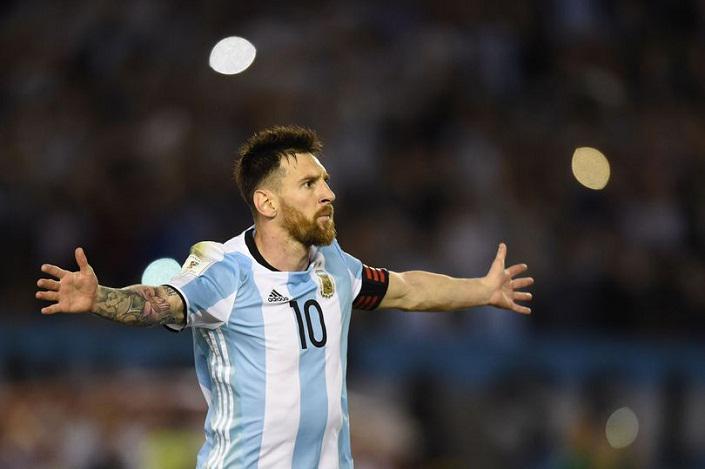
As the 2026 World Cup draws nearer, defending champions Argentina ought to be focused on their title-defense squad and tactical cohesion. Instead, a string of legal and political battles involving the Argentine Football Association (AFA) is pushing “whether they can compete normally” to the top of the trending lists. Head coach Scaloni has publicly said he wants Messi to stay and lead the side—a storyline that, against the backdrop of the FA president being formally charged, the president pushing club privatization, and warnings already issued by FIFA and CONMEBOL, cuts closer to fans’ real anxiety than any slogan.
FA president charged, shadow over the title defense
In March this year, AFA president Claudio “Chiqui” Tapia was formally charged in connection with an alleged tax-evasion scheme worth around $13 million; his assets have been seized by the Argentine government, and a money-laundering investigation is moving ahead in parallel. Reporting from the sources stresses that the sum itself may not be FIFA’s most sensitive trigger point—what has alarmed world football’s governing body is the line between government power and the internal workings of a member association.
On the rules side, FIFA strictly forbids member associations from suffering government or political interference. In 2024, FIFA and CONMEBOL warned the AFA that if government intervention continued, the association could face disaffiliation, which would affect not only the national team but also the competition eligibility of clubs under the affiliated system. With roughly a year to go before the tournament, a full ban is still widely seen as a low-probability outcome, but if legal pressure drags on, “procedural headaches” such as eligibility reviews, financial audits, and interim management appointments would be enough to disrupt preparation rhythms.
Milei pushes privatization, on a collision course with the FA
Argentine President Javier Milei is pushing to convert non-profit, member-owned clubs into publicly listed sports companies (the SAD model), aiming to bring football assets under capital-market logic. The AFA and Tapia strongly oppose the move, arguing it would rewrite ownership structures that have underpinned grassroots football for more than a century. The privatization dispute and criminal charges against Tapia have overlapped in timing, amplifying outside readings of “political interference in football”—the red line FIFA most often cites when sanctioning other national associations over the years.
For Scaloni, the stakes are concrete: if federation leadership remains mired in litigation and management stability is in doubt, call-ups, training-camp bases, friendly schedules, and sponsor contracts could all be shaken. His public hope that Messi will stay with the national team is not mere sentiment—at 39, Messi remains the tactical centerpiece, the dressing-room anchor, and hard currency in global broadcast and ticketing discussions.
The “Messi Effect” and the Miami Double Track
Since Messi joined Inter Miami, MLS and the commercial narrative around World Cup venues in North America have been strung together by the same name: his appearances during the World Cup directly affect attendance, merchandise, and broadcast bargaining power. On-site data show Argentina are currently ranked third by FIFA, down one place from second in the previous cycle, on 1,874.81 points—a small ranking swing is not enough to explain the surge in attention, but it confirms the team remain in the title-contending tier. What has truly amplified the noise is the overlap of “superstar plus federation crisis,” with fans on social media repeatedly asking: if procedural sanctions take effect, will Messi’s last World Cup script be rewritten?
At club level, Inter Miami have drawn a string of 0-0 results in recent league games in the 2026 season (roughly rounds 32 through 37). Attacking efficiency is not the main talking point, but it underscores the need for a careful balance between Messi’s physical load in the United States and national-team preparation. If Scaloni cannot lock in Messi’s international form early, the window for friendly run-ins and tactical experimentation will be squeezed.
Suspension odds are low, but the “headache” is lethal enough
Multiple analyses suggest Argentina is unlikely to be expelled outright from the World Cup: its status as defending champion, the global revenue Messi generates, and expectations in the North American host markets all provide a practical buffer. Yet history shows FIFA has very little tolerance for “government intervention”—at the mild end, fines and compliance deadlines; at the severe end, frozen federation accounts and FIFA-appointed interim committees—and any of those steps would ripple through to national team selection and coaching contracts.
From the standings and schedule, Argentina’s real on-field pressure still lies in the final tournament starting in June 2026; before that, the international windows from June through September will be the first test of Scaloni’s squad stability amid off-field uncertainty. Watch whether Messi continues to accept call-ups, whether young players can shoulder more of the attacking load, and whether the AFA can put forward a governance plan that satisfies FIFA amid litigation and privatization disputes.
Editor’s View: Structural Risks Behind the Headlines
At its core, this is not gossip but sports governance colliding with political reform: the Tapia case tests federation financial compliance, Milei’s SAD path tests professional football property rights, and FIFA only asks who controls the game. If Argentina wants to lift the trophy again after Qatar, it must win on the pitch and in the boardroom. For ordinary fans, there is no need to panic over “ban” headlines in the short term—but watch FIFA’s next statement on the AFA, judicial progress in the Tapia case, and whether Messi is on the list when Scaloni next names his squad. Those are the hard indicators of whether the 2026 World Cup storyline still follows the defending-champion script.