















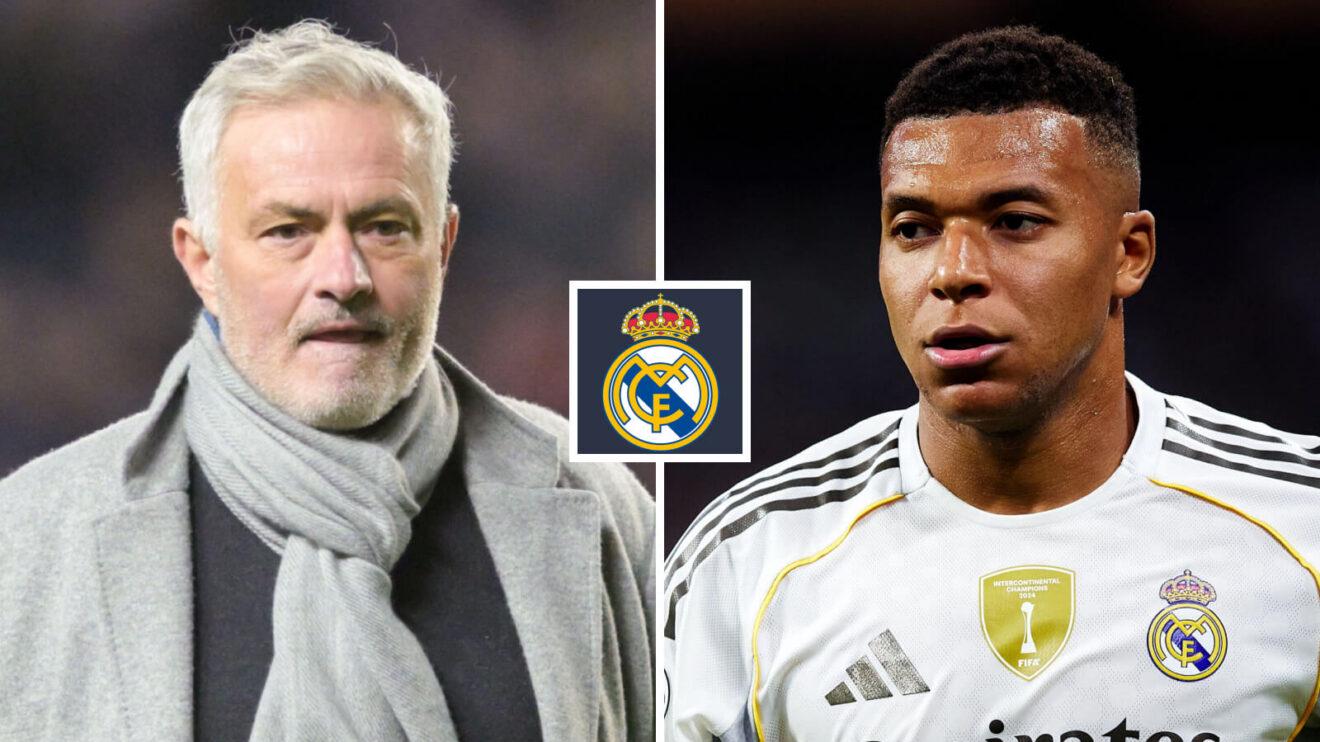
Multiple British media outlets report that if Real Madrid finalize José Mourinho as their new head coach, their transfer approach could include signing another striker — described as “not great news” for Kylian Mbappé, who is already at the center of a media storm at the club. At the same time, interim boss Álvaro Arbeloa has announced his departure, with “The Special One” widely linked to the Bernabéu hot seat; the French forward was booed at home when he came off the bench and admitted he has dropped to fourth in the pecking order up front. With those two storylines converging, an already turbulent 2025/26 season has pushed Los Blancos to a crossroads in the dressing room and in the court of public opinion.
From Alonso’s sacking to Arbeloa’s farewell
It has not been a smooth campaign for Real Madrid. President Florentino Pérez dismissed Xabi Alonso in January 2026, handing interim charge to club legend Arbeloa. Arbeloa formally ended that spell this week; asked whether this weekend’s meeting with Athletic Bilbao would be his final game in charge, he replied “yes,” closing a brief but intense tenure with an emotional farewell.
He thanked the players for “making me a better person,” thanked Pérez and sporting director José Ángel Sánchez for the opportunity, and said he is “a more mature coach than when I took over on January 12.” After more than two decades at the club, he called the Bernabéu home and said he hoped this was “only a temporary goodbye.” For core players caught in the eye of the storm, such as Mbappé, managerial changes are never background noise — whoever sets the lineup and decides the pecking order up front can directly reshape the trajectory of a career at a critical juncture.
Bernabéu boos and the “fourth striker” admission
Public pressure materialized on the pitch. In Real Madrid’s recent 2-0 win over Real Oviedo, Kylian Mbappé was booed by some fans when he came on as a substitute. The France international said after the match that he was “100 percent fine” physically and that he did not start because Arbeloa had made it clear he was fourth in the forward pecking order—behind Franco Mastantuono, Vinícius and Gonzalo. He said he accepted the arrangement, respected the coach’s decision, had “no issues whatsoever” with Arbeloa, and felt he performed well in his minutes on the pitch.
Behind the boos lies disappointment built up over a second straight trophy-less season. Fans have directed some of their anger at Mbappé, signed for a record fee; compounding matters, he chose to holiday in Sardinia while recovering from a hamstring injury, prompting a petition signed by more than 30 million people demanding the club sell the striker—the figure alone shows the debate has shifted from sporting analysis to emotional venting, with a replicable chain spreading on social media: injury management, professionalism and the club’s image compressed into one line: “He doesn’t deserve to wear the white shirt.”
Real Madrid in the numbers: winning games, yet the core tensions remain
Recent La Liga trends shown in the site's database stand in stark contrast to the mood in the dressing room. In Matchday 38 of the 2025 season, Real Madrid won 4-2; another related result on record stands at 5-1. In recent single-match statistics, the team has produced dominant displays such as roughly 65% possession at home, 26 shots, 10 on target, and a 92% pass completion rate, as well as winning samples on the road with around 58% possession, 17 shots, and 7 on target. Los Blancos can still deliver high-intensity attacking output in the data, yet failed to convert their league advantage into the title—precisely the soil in which Mbappé has been cast as the scapegoat: when trophies are absent, the most expensive striker is often the first to come under the microscope.
Mourinho's 'New Striker Plan' and Mbappé's Crossroads
Reports have linked a possible return by Mourinho with the narrative of "signing a new striker." For Mbappé, the logic chain is straightforward: if the new manager insists on a more traditional two-striker or target-man system, bringing in a pure No. 9 or a powerful focal point would squeeze his existing tactical role and playing time; even though Mourinho has yet to be officially confirmed, the rumors alone are enough to reignite the transfer market and fan sentiment. Mourinho and Mbappé worked together during their time at Paris Saint-Germain, so observers are watching closely whether a reunion would repair relations or reignite another power struggle.
From a career narrative standpoint, the 27-year-old Mbappé is experiencing his second "identity crisis" since joining Real Madrid: the first was adapting to La Liga's pace and a central role; the second comes with the manager, fans, and media all questioning his priority and attitude at the same time. His public acceptance of a fourth-striker role is professional restraint, yet it may also be read as a show of weakness—in a dressing room renowned for Mourinho's hard-line politics, showing weakness does not necessarily bring protection and may instead become grounds for tactical reshuffling.
Striker pecking order: Mastantuono and Vinícius on the rise
Arbeloa’s pecking order is worth reading closely: Mastantuono, Vinícius and Gonzalo ahead, Mbappé behind. Vinícius remains one of Real Madrid’s attacking focal points; the boos have not reached him, which suggests the Bernabéu’s patience is selective. Putting the young Argentine prodigy Mastantuono at the front of the line signals that the club is willing to bet on the future rather than build solely around superstars. Gonzalo’s place in the top three as a homegrown face further dilutes the old logic that megastars are the answer. For Mbappé’s camp, if Mourinho really arrives and brings in a new striker, the bargaining chips at the negotiating table would slide from “cornerstone” toward “an expensive asset who can be moved on”—resonating with the pressure from the 30-million-signature petition, even if the club may not actually sell.
Why the story broke out of football circles: from petitions to manager rumours
The reason this story keeps spreading across English-language football media is that it hits four viral triggers at once: Mourinho’s return to a superclub, a star falling out of favour, a fan petition, and a warm farewell from the outgoing coach. Arbeloa’s words of gratitude offered a “human” outlet, softening the cold image of a club changing managers; Mbappé’s boos and his Sardinia holiday supplied the opposing moral debate. Headline-ready phrases around Mourinho—“dirty tricks”, “bad news” and the like—also feed algorithms’ appetite for conflict keywords: readers can take a side on social media without finishing any tactical analysis.
What to watch next
For supporters, what matters most in the coming weeks is not the rumours themselves but three concrete benchmarks: whether Mourinho officially signs, whether a genuine bid for a new striker lands in the summer window, and whether Mbappé’s place in the pecking order rebounds during pre-season and in round one of the league. The weekend fixture against Athletic Bilbao will be the full stop on the Arbeloa era; if a new manager and new striker follow in quick succession, Real Madrid’s 2026/27 season could open with a reconstruction of dressing-room order. If Mbappé cannot claw his way back into the top three during pre-season, his stated willingness to “accept being the fourth choice” may shift from a delaying tactic to the defining tone of his entire Bernabéu spell—and then a petition with 30 million signatures might prove merely the prologue, not the climax.
From a professional standpoint, Real Madrid’s core issue is not the form of any single striker, but the collective anxiety that has built as management, the coaching staff and supporters have run out of patience with the “galáctico” model after a run without titles. Signing a new centre-forward can shift the narrative, but it may not fix the system; Mourinho is adept at winning short-term trust, yet whether he can make Mbappé, Vinícius Jr. and Mastantuono coexist depends on whether he is willing to give the French forward a genuine tactical focal point amid the media storm, rather than using him again as a pressure-release valve for public opinion.