















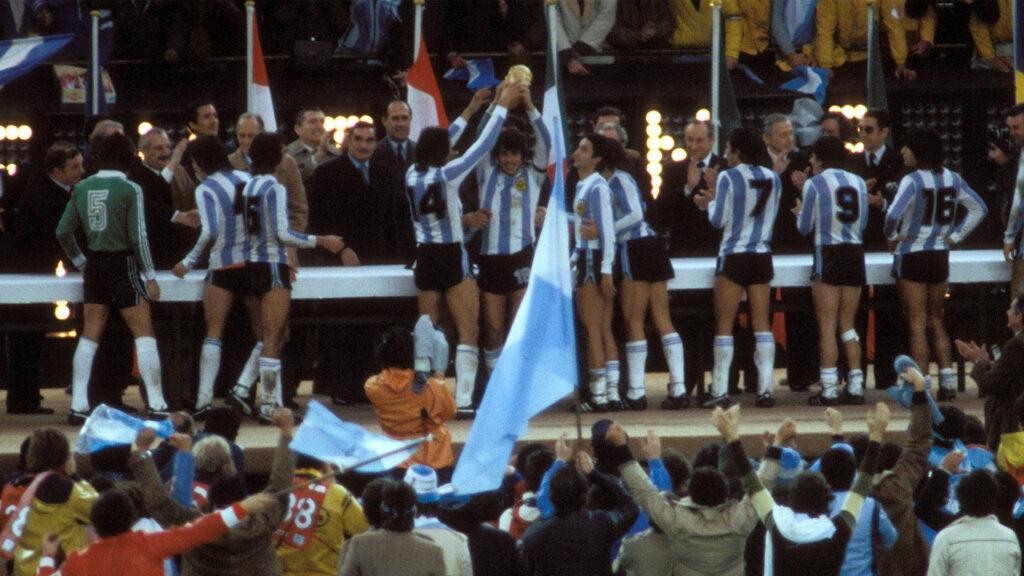
In June 1978, with ticker tape raining down at the Estadio Monumental in Buenos Aires, hosts Argentina beat the Netherlands 3-1 after extra time to lift the FIFA World Cup. The final went to the wire: Mario Kempes scored twice, Daniel Bertoni sealed victory with the clincher; for the Dutch, Dick Nanninga equalized, and Rob Rensenbrink hit the post in stoppage time of normal time—inches away from forcing a penalty shootout. Captain Daniel Passarella held the back line steady, while Kempes turned chaos up front into goals—the cruellest dividing line between champions and runners-up.
One final, two career narratives
For Argentina, it was the crowning moment for Passarella and Kempes after years of honing their partnership from youth teams to the senior side: the defensive leader built a wall at the back, and the striker delivered the killer blow under pressure. For the Netherlands, it was a second straight final defeat—heartbreak in Munich against hosts West Germany in 1974, then the same “so close” story on Argentine soil in 1978. Rensenbrink’s post strike is often read alongside the regrets of 1974; Johan Cruyff’s Total Football philosophy still loomed over the Oranje, but he did not play at this tournament, and the side lacked his cool head when decisions had to be made on the pitch.
Controversy in the build-up and the hard numbers on the pitch
Argentina's title run remains one of the most debated chapters in World Cup history: the tournament was held under military rule, and details such as the fixture schedule and a second-phase 6-0 win over Peru that sent them to the final on goal difference have long drawn allegations and rebuttals, yet no conclusive evidence has ever been made public. On the pitch the story was just as hard-nosed: they advanced from a group with Italy, France and Hungary, then in the second phase took on Brazil, Poland and Peru in succession; in the final Argentina's direct wing play met the Netherlands' positional rotations to stretch space, with the outcome decided by finishing and composure in extra time.
ScoreZ retro Team of the Tournament: 3-2-4-1
Using ScoreZ's retro data from the 1978 World Cup, this edition's Team of the Tournament is set up in a 3-2-4-1. In goal, Peru's Ramón Quiroga (8.68) earned his spot with saves in the early rounds. The back three: Austria's Bruno Pezzey (7.52), Italy's Gaetano Scirea (7.40), Argentina's Passarella (8.01)—three different styles, yet each delivered what their coach valued most on their line: shutting down play before the final pass.
The holding midfield pair from West Germany (period team name): Rainer Bonhof 7.80, Heinz Flohe 8.03 — crisp distribution, purposeful progression. In front of them, four creators who could also finish: Argentina’s Osvaldo Ardiles 7.78, Peru legend Teófilo Cubillas 7.80, Daniel Bertoni and Kempes — a front line that mixed orchestration with end product. The Netherlands’ Rob Rensenbrink left the final with the regret of hitting the post, yet his overall tournament still belonged in the Best XI conversation; Dick Nanninga’s goal in the final was a reminder that the runners-up, too, had men who pinned their careers to the centre of the World Cup stage.
From 1978 to today: a contrast
Using the site’s latest FIFA rankings as a vertical reference (not the live 1978 table): Argentina are now 3rd on 1874.81 points; the Netherlands 7th; Brazil 6th; France 1st; Italy 12th; Peru 53rd; Hungary 42th; Austria 24th. The numbers show these football powers remain competitive today, yet they cannot rewrite that night in 1978 — the hosts, with cooler finishing in extra time, kept the title beneath the ticker tape on home soil at the Monumental.
From a coach’s perspective, this best XI’s value lies not in an All-Star spectacle but in how the roles are divided: Quiroga hauled Peru out of a messy group stage; Scirea and Passarella embody two defensive textbooks—Italian and Argentine; Bonhof and Flohe showed that West Germany’s midfield could dictate the tempo without flash; Ardiles and Cubillas brought South America’s technical refinement into the same front line. If you’re rewatching 1978, start by noting the final score and Rensenbrink’s shot off the post, then work through this 3-2-4-1 man for man—many “what might have been” stories hide in those few centimetres between the ratings curve and the winner’s trophy.