

















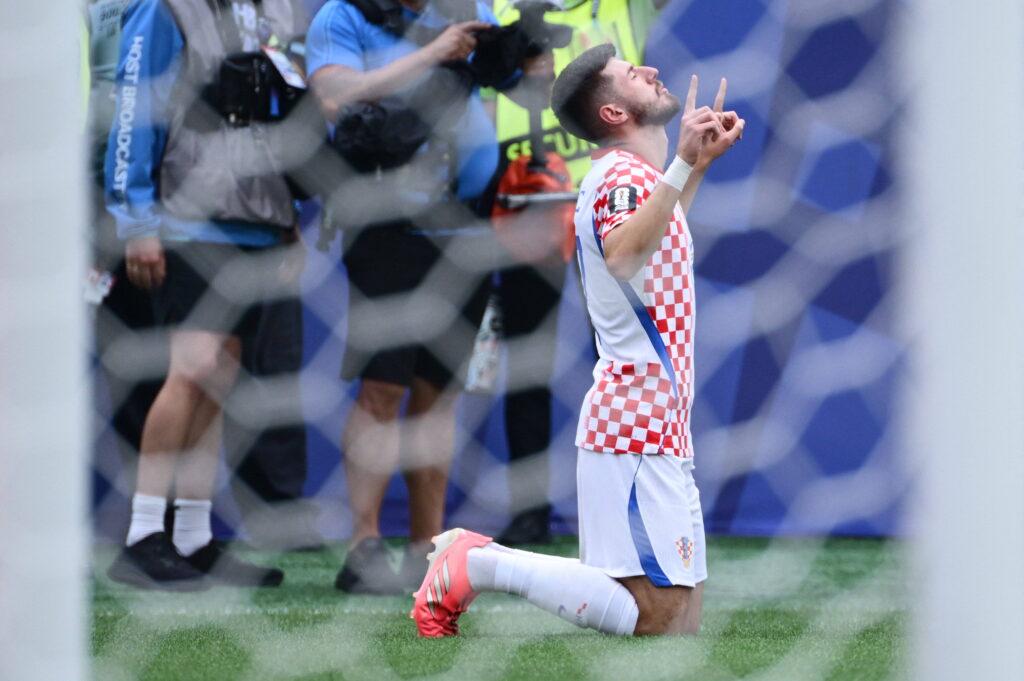
In a Group L match at the 2026 FIFA World Cup, Croatia defeated Ghana 2-1. Inter Milan midfielder Petar Sučić played the full 90 minutes and scored despite taking only one shot in the entire match. ScoreZ ultimately gave him a rating of 8.6, one of the standout individual performances of the game. For casual fans, what a high rating actually means requires breaking down the scoring logic and his specific contributions.
What Does an 8.6 Rating Really Mean?
ScoreZ player ratings don't simply come down to whether a player scored—they aggregate and weight multiple actions such as passing, shooting, duels, and defensive work, then compare that against other players on the pitch. An 8.6 sits clearly above average, usually meaning the player contributed effectively across several areas rather than relying on a single standout moment.
The match was played at Lincoln Financial Field in Philadelphia, with an attendance of 68,324. On a big stage with the score tight, a midfielder who delivers at both ends of control and finishing often sees his rating pushed up significantly. Sučić was exactly that type of case in this game.
Possession Phase: Stabilizing the Rhythm Through Passing
Looking at his passing numbers, Sučić completed 31 of 34 passes for a 91% success rate. Digging deeper, all 13 of his passes in his own half found their target, showing that under pressure the team could still rely on him to maintain order in build-up play; in the opposition half he completed 18 of 21 passes, helping Croatia push forward and keep Ghana under pressure.
In addition, his one long pass was successful, and he attempted two crosses, offering different routes in attack. His 44 touches weren't an inflated total, but the quality was high: he lost possession just six times, with only one direct tackle against him. For a playmaking No. 8, that points to steady decision-making and manageable mistakes.
He also delivered 1 key pass and drew 4 fouls, earning set-piece opportunities and breathing room for the team. A key pass is a delivery that directly creates a shooting chance; drawing fouls reflects his ability to “change the tempo” for the team in tight physical battles. Together, these aspects mean his match value extends beyond personal shooting.
Finishing efficiency: How one shot changed the match
Sučić had only one shot all game, but it became a goal. This kind of “low volume, high conversion” performance is exactly the supplementary contribution coaches most want from midfielders.
From an expected goals (xG) perspective, that shot had an xG of 0.0376, showing it was not an absolute “sitters” chance; but the expected goals on target (xGOT) rose to 0.2519 once on target, meaning that once he pulled the trigger, the quality and angle of his finish still carried real threat. ScoreZ split his contribution this match into 0.51 shooting value and 0.49 passing value—almost evenly divided—underscoring that this is not a player who merely pads his scoreline with goals, but a complete display balancing control and finishing.
With the score locked at 2-1, a midfielder’s single high-quality action to score often carries greater tactical significance than the numbers alone—the team does not need to over-commit its shape forward and can still create unpredictability with a sudden central run.
Physicality and defense: A World Cup midfielder cannot only attack
Beyond attacking numbers, Sučić also held his own in duels. He won 6 of 8 one-on-one duels, including 1 aerial duel; he also made 1 tackle, 1 clearance, and 1 ball recovery. In a World Cup group-stage match, these “dirty work” stats are often overlooked, yet they directly affect control of second balls and stability in transition.
When a match enters a stalemate, a midfielder who can make a tackle or clearance before being caught out of position often reduces counter-attack risk more than one more inconsequential sideways pass. Sučić left quantifiable marks at both ends in this game—a key reason his rating reached 8.6.
Summary: Why this performance deserves to be remembered
Overall, Sučić’s high rating against Ghana did not come from inflated statistical accumulation, but from several interlocking elements: high-success-rate passing that maintained the team’s structure, key passes and drawing fouls that provided additional tactical outlets, one high-quality shot that tipped the balance, and minimal contributions in duels and on the defensive end.
For readers seeking to understand modern football data evaluation, this match offers a clear example—top ratings do not always mean “most shots or greatest distance covered,” but rather whether a player completes role-specific tasks in key phases with fewer errors and higher efficiency. On the night Croatia secured three points, Sučić delivered a full 90-minute performance, embodying the value template midfielders should aim for in major tournaments.