

















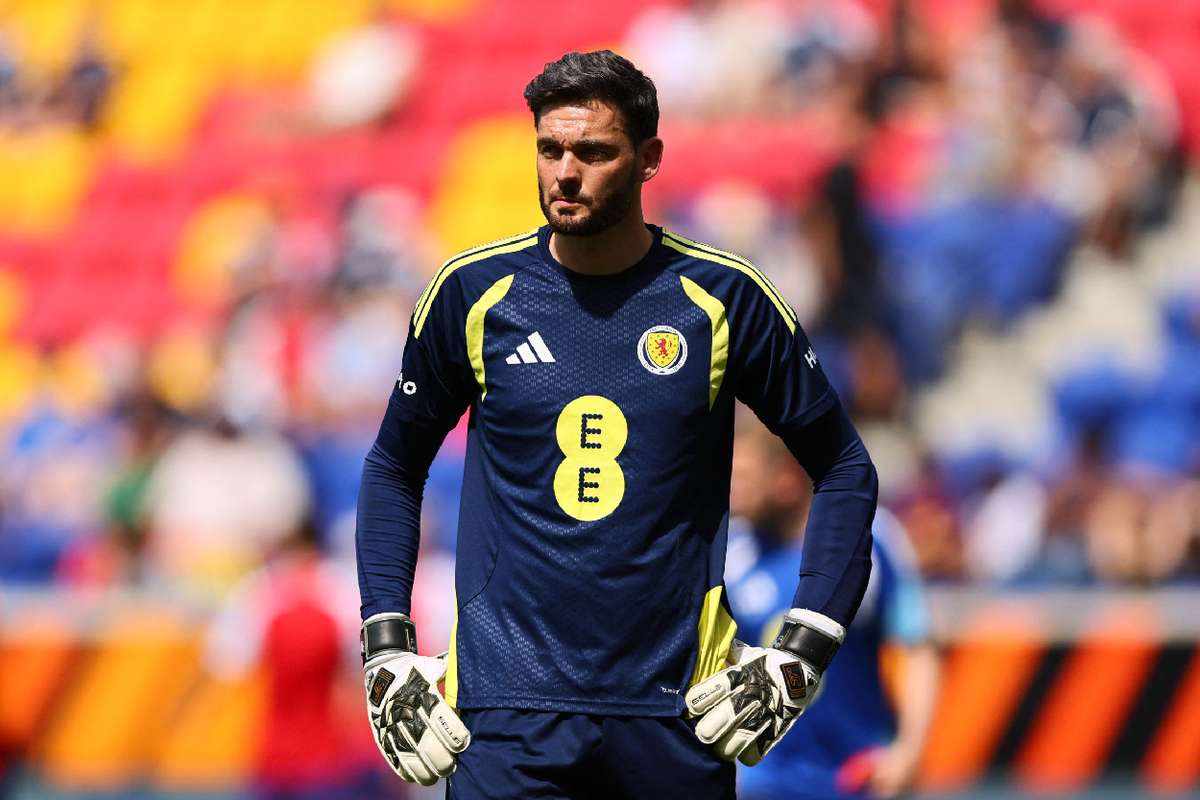
There is a particular silence that settles around a goalkeeper when the decision finally arrives—not the roar of a save, not the groan of a concession, but the quiet acknowledgment that the body and the mind have reached the same conclusion at last. Craig Gordon announced his retirement this week after 25 years as a professional, and in doing so he closed one of Scottish football's most layered careers: a story of boyhood loyalty, record-breaking ambition, physical setback, and a stubborn refusal to let the narrative end on anyone else's terms.
Gordon made the announcement in a video message shared on social media, speaking with the measured tone of a man who has spent decades reading pressure before it fully forms. "I've never wanted it to end, but end it must," he said. "I have lived my dreams and for that I am so thankful." The words carry weight beyond courtesy. They suggest a career lived at full stretch—never casually, never half-present—and a departure chosen rather than imposed.
The Long Arc From Edinburgh to the World Stage
Gordon's path began where so many Scottish stories do: in a youth academy rooted in local identity. A product of Hearts' development system, he made his senior debut while on loan at Cowdenbeath in 2001, a first step that can feel both enormous and invisible for a young goalkeeper learning to stand alone in a rectangle of grass. The following season he broke into Hearts' first team, and from that point forward the posts became his permanent address.
Across his career he made 682 appearances for Hearts, Cowdenbeath, Sunderland, and Celtic—a number that speaks not only to durability but to reinvention. Goalkeepers are judged in moments that arrive without warning: a one-on-one in the 89th minute, a cross whipped in from a dead-ball situation, a penalty kick that compresses an entire match into a single stride. Gordon stood in that space for a quarter-century.
For Scotland, he earned 84 caps, a figure that places him among the most experienced figures ever to represent his country. International duty adds a different kind of pressure—the shirt feels heavier because it carries generations—and Gordon wore it across eras of Scottish football, through qualifying campaigns, near misses, and the long psychological work of staying ready when selection is never guaranteed.
When the Fee Became the Story
In 2007, Gordon moved to Sunderland in the Premier League for a reported fee of nine million pounds, at the time a British record for a goalkeeper. Record transfers do not merely change bank balances; they change expectations. Every save becomes proof of worth. Every mistake becomes evidence of miscalculation. Gordon arrived in England carrying that invisible ledger, and for a period he met it with the composure that had defined his early career.
Yet his spell at the Stadium of Light was shaped as much by the body as by the spotlight. Injuries interrupted rhythm, and rhythm is everything for a goalkeeper whose confidence lives in repetition—the same pre-kick routine, the same positioning drill, the same trust that the next movement will arrive on time. Over five years he made 95 appearances for Sunderland, a tally that understates both his quality in fit stretches and the frustration of seasons spent rebuilding rather than performing.
For many players, that chapter would become the defining one. Gordon refused to let it.
Return, Trophies, and the Hearts Homecoming
In 2014 he returned to Scotland with Celtic, and what followed was six seasons in Glasgow that restored the competitive arc of his career. He won five Scottish Premiership titles, two Scottish Cups, and five League Cups—silverware that reflected not just team success but personal renewal. To excel again after a prolonged injury spell requires more than physical recovery; it demands a psychological reset, a willingness to treat past setbacks as closed chapters rather than prophecies.
Gordon rejoined Hearts in 2020, completing a circle that felt almost deliberately narrative. The boyhood club became the stage for his final act, and there is a emotional logic to that choice that documentary filmmakers would recognize immediately: the place where identity was first formed becomes the place where identity is formally laid down.
The World Cup Bench and the Final Frame
He was part of Scotland's squad for the 2026 World Cup, the oldest player at the tournament. He did not appear in any matches, serving as backup to Angus Gunn, yet his presence carried its own meaning. Squad selection at that level is never purely about minutes played; it is about experience held in reserve, about a dressing room that benefits from voices that have seen every emotional temperature football can reach.
To travel to a World Cup at 43, even without entering the pitch, is to stand at the edge of a dream one more time—to feel the atmosphere, absorb the scale, and accept that the role has changed even if the devotion has not. For Gordon, that tournament appears to have been less a last grab at glory than a final confirmation that he had remained relevant to the national team until the very end.
What Remains After the Gloves Come Off
Retirement announcements from goalkeepers often sound different from those of outfield players. The position demands a solitary vigil; the career is built on delayed gratification and immediate accountability. Gordon leaves the game with numbers that tell one story—682 club games, 84 international caps, multiple domestic titles—and with a temperament that tells another: patience under pressure, persistence through injury, and a late-career grace that allowed him to finish where he began.
He said he never wanted it to end. Few who have loved the work ever do. But endings, when chosen with clarity, can feel less like defeat than like the final page of a book read carefully from start to finish. Craig Gordon read his slowly, turned every page, and closed it himself.