















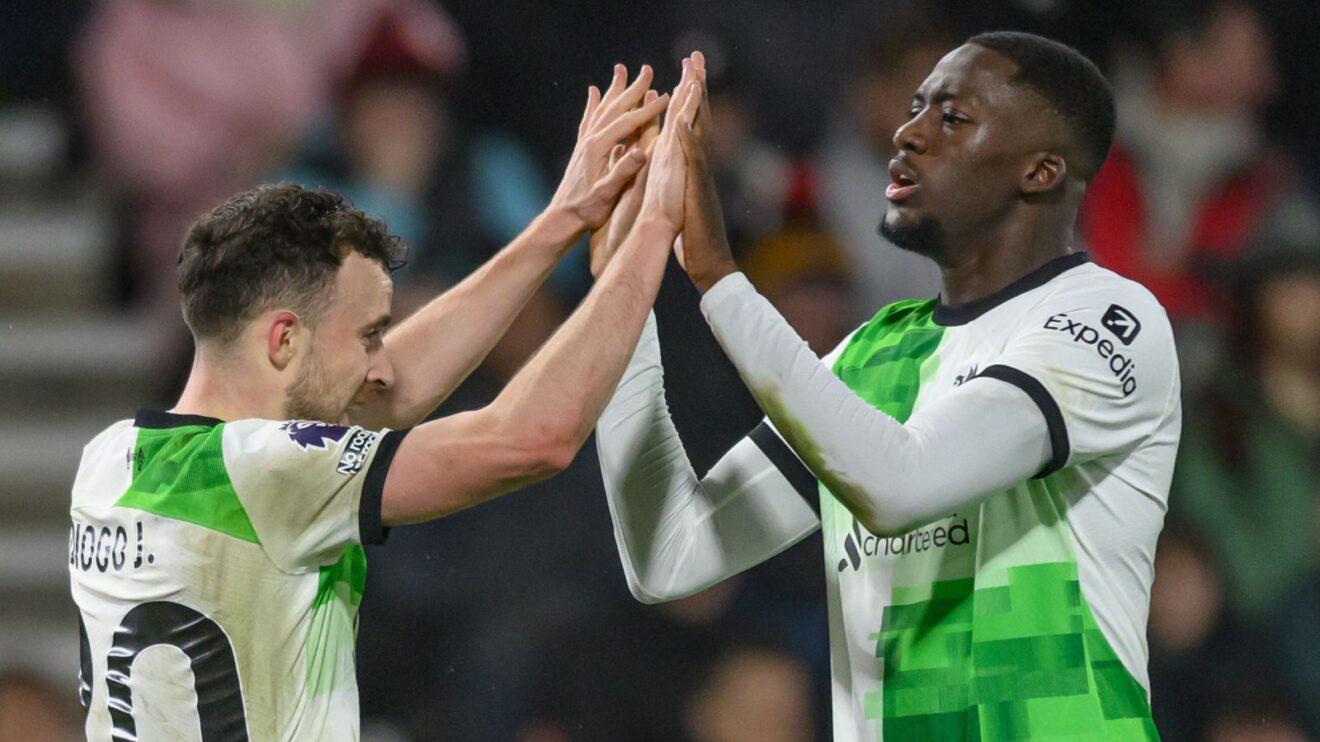
Liverpool centre-back Ibrahima Konaté addressed mental health in a structured way for the first time in an interview with The Independent, saying openly that the deaths of teammate Jota and his brother André in a car crash, together with the loss of his father Hamady to illness in January this year, had once left him with no interest in anything, and that his on-pitch form and the scrutiny at Liverpool throughout the 2025-26 season were cast under the shadow of these two tragedies. At the same time, his contract expires at the end of this month, and he is set to join Real Madrid as a free agent.
Double blow: from pre-season tragedy to his father's death
The crash involving Jota and André happened during pre-season, at a point very close to preparations for the new campaign. Konaté and Jota were not only Liverpool teammates but neighbours, with a bond far closer than that of ordinary colleagues. Konaté recalled: "That completely broke me. At the time I had no interest in anything else."
While the entire squad was still grieving Jota, Konaté's father was battling a serious illness and died in January. The two blows came almost back to back. Konaté admitted: "I didn't know what to do—should I go home and stop playing, or keep turning out for the team? The squad needed me too, but I couldn't find anyone to talk to and could only bottle everything up." His advice now is blunt: when you feel low or hit by upheaval, you must open up to those around you—"silence only leaves you more isolated."
On-field slump: fifth place and the scapegoat
Source reports note that as reigning champions, Liverpool finished fifth in the Premier League this season, and Konate personally endured a prolonged spell in which fans and pundits treated him as a scapegoat. That did not match his actual workload on the pitch—late in the season, the Reds lost 2-4 away on Matchday 37 and drew 1-1 at home on Matchday 38, with defensive stability remaining one of the visible weaknesses that kept the side from returning to the title race.
From a data standpoint, the pressure on Konate did not come solely from goals conceded. Protection in transition from a high defensive line, set-piece marking, and control of second balls are all composite metrics for a modern centre-back; when overall team rhythm and an injury crisis overlap, centre-backs often become the most conspicuous fall guys. That Konate kept playing while depressed meant he was under dual strain—performance and psychological load—a dimension rarely factored into off-pitch punditry.
Breaking the taboo: depression in professional football
Konate spoke openly about the related stigma, stressing that depression "starts in the heart, spreads to the brain, then takes over the whole body," regardless of income. "I often hear players say they're depressed, and people outside think, 'you earn so much, what have you got to be depressed about'—that's nonsense, you shouldn't say that." His words reframed the issue from "player privilege" to the human condition: when tragedy, family responsibility and professional duty run in parallel, psychological breakdown is not uncommon.
On how he kept playing, Konate was restrained and honest: "You go back to the pitch because you have no choice. The club pays wages every month; we have a duty. We have no choice but to play—for Jota and his family, and for ourselves. You can't truly 'get over it', but you learn to live with it." That explains why, on the surface, he "looked like he was still playing normally" while internally he may have been in a low-energy state for a long time.
Moving to the Bernabéu: contract, risk and opportunity
On the contract side, Konaté’s existing deal with Liverpool runs out at the end of June, after which he will join Real Madrid as a free agent. For the Reds, that means losing a defensive cornerstone with no transfer fee coming back in; for the player, it is a new setting at a time of psychological rebuilding—the Bernabéu, Real Madrid’s home, holds 85,454, and the club’s platform and Champions League credentials are part of the pull, but so are greater exposure and immediate results pressure.
Looking at Real Madrid’s recent league run: a 1-0 away win on matchday 37 and a 4-2 home victory on matchday 38; one of those wins came with 58% possession, 17 shots and seven on target, the other with 72% possession, 753 passes and a 93% completion rate. Los Blancos still deliver consistently in possession dominance and transition efficiency. If Konaté fits into the Alonso (or current) system, he must adapt not only to tactical calls but also to different positional and distribution demands under La Liga tempo.
Deal perspective: what is certain beyond the rumours
This move needs to be read in layers: what is confirmed is that he will leave Liverpool on a free transfer at the end of the month and join Real Madrid; what remains to be seen is whether his form can rebound with the change of environment, and whether the mental-health support systems in La Liga are a better fit for his needs than those in the Premier League. For Liverpool, with a 61,276-capacity Anfield as their home ground, how they replace depth at centre-back and whether they reinvest in the back line will directly shape the ceiling of their Premier League top-four push—and title challenge—next season.
What to watch next
In the short term, watch how often Konaté appears in Real Madrid's pre-season sessions and how his body responds; over the medium term, see whether he continues to speak openly about mental health and helps build more practical pathways to support within professional football. On the pitch, if he can restore stable one-v-one defending and aerial numbers at his new club, the narrative may shift from “tragic figure” back toward “elite centre-back”—but that will take time and should not be judged on a single-season sample.