
















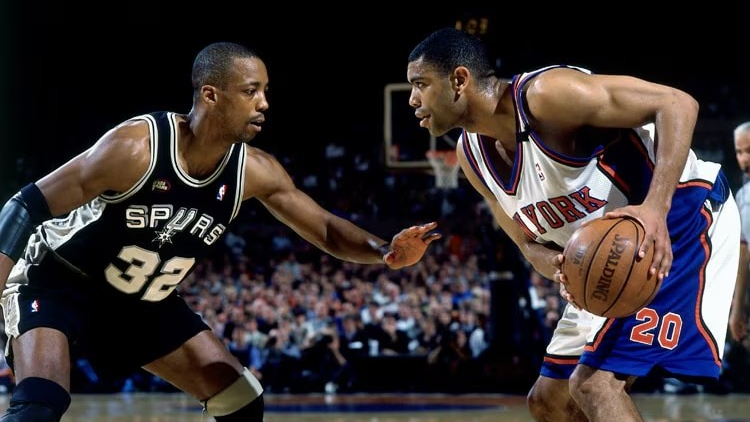
In Game 5 of the 1999 NBA Finals, when the final buzzer sounded at Madison Square Garden, the scoreboard showed just a one-point gap—78-77—as the San Antonio Spurs snatched the Larry O'Brien Trophy from the New York Knicks on the road. After five games, the series stood at 4-1. It was the first championship in Spurs franchise history, and the last time San Antonio and New York would meet on the NBA Finals stage.
That season, the NBA had just restarted after the lockout. The regular season was compressed to 50 games, but the playoff pace never let up. The Knicks fought their way through the East to the Finals, while the Spurs entered June with a more settled starting five and a heavier defensive edge. The five final scores were 89-77, 86-83, 89-81, 96-89, and 78-77—not one game saw both teams combine for 100 points. This was not a Finals built on offensive firepower, but a series of bone-deep defensive battles.
Through the first two games, the Spurs set the tone at home. In the opener, Tim Duncan dropped 33 points for the game high, while Allan Houston led the Knicks with 19 in an 89-77 San Antonio win. Game 2 was tighter: Latrell Sprewell poured in 26 for New York, but Duncan answered with 25 more in an 86-83 victory, and San Antonio took a 2-0 lead into New York with all the pressure squarely on the Knicks.
The Knicks brought the series back to life in Game 3. Houston erupted for 34 points, and even though Spurs center David Robinson added 25, New York still won 89-81 to claw one back. That night, the roar from the MSG stands shook Madison Square Garden to its core—Knicks fans saw a lifeline, while the Spurs locker room knew the road to a title is never a straight line.
The Spurs answered quickly in Game 4. Duncan led the way with 28 points, and Sprewell countered with 26 to keep the contest a dogfight until San Antonio closed it out 96-89 and took a 3-1 series lead. The real suffocating tension came in Game 5: Sprewell poured in 35 points, a single-game Finals high by a Knicks player in this series, nearly willing the home team back from the brink on his own; Duncan fired back with an equally defiant 31. The 78-77 one-point margin needed no overtime and no extra drama—the championship was etched into history in the final possession.
Spread the five-game numbers across the board and San Antonio's stability shows up on nearly every line—Duncan was the team's leading scorer in four of five games, with Robinson taking over in the paint in Game 3; New York's offense leaned heavily on Sprewell and Houston, who alternated carrying the scoring load across the series, with Sprewell topping the team three times and Houston twice. New York had its moments, but San Antonio's more sustained star production and more cohesive defense made the 4-1 result feel like the logical outcome.
For the Spurs, the trophy marked the beginning of the Tim Duncan era's championship culture and meant David Robinson finally reached the summit late in his career. For the Knicks and the MSG crowd that night, a one-point margin will be remembered for years—Sprewell's 35 and Houston's 34 showed New York was never in danger of being swept, yet San Antonio's five-game run of low-scoring, high-intensity battles delivered the franchise's first title.