

















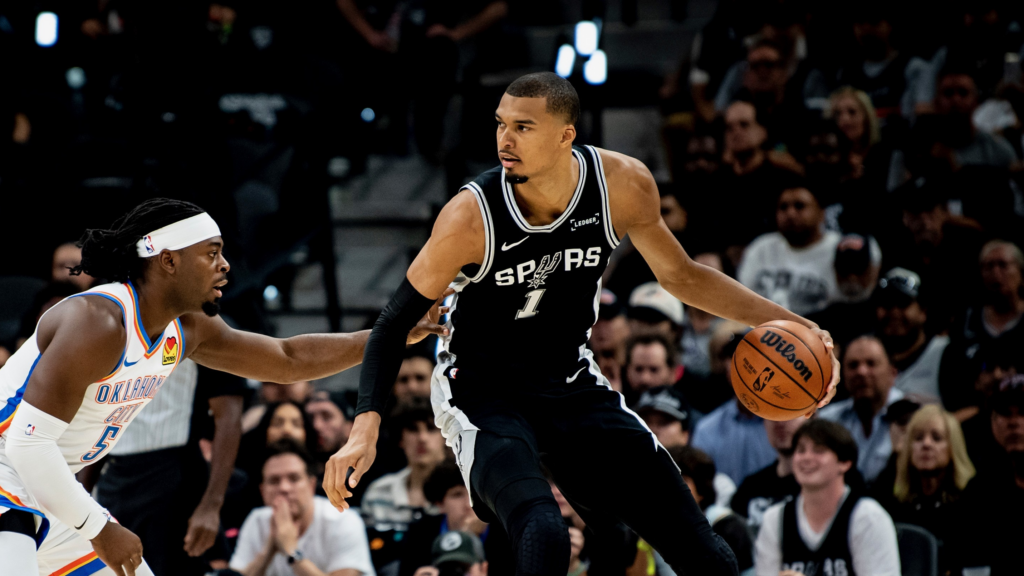
The San Antonio Spurs beat the Oklahoma City Thunder 118-91 at home, forcing a Game 7 in the NBA Western Conference Finals. Victor Wembanyama delivered a complete line of 28 points, 10 rebounds and 3 blocks as San Antonio seized control from the opening quarter, blew the game open with a 32-13 third period, and never surrendered the lead.
A must-win clash under schedule pressure
For both sides, this Game 6 sat on the razor’s edge of playoff load management. Oklahoma City had been rolling, while San Antonio had endured multiple seesaw battles in the series—a home loss would end their season. On a packed schedule, rotation depth and recovery quality often matter more than one-night spikes—San Antonio turned the “must win” pressure into 47 minutes and 45 seconds of leading time with clearer rhythm distribution and steadier bench production.
Wembanyama: an efficient, high-usage floor general
Wembanyama finished 10-of-21 from the field, 4-of-9 from three and 4-of-4 at the line, adding 2 steals and 2 assists for a +13 plus-minus and an 8.3 Sofascore rating. He poured in 11 first-quarter points with three triples as the Spurs led 35-22 after one; he had 22 at halftime on 9-of-16 shooting. After the break he went 4-for-4 from the stripe for 4 points in the third as the team won the period by 19 on defense and rebounding—despite heavy usage (about 38.22%) he committed only 3 turnovers and had 0 fouls, keeping him on the floor in crunch time.
On the numbers, he went 6-of-12 from two and 4-of-9 from three for an effective field-goal percentage of 57.14% and a true shooting percentage of 61.51%. Defensively, he recorded three blocks and repeatedly disrupted shots at the rim, pulled down 10 rebounds (six defensive, four offensive), and created extra possessions on second chances and in transition. When the Thunder tried to rally, his presence protecting the rim, generating steals, and on the glass directly squeezed Oklahoma City’s room to claw back.
Full-team firepower: rotation and bench decide the outcome
The Spurs did not rely on star isolation alone. Rookie guard Stephon Castle scored 17 points with nine assists and five rebounds for an 8.0 rating, repeatedly attacking the paint to draw fouls; reserve Dylan Harper added 18 points on 6-of-9 shooting, 2-of-3 from three, and 4-of-4 from the line for a 7.9 rating. Devin Vassell hit four threes for 12 points and added two blocks; Julian Champagnie had 10 points, six rebounds, and two blocks with a team-high plus-minus of +24. Keldon Johnson scored nine points while battling on the glass, and Harrison Barnes knocked down two threes from outside. De'Aaron Fox went 1-of-9 from the field but still dished seven assists with a plus-minus of +17—when a star’s shot goes cold, steadying the game through playmaking and defense is exactly what playoff rotation value looks like.
Statistical dominance: the third quarter sets the tone
The game was played at Frost Bank Center, where 19,666 fans watched San Antonio control the contest from start to finish. In the first quarter, the Spurs went 8-of-14 from three, with 10 of their 13 field goals assisted, and led 35-22; they were up 60-53 at halftime. In the third, the Thunder went 0-for-8 from three while the Spurs won the period 32-13, building a lead as large as 28 and stringing together a 20-0 run.
The Spurs owned the glass 52-42 (+10), dished out 30 assists to Oklahoma City’s 22 (+8), recorded 7 blocks, and committed 12 turnovers—matching the Thunder. They went 41-of-88 from the field, 15-of-41 from three, and 21-of-25 at the line. The Thunder’s perimeter went silent in the pivotal third quarter, while San Antonio kept drawing fouls and cashing in on second chances, turning their “fast-paced start” into full-game control.
Series trend: from reactive to Game 7 initiative
Viewed over a longer arc, this Western Conference Finals round shows a clear uptick in San Antonio’s form curve in Game 6: more offensive spacing, ball movement back to playoff level, and rim protection plus rebounding rising together. Oklahoma City still has the makeup of a regular-season powerhouse, but in Game 6 they could not match the Spurs’ energy output and bench scoring—a must-review issue for a team that relies on its stars to sustain production heading into a winner-take-all Game 7.
Game 7 storylines and what to watch
Game 7 will directly decide the Western Conference champion. The Spurs need to carry over this game’s third-quarter defensive intensity and rebounding edge while managing Victor Wembanyama’s fouls and turnovers; the Thunder must shore up perimeter consistency and get De’Aaron Fox and other core players shooting efficiently under pressure. For fans, this is the most brutal yet fairest game of the Western Conference Finals—one side riding home-court momentum, the other carrying the weight of a “no more room to lose this season” schedule. Whoever manages energy, rotations, and clutch execution better in Game 7 moves closer to a Finals berth.
From a professional standpoint, the value of this Spurs win lies not just in the score but in proving they can use team basketball to offset a talent gap on a high-intensity night. Wembanyama supplies the ceiling, Castle and Harper the staying power, Vassell and Champagnie the spacing and defense—if that combination holds up in a Game 7, the Spurs will keep this series in doubt until the final minute.