

















The modern World Cup is built on a simple promise: for a few weeks, the global game becomes public property. Fans travel across continents, players become temporary neighbors in host-city hotels, and the boundary between celebrity and community thins until a handshake or a photograph feels within reach. That promise collided with tournament security protocol this week in Dallas, where Egypt officials say a police officer physically intervened during an otherwise ordinary fan encounter involving the national team director and one of the squad's most recognizable figures.
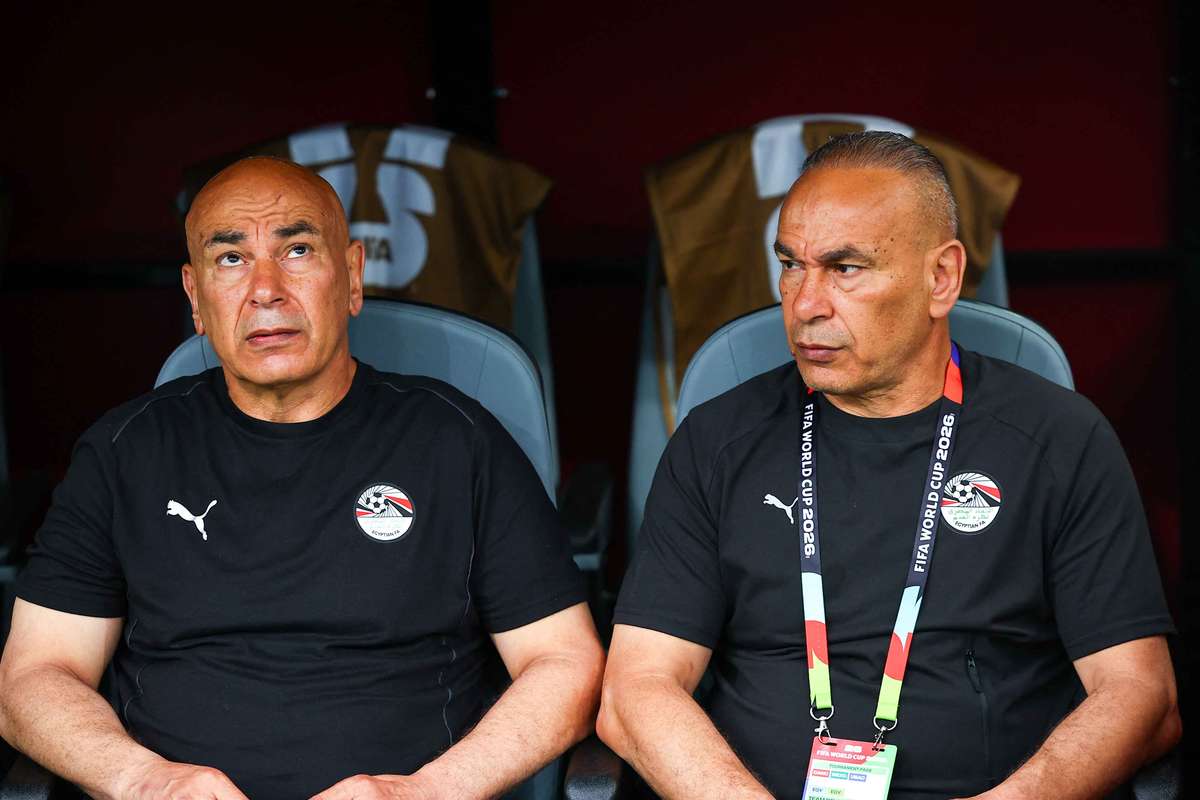
According to Egypt's national team media officer Mohamed Morad, the episode unfolded at the Pharoahs' team hotel as the squad prepared for its Round of 32 meeting with Australia at the World Cup. A father and his son approached Ibrahim Hassan, the team's director, and winger Trezeguet with a request for a photograph. Hassan approved the interaction, a routine gesture in a tournament where player accessibility is part of the emotional contract between nations and their supporters.
What followed, however, was anything but routine. A security officer stepped in and, according to the Egyptian delegation, pushed not only the fan but also Trezeguet and Hassan, despite both club official and player remaining within their designated area. Hassan then asked the officer to handle the situation in a normal manner, language that suggests the dispute was less about hostility than about competing definitions of what "normal" means inside a hardened security perimeter.
The Architecture of Access at a Global Tournament
To understand why a photograph request escalated into a physical confrontation, it helps to examine how major sporting events reorganize public space. The 2026 World Cup, staged across Canada, Mexico, and the United States, operates under layered credential systems designed to separate accredited personnel, athletes, and the general public. Hotels that house national delegations function as semi-sovereign zones: familiar to fans on the outside, governed by strict access rules on the inside.
That tension is not new, but it intensifies when social media collapses distance between stars and supporters. A child asking for a picture with Trezeguet is participating in a ritual as old as sport itself. A security officer enforcing credential checks is executing a mandate written in the language of risk management. When those two logics meet without a shared script, friction becomes likely, and physical contact becomes the worst possible outcome.
Egypt's account places emphasis on location: Hassan and Trezeguet were not wandering through an unauthorized corridor. They were in an approved team space when the officer intervened. That detail matters because it reframes the incident from a story about celebrity entitlement to one about jurisdiction, where responsibility for crowd management shifts between hotel staff, private security, and municipal police.
What Dallas Police Said Happened
The Dallas Police Department confirmed awareness of a video circulating online that showed a heated interaction involving one of its officers. In a statement posted to social media, the department said officers responded to the hotel at the request of hotel security regarding an individual without event credentials who was attempting to gain access.
Police later determined that credentials were not being displayed properly, which the department described as a requirement in the tournament environment. The situation was resolved on scene, according to the statement, and department representatives subsequently met with members of the Egyptian delegation to address their concerns. Both sides now characterize the matter as resolved.
Read together, the two narratives do not contradict so much as they illuminate different priorities. From a law-enforcement perspective, the central issue was unauthorized access and credential compliance in a high-security setting. From Egypt's perspective, the central issue was proportionality: whether physical force was necessary against a fan, a player, and a senior federation official who were already inside a controlled team area.
Trezeguet and the Weight of Visibility
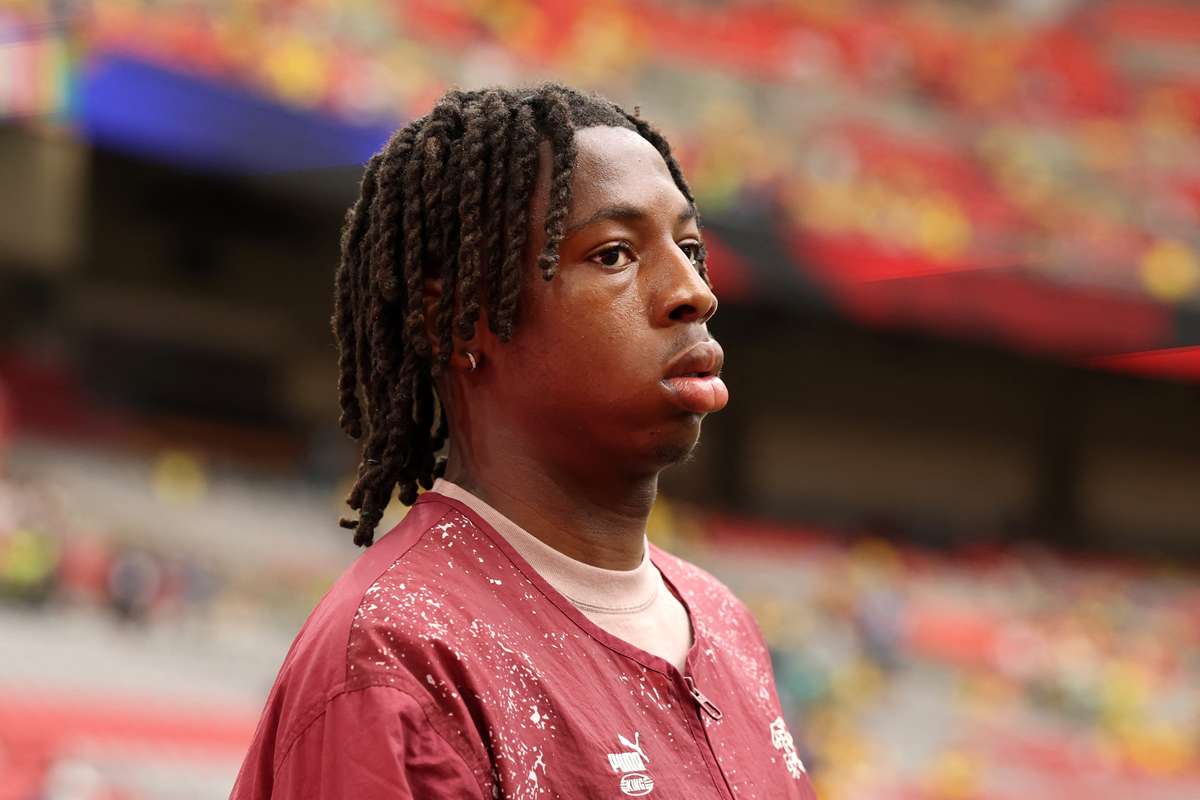
Trezeguet occupies a distinctive place in Egypt's football imagination. Born Mahmoud Hassan, he carries a nickname that echoes a generation of European football romance while anchoring him firmly in Egyptian identity. At a World Cup, that visibility is both asset and exposure. Players like Trezeguet draw supporters toward the team hotel precisely because they symbolize the possibility of proximity, the idea that international football still belongs to the people who fund its emotion with travel, time, and devotion.
When security protocol treats that proximity as a threat by default, the sport's cultural machinery judders. Supporters are not merely consumers of broadcast images; they are participants in a shared narrative. A denied photograph can feel trivial until it becomes the spark in a broader dispute about who the tournament truly serves.
Ibrahim Hassan's role adds another layer. As team director, he sits at the intersection of sporting operations and institutional authority. His decision to permit the photo was an act of hospitality rooted in long-standing football customs. His reported request that the officer respond in a "normal manner" reads as an appeal to proportion and dignity, values that federations often invoke when they feel their delegations have been treated as security problems rather than as guests of the host nation.
On the Pitch, a Different Kind of Pressure
The hotel confrontation unfolded against the backdrop of Egypt's competitive campaign in the United States. The Pharoahs entered the Round of 32 tie with Australia ranked 29th in the FIFA world rankings, having climbed two places recently with 1,563.24 ranking points. Australia sat just ahead at 27th, holding steady at 1,580.67 points. On the field, Egypt's meeting with the Socceroos became a study in contrasting efficiency: the North African side finished with 58 percent possession, 14 shots, and four on target, while Australia managed 16 attempts but only one on target in a 3-4-2-1 shape that struggled to convert territorial ambition into clear danger.
Football history suggests that off-pitch turbulence rarely stays neatly compartmentalized. Squads carry the residue of disrupted routines, altered sleep patterns, and the low-grade adrenaline of institutional conflict. Whether this hotel episode affected Egypt's competitive rhythm is impossible to measure with precision, yet the psychological footprint of feeling physically mishandled so close to kickoff is not trivial. Teams travel to World Cups with elaborate performance plans; they do not always plan for the sociology of the hotel lobby.
Security, Hospitality, and the Tournament's Social Contract
Major tournaments ask host cities to become temporary capitals of football culture. Dallas, serving as one of the American stage cities in this expanded 48-team format, inherits both the economic benefits and the reputational risks of that role. Incidents at delegation hotels do not threaten the integrity of competition on the pitch, but they do test the softer infrastructure of welcome.
The Egyptian Football Association's decision to speak publicly through its media officer signals that the federation viewed the episode as more than a private misunderstanding. Public statements in these contexts are themselves a form of diplomacy, a way of documenting concern while leaving room for the reconciliation that Dallas police says followed. That resolution, described as a meeting between department representatives and the Egyptian delegation, is the outcome tournaments prefer: de-escalation without a prolonged jurisdictional dispute.
Still, the video's circulation ensures the incident will live in the tournament's secondary archive, the one composed of fan recordings and social posts rather than official match footage. In that archive, the World Cup becomes a series of human moments, some glorious, some uneasy. This one belongs to the uneasy category because it reveals how quickly the festival atmosphere can narrow into enforcement language.
What This Episode Teaches About Modern Football Culture
Sport has always policed its borders, from ticketing lines to mixed zones and beyond. What has changed is the density of documentation. Every shove, every raised voice, every credential check now carries the potential to become global content within minutes. That visibility can discipline authority, but it can also amplify confusion before facts settle.
For Egypt, the immediate competitive objective remained advancement in the knockout bracket. For tournament organizers, the lesson is procedural: clear chains of communication between hotel security, municipal police, and team delegations may prevent future collisions in spaces where fans reasonably expect warmth and officials are trained to expect threat. The gap between those expectations is not a footnote. It is part of the tournament's cultural engineering.
The photograph that was never taken becomes, in retrospect, the story's quiet center. A father and son wanted a memory. A director said yes. A player stood nearby. And in the middle of the world's most watched sporting event, the question of who may stand where, and how gently the boundary must be held, briefly became louder than the match itself.