

















The Stage and the Stakes
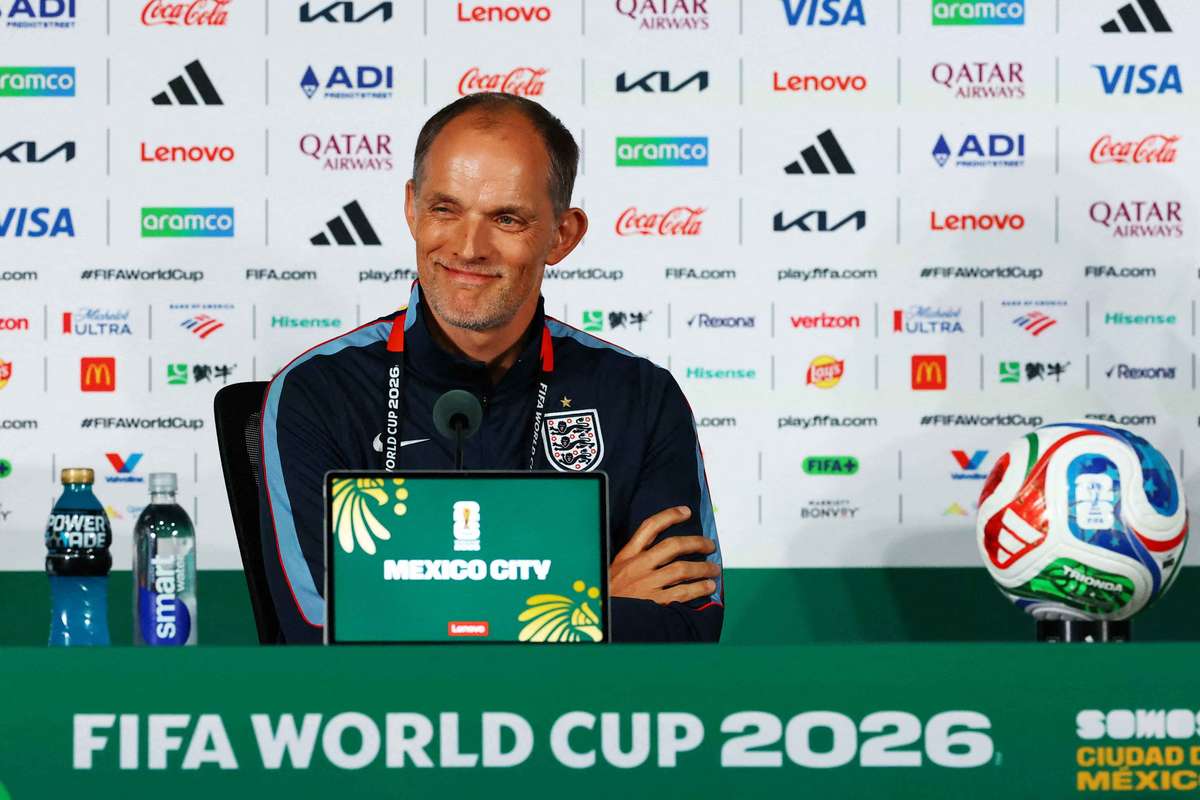
England's World Cup path has narrowed to a single corridor: Mexico City, Estadio Azteca, and a co-host nation that has not lost in this tournament. For Thomas Tuchel, the assignment is less about managing fear of the environment and more about managing the details his squad can actually command — spacing in the middle third, rest-defense shape after turnovers, and the tempo at which England can impose their structure on an opponent built to absorb pressure and strike in transition.
The visitors arrived in the capital on Friday and trained at Pumas UNAM's Cantera complex, their first session at roughly 2,200 meters above sea level. That timing mattered tactically as much as physically. With only four days separating England's round-of-32 victory over DR Congo and Sunday's knockout fixture, recovery windows were compressed. Tuchel used the open portion of training — roughly 15 minutes visible to media — to send a deliberate signal: the squad looked loose, smiling through warm-up drills, projecting the kind of emotional baseline that usually precedes a team confident in its game model rather than one bracing for excuses.
"We are in an iconic place, an iconic stadium, a massive game, a knockout game against Mexico at the Azteca," Tuchel told reporters. "It's an iconic match and a big stage, and we feel it." The German coach's language framed the occasion as context, not burden. That distinction will matter when the whistle blows and the first 10 minutes typically reveal whether a visiting side has settled its breathing rhythm or is still calibrating passes through thinner air.
Altitude as a Tactical Variable, Not a Narrative
Much of the pre-match discussion has orbited Mexico City's elevation, and Tuchel did not pretend it was irrelevant. After England's first session in the capital, he acknowledged that several players felt the conditions in the opening minutes before adapting as the work progressed.
"The players felt it in the first minutes of the training session and the longer it went, they could cope with it better," he said. "It's just what it is."
From a tactical lens, altitude rarely changes a team's principles; it changes the cost of executing them. Short passing chains that England have leaned on — their World Cup dataset this cycle includes sequences with 89–91% completion rates and possession figures of 60% and 67% in recent wins — require sharper decision speed because heavy touches get punished more quickly at elevation. Recovery runs after losing the ball become more expensive. That is why Tuchel's emphasis on "glue in the team" reads less like a motivational line and more like a structural requirement: compact distances between the double pivot and the back line reduce the number of sprints demanded in reactive phases.
England's recent tournament profile also suggests they are prepared to modulate shape by opponent. A 4-2-3-1 with 16 shots and seven on target in one World Cup 2026 win pointed to controlled dominance; a 4-1-4-1 away from home produced 17 attempts and 67% possession in another. Against Mexico, who have operated in a 4-3-3 and claimed a World Cup win this season with 15 shots despite only 43% possession, the tactical puzzle is familiar: break a side comfortable conceding territory if the spaces between lines stay narrow.
Atmosphere Without Hostility
Azteca's history adds a psychological layer England have not faced in a competitive match at this ground since the 1986 World Cup quarter-final against Argentina — the night Diego Maradona turned the world's largest football stage into a theater of two extremes. Tuchel, however, rejected the idea that England should expect a hostile reception from the co-hosts' support.
"I don't expect a hostile environment," he said. "I think it will be emotional and full of support for the home nation. Altitude, it is what it is. Home crowd, it is what it is. We need to overcome obstacles, but we have the spirit, the commitment, the pure will and the glue in the team to overcome these things."
That framing aligns with how elite teams treat crowd noise: not as an opponent to fight, but as a variable that speeds emotional decision-making if you are unprepared. Mexico's unbeaten run in the tournament means the Azteca crowd will arrive believing in a team that has already learned how to win without dominating the ball — a profile that can amplify the tension in key transition moments. England's task is to keep those moments manageable through rest discipline and controlled aggression in pressing triggers, not to win an argument with the stands.
Henderson's Role in the Middle Third
If Tuchel sets the emotional temperature, Jordan Henderson often sets the operational one. The 36-year-old midfielder spoke about the magnitude of the fixture with the clarity of a player who understands that knockout football is decided in the minutes when tempo slips.
"It doesn't get much better or bigger than playing Mexico in Mexico City in this stadium," Henderson said. "It's an incredible occasion for everyone. Mexico are a very good side. It'll be a really tough test, but everybody's looking forward to coming and playing this game."
Henderson's value in this specific matchup is positional rather than ornamental. Mexico's 4-3-3 structure in their recent World Cup win featured efficient vertical progression despite lower possession, which usually indicates a midfield that can play through pressure in short bursts. England need a connector who can receive under duress, shift the ball to the weak side, and — critically — organize the counter-press when the first line is bypassed. Henderson echoed his manager's insistence that external factors stay external.
"Everything that we can't influence, like altitude or kickoff times, is not in our control," he said. "For us, it's about full focus on our job ahead. No excuses. We're ready to go."
That language mirrors how Tuchel wants the squad to process the schedule constraint. Four days between knockout rounds is not ideal for a team that presses with intent, yet England's camp body language suggested they were prioritizing execution over complaint — a small but meaningful indicator heading into a fixture where the first 15 minutes often define whether a favorite controls the middle third or spends the half chasing oxygen and shape.
FIFA Rankings and the Matchup Profile
On paper, the gap between the nations is real. England enter ranked fourth in the world with 1,825.97 points, unchanged from their previous position, while Mexico sit 15th at 1,681.03 after climbing one place. Tournament form, though, has a way of compressing those margins. Mexico's unbeaten run at home in this World Cup cycle speaks to a team that has learned to win within its constraints: 43% possession in a recent victory, 15 shots, three on target, and a defensive ledger clean enough to keep pressure manageable.
England's corresponding data paints a different portrait — higher volume, higher control, more sustained territorial presence — but knockout football at altitude rarely rewards the team that looks best in aggregate statistics. It rewards the team that wins the decisive phases: the rest-defense recovery after a corner, the quality of the first pass under press, the discipline to avoid cheap fouls in dangerous areas. England collected 10 fouls in multiple recent World Cup fixtures; Mexico matched that number in their sample win but without a card, hinting at a side that can stay aggressive without self-sabotage.
What Sunday Demands
The Azteca is not merely a venue; it is a tactical amplifier. Elevation taxes repetition. Crowd energy accelerates risk. Mexico's co-host status adds emotional fuel without, in Tuchel's view, crossing into hostility. England's response, as articulated by both manager and captain-in-spirit midfielder, is to treat those elements as fixed conditions of the match environment — like pitch dimensions or weather — rather than as reasons to alter their competitive identity.
Sunday's question is straightforward even if the answer is not: can England translate their superior ranking and possession profile into clear chances against a disciplined, unbeaten Mexico side on the biggest stage in Mexican football? Tuchel's training-ground demeanor and Henderson's no-excuses framing suggest they believe the answer lies inside their own structure — compact defending, intelligent circulation, and the willingness to absorb one extra sprint in the 80th minute without losing shape.
For a squad ranked among the world's elite, that is the minimum standard. At Estadio Azteca, it may also be the difference between departure and continuation.