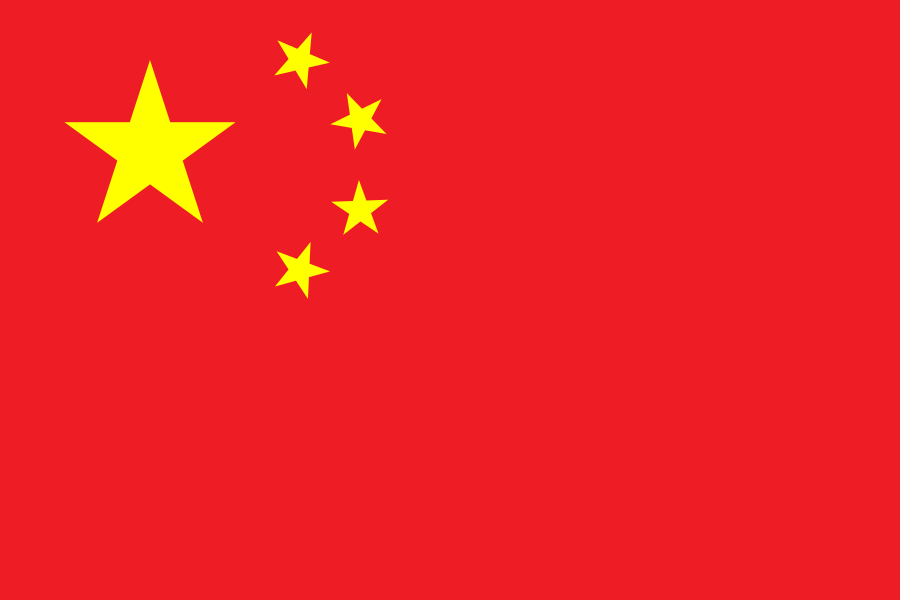




Four Round of 16 fixtures are in the books, and the early knockout data already sketches a clear pattern: the teams climbing FIFA’s current hierarchy did not all climb the same way. France remain world No. 1 after edging Paraguay in the tournament’s hottest recorded match. Morocco, ranked eighth, dismantled Canada 3-0 despite losing the shot-efficiency battle. England, fourth in the global table, delivered an upset on Mexican soil. Norway, 31st in the rankings, ended Brazil’s campaign. The sample is small, but the metrics across these four games are loud enough to forecast what the quarterfinal picture may look like.
France: Volume Without Open-Play Resolution
The headline number for Les Bleus is straightforward: one goal, one win, one step closer to a Morocco reunion that will test every warning sign from the Paraguay tape.
France controlled territory for long stretches against a Paraguay side sitting 40th in the FIFA rankings. The chance creation profile favored the Europeans throughout — Dembélé, Barcola, and captain Kylian Mbappé repeatedly found lanes in wide and central zones. Yet the conversion curve flattened in the first half: multiple high-value looks were either mishit or denied by Paraguayan goalkeeper Orlando Gill, who operated as the equalizer France’s expected-goals line never fully captured.
The decisive moment did not come from sustained open-play rhythm. After Gómez and Miguel Almirón fouled Désiré Doué in the penalty area, the initial no-call was overturned on review, and Mbappé converted from the spot. That single intervention flipped a game France had dominated in process but not in outcome.
From a tactical forecasting lens, the concern is structural rather than personnel-based. France’s attack model still runs through elite wide speed and interior combinations, but low-block opponents that compress the central corridor and force contested finishes have repeatedly turned French dominance into narrow margins. Paraguay’s defensive posture was not exotic — compact mid-block, aggressive goalkeeper positioning, limited transition risk — and it nearly held. With Achraf Hakimi and Morocco’s organized rest-defense waiting next, France must solve a recurring efficiency problem: high territorial share, low open-play reward.
Morocco 3-0 Canada: Possession Lies and Defensive Geometry
Morocco’s box score looks like a statement win. The underlying possession split tells a more complicated story — and that complication is exactly why the Atlas Lions look dangerous heading into the quarterfinal window.
Canada and Morocco finished level on possession, yet Canada generated roughly twice as many shots on target. By traditional shot-volume logic, that should have kept the hosts competitive. Instead, Canada scored zero, Morocco scored three, and the gap between chance quality and defensive discipline decided everything.
Canada’s attacking imprecision was not new. Group-stage film already flagged wasteful final-third decisions and rushed release points. In the Round of 16, those tendencies persisted: Canada created volume without sharpening the last action. But attributing the 3-0 solely to forwards would miss the larger structural failure.
Morocco’s opener traced back to a set-piece sequence in Canada’s defensive third. Azzedine Ounahi received the ball after a free kick in a dangerous zone; Canada’s line reacted flat rather than stepping as a coordinated unit. That static spacing invited the first breakdown, with goalkeeper Maxime Crépeau’s intervention arriving too late to recover the angle.
The second goal amplified the theme. Two Canadian center backs collided while tracking a ball over the top — a catastrophic coordination error that turned a manageable aerial phase into a conceded finish. Morocco did not need to dominate the ball to punish those moments; they needed Canada to break their own shape. The Atlas Lions did the rest.
For a side ranked 30th globally, Canada’s World Cup run as co-hosts still carried emotional weight. Tactically, though, the data profile reads like a team that can generate activity without controlling outcomes — a dangerous combination in knockout football where one structural lapse becomes irreversible.
England on Mexican Soil: Ranking Gap, Different Game State
England’s Round of 16 assignment carried a familiar tension: a top-five FIFA side traveling into a hostile environment against Mexico, ranked 15th and buoyed by home support. The result registered as a surprise on Mexican soil — the kind of outcome that rewrites pre-match priors even when the final margin stays modest on the stat sheet.
Without leaning on a specific scoreline beyond the confirmed upset frame, the broader lesson mirrors what France experienced from the opposite direction. England’s global ranking (fourth, unchanged in the latest cycle) reflects sustained qualifying and tournament form, but knockout football compresses those gaps when game state, crowd influence, and moment-to-moment decision speed shift. England’s ability to navigate that environment suggests their rest-defense and transition control held under stress — the same variables that collapsed for Canada against Morocco.
Mexico’s upward ranking movement (+1 to 15th) underscored progress entering the tournament. The Round of 16 exit still highlights a recurring knockout-stage challenge for hosts: emotional energy can carry a group run, but structural consistency under equalized pressure separates quarterfinalists from memorable stories.
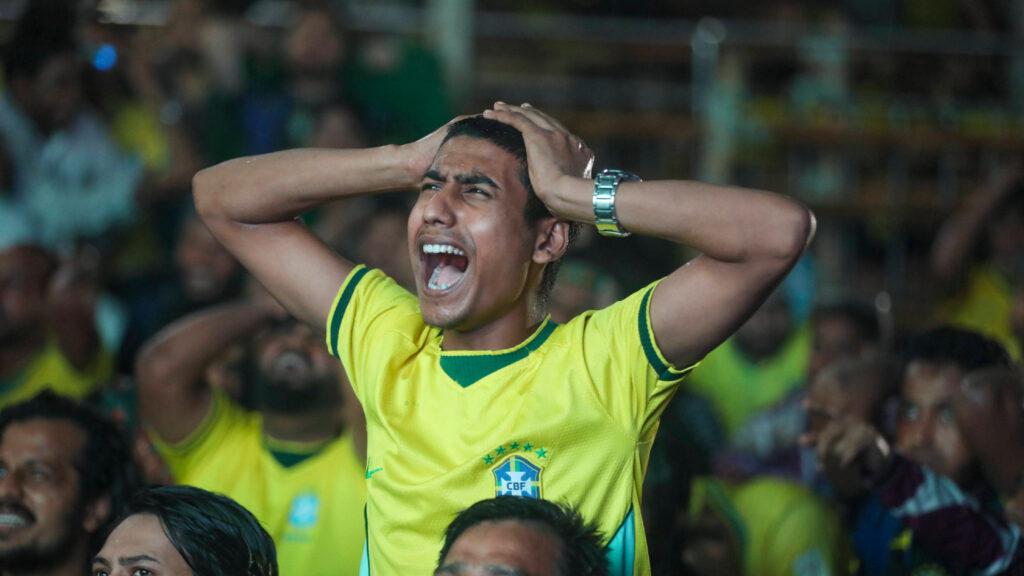
Norway vs Brazil: The Ranking Upside No Model Loved
If Morocco-Canada was a lesson in defensive geometry, Norway’s elimination of Brazil was a lesson in ranking humility.
Brazil entered the fixture sixth in the FIFA table, one spot down from their previous cycle but still carrying the weight of a traditional powerhouse profile. Norway sat 31st, up one place yet still outside the elite tier on paper. On the knockout stage, that paper gap frequently collapses when the lower-ranked side controls transition moments and limits Brazil’s preferred wide-to-central combinations.
Brazil being stopped in their World Cup quest does not require inventing a blowout narrative. The essential data point is simpler: the team with the higher global coefficient did not advance. Norway’s recent competitive sample — including a goalless draw in a November 2026 fixture in the same broader international window — hinted at a side comfortable playing within compact phases and forcing opponents to solve organized blocks. Against Brazil, that profile likely translated into fewer clean entries and more contested duels in zones where Seleção attackers expect time and space.
For Brazil, the exit marks another cycle where talent density did not automatically convert to knockout reliability. For Norway, it validates a game model built on discipline over possession share — the same philosophical lane Morocco exploited against Canada, albeit with different personnel and a different opponent profile.
Quarterfinal Forecast: Four Metrics to Watch
With half of the Round of 16 complete, four indicators already separate the remaining contenders from the eliminated.
1. Open-play conversion against organized blocks
France’s Paraguay tape is the clearest case study. Until Les Bleus improve finish quality and penalty-area decision-making without relying on set-piece or VAR interventions, every deep run carries latent risk.
2. Defensive coordination under set pieces and second balls
Canada’s goals conceded were not random. Flat lines, failed interventions, and self-collisions are repeatable failure modes Morocco identified and exploited. Teams that survive the next round will need synchronized stepping patterns, not individual heroics.
3. Upset readiness when rankings invert on the day
England and Norway both flipped expected outcomes against higher-ranked or home-advantaged opposition. That is not noise — it is evidence that knockout priors must weight environment and game state, not table position alone.
4. The France-Morocco collision course
The next direct test pits France’s possession-and-pace attack against Morocco’s rest-defense orchestrated in part by Hakimi. France rank first globally; Morocco rank eighth and arrive with a 3-0 confidence marker. If Les Bleus repeat the Paraguay efficiency curve, the Atlas Lions have already shown they can win without winning possession.
Bottom Line
The first four Round of 16 games did not produce a single tactical monoculture. France won while searching for open-play clarity. Morocco won while conceding the shot-on-target battle. England and Norway won while rewriting ranking-based expectations. The quarterfinal field will be shaped less by who looked strongest on paper and more by who converted structural advantages into irreversible moments — the exact variable Grace’s model tracks when the knockout stage stops forgiving mistakes.