

















For years, Charles De Ketelaere carried a question that followed him from Belgian youth football to Serie A and now onto the biggest stage of all. Could the elegant forward who once looked like the next creative heartbeat of Belgium finally deliver the kind of night that silenced doubt and announced arrival in equal measure?
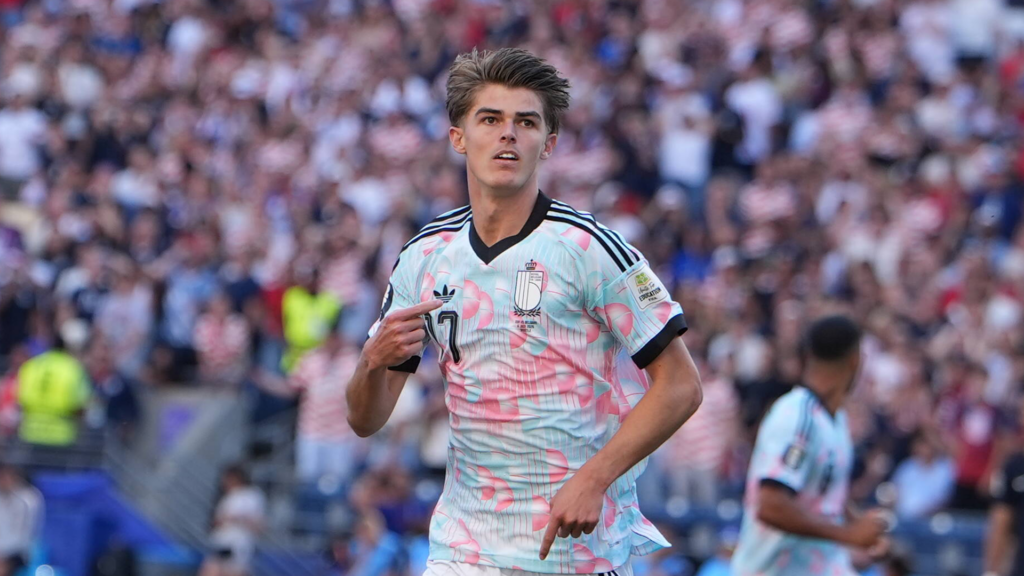
At Lumen Field in Seattle, under the weight of a Round of 16 tie at the World Cup, he answered with rare clarity. In 67 minutes, De Ketelaere scored twice, set up another, and walked off having changed not only the scoreline but the emotional temperature of Belgium's tournament. The final reading was 4-1. The personal reading was something sharper: a player who had spent seasons navigating expectation finally wrote the chapter everyone had been waiting for.
A Knockout Stage That Demanded More Than Talent
Belgium arrived in Seattle knowing that knockout football rarely rewards reputation alone. The Red Devils entered the Round of 16 ranked ninth in the world, unchanged from their previous position, carrying the quiet confidence of a squad accustomed to high-stakes nights. Yet standing across from them was USA, ranked 16th and only one place lower than before the tournament began — a team built to compete rather than merely participate.
That context shaped everything. USA were not an opponent Belgium could overwhelm by standing still. They needed a forward who could turn half-spaces into danger, who could carry the ball into areas where organized defending breaks down. De Ketelaere had spent much of his career being described in exactly those terms. On this night, description became proof.
From Atalanta to the World Stage
The journey to Seattle carried its own texture. De Ketelaere rebuilt his rhythm at Atalanta, a club that has long asked its attackers to think quickly, move intelligently, and accept that creativity must be matched by work off the ball. That environment shaped the player who stepped onto the Lumen Field turf.
He was listed in an advanced role, operating between the lines as both a No. 10 and a forward capable of stretching a back line. Against USA, that hybrid identity became Belgium's most reliable weapon. Every time the Americans compressed central areas, De Ketelaere drifted, received, and moved again before the press could settle.
Two Goals and an Assist in 67 Minutes
The numbers tell the shape of the performance even if they cannot fully capture its timing. De Ketelaere needed just over an hour to produce two goals and one assist, the kind of return that defines knockout ties rather than merely decorates them. He finished with three shots and put all three on target, converting strong positions into tangible damage rather than near misses.
His expected goals stood at 1.22, while his expected goals on target climbed to 1.98, a gap that speaks to the quality of his finishing under pressure. Three key passes kept Belgium on the front foot, and one became the assist that completed his personal hat trick of influence. He touched the ball 30 times, lost possession only four times, and was caught offside once while drawing a foul that slowed USA's attempts to rebuild rhythm.
For a player whose career has often been discussed in terms of potential, those figures read less like projection and more like execution.
Movement That Stretched the American Back Line
What separated this display from a standard forward's stat sheet was the way De Ketelaere moved with the ball. Ten carries carried him 97.16 meters into advanced territory, repeatedly forcing USA defenders to adjust their spacing. His best single carry advanced play by 21.07 meters, a burst that illustrated why static marking rarely works against him. Two of those runs were progressive, adding 34.50 meters of forward gain and turning cautious possession into genuine threat.
That ball-carrying profile has always been part of his appeal. At Atalanta, he learned to combine vertical runs with subtle changes of pace. In Seattle, those habits translated directly to international football. USA's back line, organized and athletic, still found itself stretched because De Ketelaere refused to remain where he was first marked.
He also held his ground when the game tightened. De Ketelaere won six of nine duels, including three aerial contests from six, useful presence for a player operating in advanced zones where contact is inevitable. He added two interceptions and completed his only tackle, small details that reflected a willingness to contribute beyond the highlight reel.
Link-Up Play and the Chemistry of a Big Night
Knockout football is not only about individual brilliance. It is about whether a forward can make those around him better in the moments that decide seasons. De Ketelaere connected 15 of 17 passes for 88 percent accuracy, a clean return in a role that demanded constant involvement. In the opposition half, he completed 12 of 14 attempts, keeping Belgium's combinations crisp around the penalty area. In his own half, he went three for three when recycling possession under pressure.
One cross attempt showed his willingness to vary the final action, but the deeper story was availability. He stayed between the lines, offered himself as a relay point, and then attacked space when the pass arrived. His expected assists figure of 0.02 underscored a subtle truth: much of his influence came from passes that required sharp finishing from teammates, not obvious lay-offs. That is often the mark of a creator who understands that chance quality and final execution do not always align in the spreadsheet.
How Belgium Won Despite Less of the Ball
The wider match picture reinforced why De Ketelaere's efficiency mattered so much. Belgium finished with 15 shots and seven on target while holding only 44 percent possession. USA, for their part, managed 56 percent of the ball, seven attempts, and two on target, scoring once. It was a night that rewarded directness and precision over territorial control.
Belgium's four goals against a single American reply confirmed the gap on the night without pretending the path had been easy. USA's lone goal reminded everyone that even controlled performances can leave scars if concentration slips. Yet the Red Devils' attacking output, led by De Ketelaere's trio of direct contributions, suggested a team finding its clearest identity at the exact moment the tournament narrows.
A Career Crossroads Written in Seattle
There is a particular kind of night in a player's life that reorders how supporters, coaches, and even the player himself remember a career. For De Ketelaere, Seattle may become one of those nights. Not because it erases every earlier struggle or every match where the final product fell short of the promise, but because it showed the full package in a setting where half-measures end tournaments.
He has moved through phases: the young Belgian hope, the expensive move that invited scrutiny, the quieter rebuild in Bergamo where work replaced noise. Each phase added a layer. What he delivered against USA felt like those layers finally aligning — movement, passing, finishing, and competitive edge arriving together when Belgium needed it most.
The Road Ahead
Belgium move on to the quarter-finals with momentum that extends beyond the scoreline. Teams that find a definitive attacking leader in the last 16 often carry a different psychological weight into the next round. De Ketelaere, for so long discussed as a player on the edge of greatness, now has a World Cup knockout performance that requires no qualifier.
USA depart with pride intact. They competed, possessed the ball for long stretches, and forced Belgium to earn their advancement. But on a night when the tournament demanded a protagonist, De Ketelaere accepted the role completely.
In the stands at Lumen Field and in living rooms across Belgium, the conversation will not be about what he might become. It will be about what he did when the stage was largest and the cost of failure was elimination. Two goals, one assist, and 67 minutes that may define the rest of his international story.