







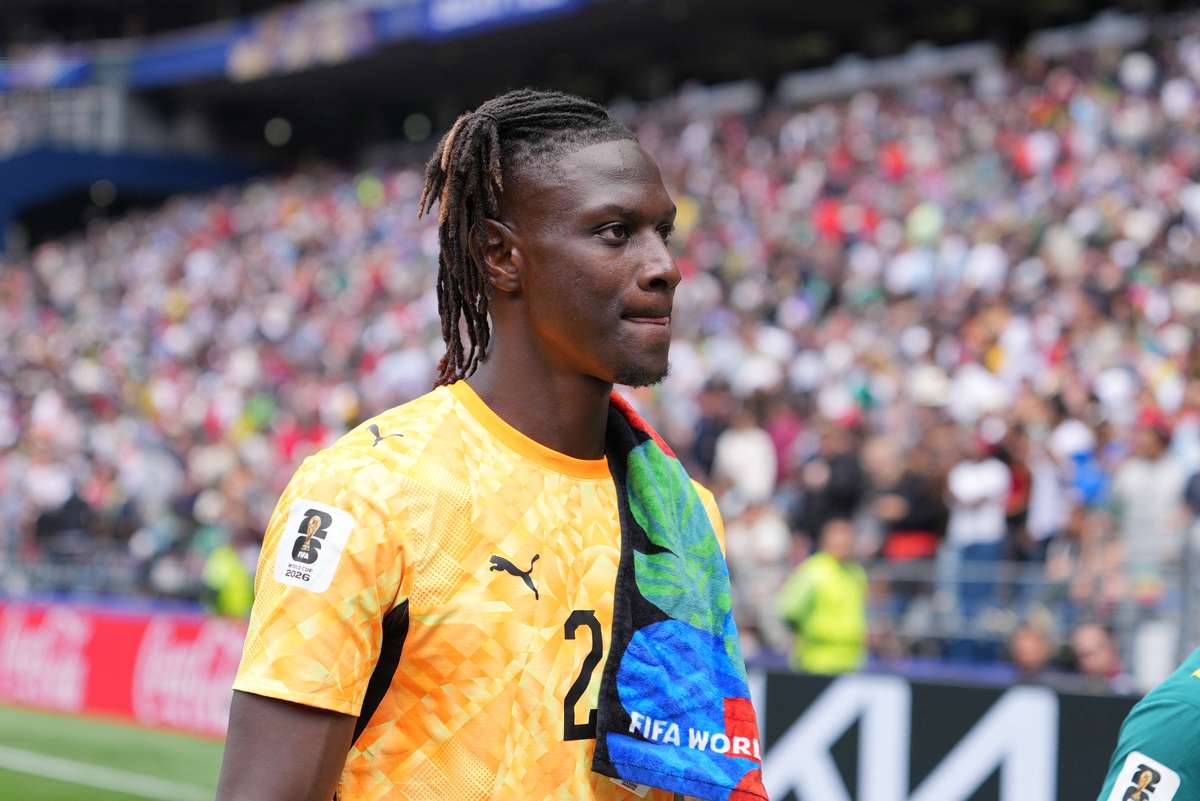
The final whistle had barely settled when the weight of a single moment began to press on Mory Diaw. Senegal had controlled long stretches of their World Cup Round of 16 tie against Belgium, built a two-goal lead, and still walked off eliminated after a 3-2 extra-time loss. For the goalkeeper who stepped in when first-choice Edouard Mendy could not finish the tournament, the pain was immediate and public.
Diaw did not wait for debate to harden online. He went to social media and spoke directly to the nation that had traveled with the Lions of Teranga through qualification, group-stage survival, and a dominant win that had carried them into the knockout round. His message was not defensive. It was the kind of plainspoken accountability that only someone who has lived between the posts can offer.
A Tournament That Turned on Injuries and Opportunity
Senegal's World Cup path had already been shaped by uncertainty in goal. Mendy started the opening defeat to France and returned for the second group match against Norway, only to leave the field with a left-knee injury that forced coach Aliou Cissé to turn to Diaw mid-game.
That change opened a door the Le Havre stopper had waited years to walk through. Diaw started the following fixture and helped Senegal hammer Iraq 5-0, a result that sealed progression to the Round of 16 and gave him a platform on the sport's biggest stage. When Belgium arrived in the knockout phase, Mendy was still not fit to start. Diaw was entrusted again.
The match itself told two stories at once. Senegal's performance in regulation mirrored the broader arc of their campaign: energetic, organized, and capable of taking control against elite opposition. Belgium, ranked ninth in the world and carrying the pedigree of a perennial contender, found themselves chasing the game for long periods.
Yet knockout football rarely rewards dominance alone. Belgium tightened their structure late, dragged the tie into extra time, and completed a turnaround that left Senegal's players staring at a scoreboard that no longer matched the flow of the contest.
The Moment Diaw Could Not Take Back
Among the turning points, Belgium's second goal stood out as the one Diaw chose to own. Youri Tielemans rose to meet a delivery in a congested area, and Diaw advanced off his line attempting to relieve the danger. The timing did not hold. Tielemans got above him, and the ball found the net.
In a match Senegal had led 2-0, that sequence became part of a broader collapse rather than an isolated incident. Still, Diaw refused to hide behind context.
"Unfortunately, things didn't go as planned," he wrote. "And I don't need to watch the replays to know that I bear some responsibility."
It is a line that cuts to the goalkeeper's contract with the game. Outfield players can miss chances and remain anonymous in the noise of a defeat. A keeper's error is magnified, archived, and replayed until it feels permanent.
"As a goalkeeper, you live with these kinds of moments," Diaw added. "A single action can erase everything that came before. It's a pain that only those who have held this position can truly understand."
For a player whose club career has been built on patience at Le Havre, that honesty carried extra weight. This was not a veteran closing out a long international chapter. This was a man living a childhood dream in real time and watching one decision become the headline.
Words Spoken Like an Interview, Not a Statement
What made Diaw's post resonate beyond the immediate result was how much of it sounded like a conversation rather than a press release. He did not stop at apology. He tried to place the elimination inside a wider story about what Senegal have built.
"A childhood dream... To wear the colours of Senegal in a World Cup," he wrote. "Since I was a child, I imagined this moment thousands of times. I never imagined it would end with such emptiness."
That emptiness, he made clear, was not his alone. He spoke about teammates who had emptied themselves on the pitch, families who had carried the emotional cost of long camps and long flights, and supporters who had treated this run as a shared national project.
"Today, I feel immense sadness," he continued. "For my teammates, who gave everything. For our families. And above all, for an entire nation that dreamed with us. I am sorry. Sorry I couldn't take you further. I will carry this pain with me for a long time."
There was no attempt to rewrite the match. Senegal's numbers from the defeat reflect a team that stayed competitive in possession and chance creation, finishing with 19 attempts and two goals while Belgium matched them on volume and found three. In a tie that swung from control to crisis, Diaw's admission sat alongside the broader truth that elimination rarely rests on one player.
Even so, he understood how goalkeeping works in public memory. A strong tournament can be framed by the save not made, the punch not claimed, the line not held.
Pride That Outlasted the Result
If the apology was the headline, the closing tone was equally telling. Diaw did not ask to be forgiven quickly, and he did not ask the country to forget the defeat. He asked them to remember what came before it.
"But I don't want this elimination to make people forget what this team has built in recent years," he wrote. "Behind every victory, every qualification, and every emotion, there are immense sacrifices, hours of work behind the scenes, injuries, moments of doubt, and a group that never stopped believing."
That framing fits Senegal's recent identity. Ranked fourteenth in the world entering the tournament, they arrived with proof that African football's competitive depth continues to grow. Ismaila Sarr had been among their most influential performers throughout the World Cup, carrying attacking threat and leadership when the team needed a reference point in transition.
Diaw's message seemed aimed at protecting that broader narrative from being reduced to one night in the knockout round.
"But it will never change the love I have for this jersey," he said, "nor the pride I feel in having represented my country on the biggest stage."
He ended where many athletes only arrive after years of distance from failure: with a promise to return.
"Sometimes the biggest scars become the greatest strengths," Diaw concluded. "I will come back with even more determination, because this badge deserves to be reclaimed, no matter the challenges."
What Comes After the Apology
For Senegal, the immediate work is emotional and structural. A squad that reached the Round of 16 and pushed a top-ten nation to extra time will dissect the details of game management, defensive concentration, and the thin margins that separate advancement from departure. For Diaw, the path forward is equally personal.
Mendy's injury created opportunity, and Diaw seized enough of it to help the team advance before the Belgium loss. That sequence will follow him back to club duty, where consistency over a full season often matters more than one high-profile night. Internationally, his willingness to speak plainly may earn respect inside the dressing room even as debate continues outside it.
Belgium move on with Tielemans' intervention among the moments that defined their survival. Senegal go home with a public apology from their stand-in goalkeeper and a reminder that World Cup dreams can arrive suddenly and end just as fast.
In the end, Diaw offered supporters something rare in the aftermath of elimination: accountability without excuse, pride without denial, and a belief that the story of this team did not begin or end on one rushed decision off his line.