








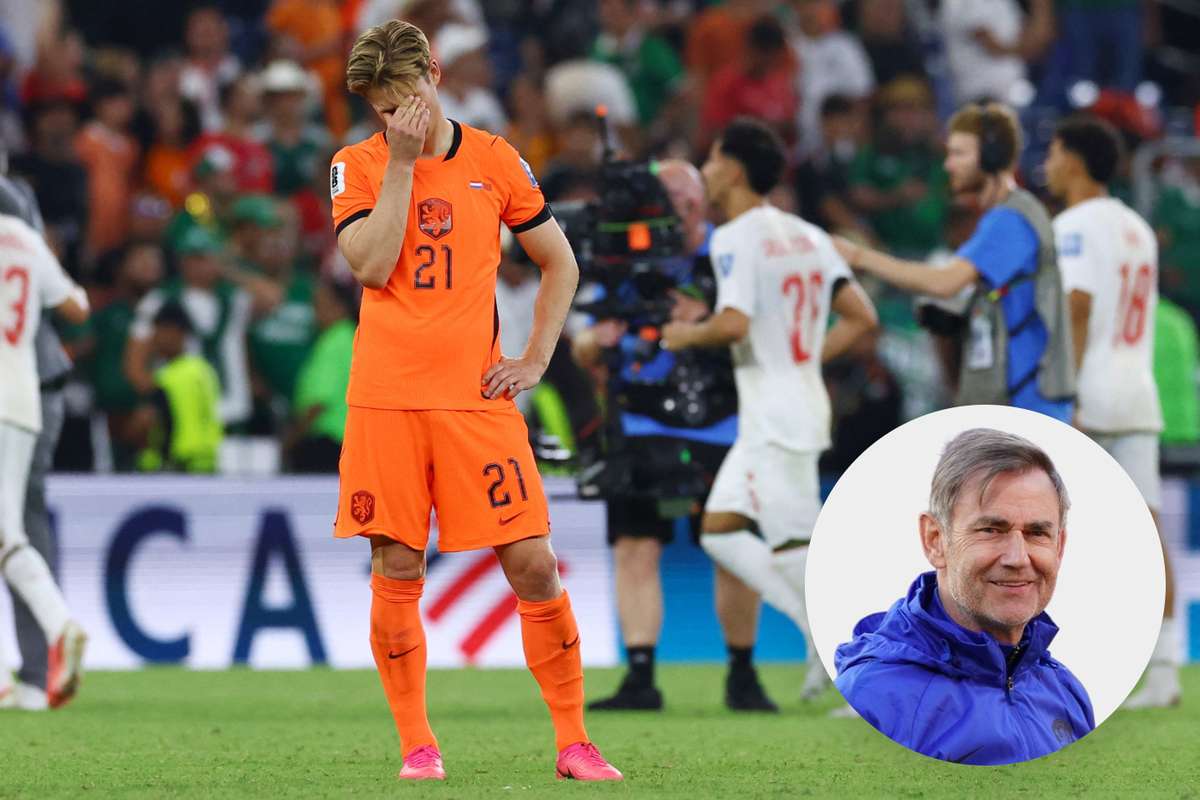
The Netherlands and Morocco walked into their World Cup meeting looking like two of the tournament's most convincing group-stage sides. By the final whistle, former Dutch staff member Marco van Hoek was left with a blunt verdict: the Oranje had not looked like themselves at all.
"It was one of those games that promised real quality," Hoek said, reflecting on a tie that carried far more weight than a standard knockout-round opener. Morocco arrived in what he described as arguably the strongest period in their history. The Netherlands, ranked seventh in FIFA's latest list, still carried the profile of a side built to dominate the ball and force the issue.
The gap between those two pictures and what actually unfolded on the pitch is what Hoek keeps returning to.
A decade of change at the top
Hoek's reference point is personal. When he was part of the Dutch setup for a friendly against Morocco in 2017, the Netherlands won 2-1. Nearly ten years on, he sees a different country entirely in the Atlas Lions.
Morocco sit eighth in the current FIFA rankings, unchanged from their previous position, and Hoek pointed to their run at the last World Cup and their strong work at the most recent Africa Cup of Nations as evidence of a sustained rise rather than a one-off surge. In this tournament's group phase, he singled out their performance against Brazil as especially sharp, even if their other fixtures were slightly less commanding.
The Netherlands, meanwhile, had mixed impressions of their own path through the groups. Their opening match against Japan was uneven at times, though Japan's 18th-place ranking underlined the quality in that room. A 5-1 victory over Sweden felt like a genuine statement, and the win against Tunisia was comfortable even if Hoek noted moments when fortune helped the Dutch through sticky passages.
None of that, in his view, fully explained what happened once Ronald Koeman reshaped the team for Morocco.
When the system flipped
Through much of the World Cup, the Netherlands had lived in a 1-4-3-3, including the use of a dedicated goal-side forward in the house style Koeman inherited from Dutch football's broader identity. Against Morocco, that changed.
Koeman moved to a 1-5-2-3, or effectively a 1-3-4-3 depending on the phase. Hoek called it a major shift, and the match that followed looked like the inverse of what observers expect from Netherlands football.
"Morocco basically played the way we usually want to play," Hoek said. "They were the Netherlands, and the Netherlands looked like Morocco of ten years ago."
The Dutch settled into a 1-5-4-1 without the ball. Hoek thought the structure was reasonably compact, but compactness alone could not restore control. Morocco saw plenty of possession and initially moved it with caution, as if waiting for the tie to find its rhythm. Once the game opened, the contrast became harder to ignore.
Physical edge and possession lost
When Morocco did accelerate, Hoek saw intensity, power and speed at a level he considered genuinely top-class. Their defending was physical throughout, constantly riding the line between legal pressure and foul trouble. Hoek praised the referee for staying even-handed and allowing a demanding, contact-heavy contest to breathe rather than interrupting every challenge.
"It was football for men," he said, framing that tone as one reason the Netherlands could not keep the ball for long stretches. Morocco's aggression arrived at the right moments, and the Dutch, seventh in the world but playing on unfamiliar terms, struggled to impose their usual rhythm.
That is the heart of Hoek's "un-Dutch" label. The Netherlands did not lose because they lacked effort in a back line of five. They lost because the match asked them to be something other than what their tournament identity had been built around.
Questions beyond the result
Hoek's column arrives at a moment when the conversation around Koeman is widening. The aggregate theme of the Dutch camp's post-tournament reckoning already includes not only how the Morocco plan was chosen, but who should lead the national team if the federation decides change is necessary.
The truncated public discussion so far has focused more on the performance itself than on naming a successor. Still, Hoek's assessment carries weight because it comes from someone who knows the internal language of Dutch football and can compare this side with the Morocco he once prepared for.
For Morocco, the night reinforced a broader trend. A team once treated as a useful benchmark in friendlies now sits among the world's top ten and played the kind of proactive, front-foot football the Netherlands are supposed to own. For the Oranje, the defeat is less about one bad half and more about a tactical identity crisis at the worst possible stage.
Hoek did not dress that up. The Netherlands had shown enough in the group to believe they belonged at the sharp end. Against Morocco, they became a side waiting to be beaten on terms they rarely accept. That, he suggested, is what will linger longest after the flight home.