



Sirens and barricades arrive before the opening whistle. In Paris—and not only in Paris—public viewing screens flicker back to life under the gaze of thousands of officers in the hours before France face Morocco. In Boston, the mood could hardly be more different: families wave both flags from the same section, children wear replica shirts from both camps, and the wait feels more like a neighborhood festival than a security operation.
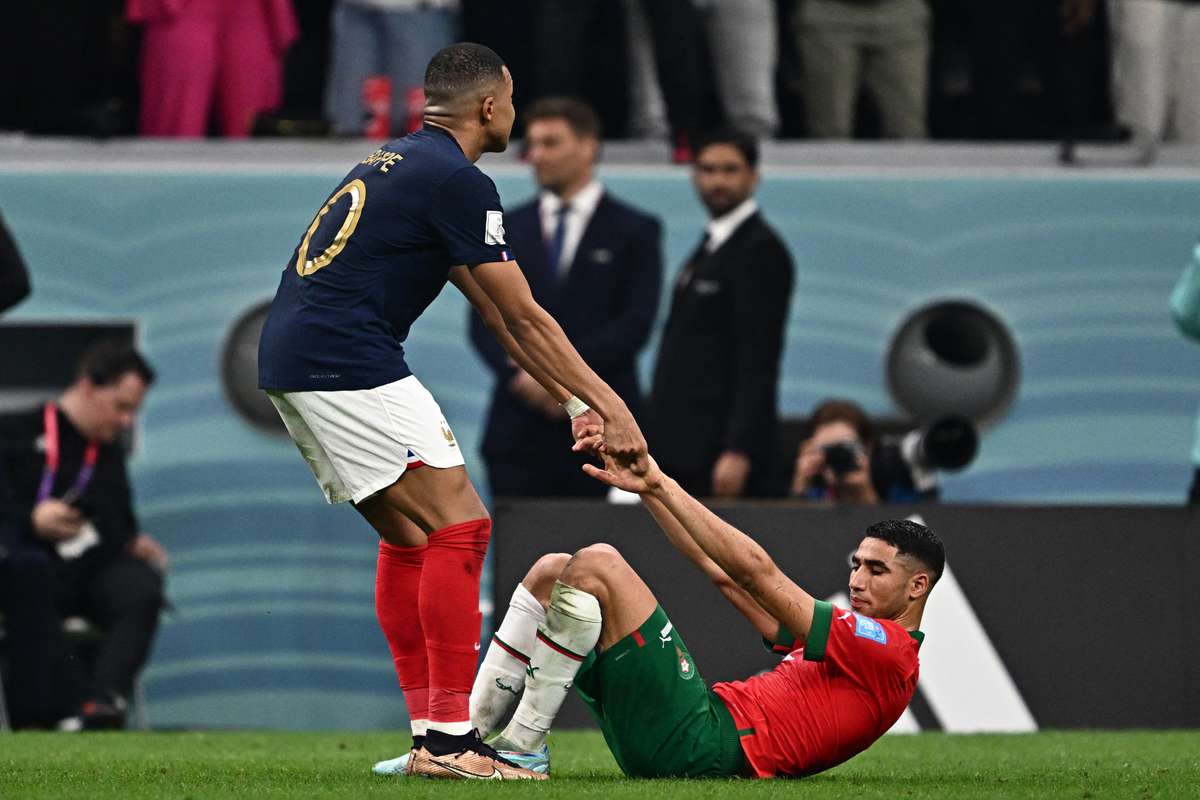
That split screen is the real headline of this World Cup quarter-final, a fixture that carries the weight of a final without needing a trophy ceremony attached. On one side sits France, FIFA's current No. 1 at 1877.32 points after climbing two places, a squad built around Kylian Mbappe, Ousmane Dembele and Michael Olise. On the other is Morocco, steady at eighth in the world on 1755.87 points, no longer framed as romantic underdogs but as peers—proof that the Atlas Lions belong among the sport's modern elite.
When Football Stops Pretending This Is Just a Game
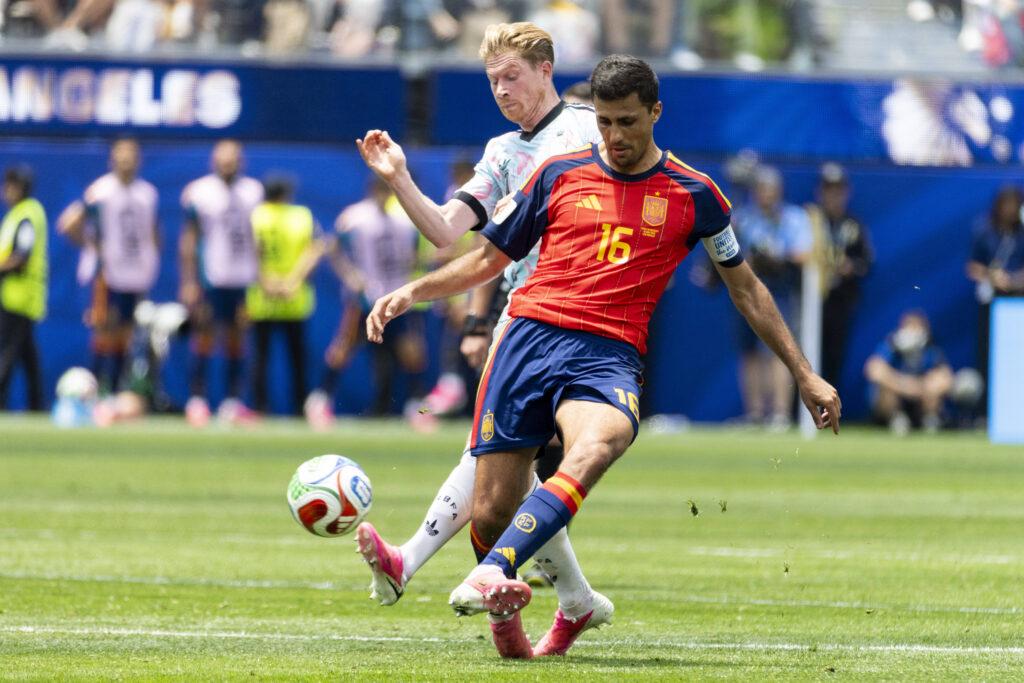
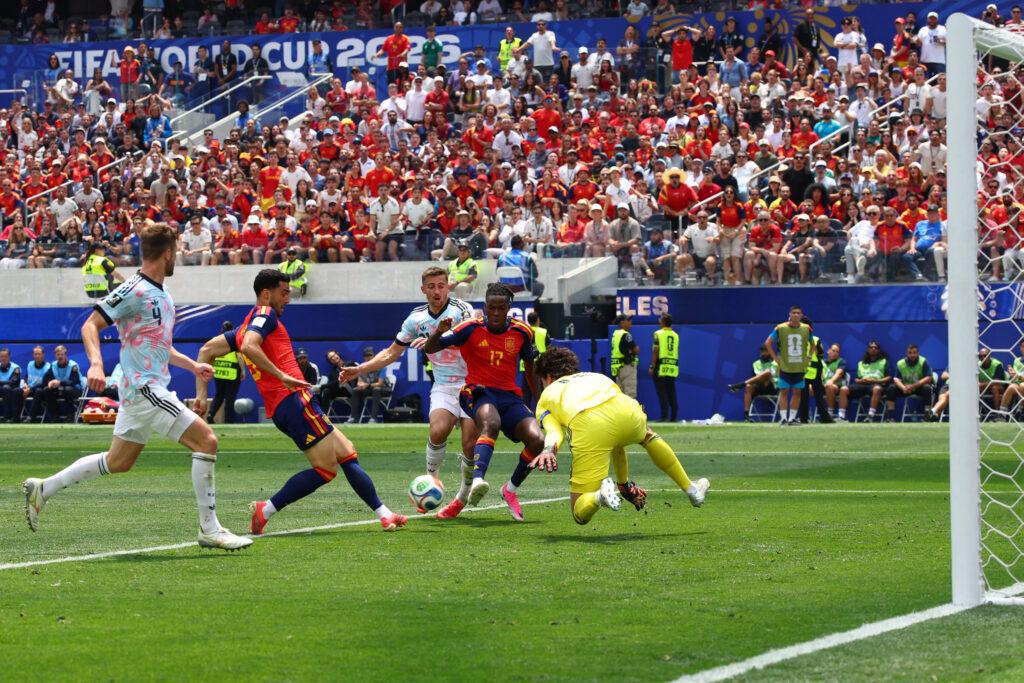
The sporting case alone would justify the noise. France have moved through the tournament with the controlled confidence of a squad that expects territory; Morocco have mixed swagger and grit, with Achraf Hakimi's raids from full-back, Brahim Diaz's clever finishing and Ismael Saibari emerging as one of the revelation stories of the summer. Two 4-2-3-1 shapes, two confident identities, two teams that can win this match without anyone calling it an upset.
The numbers from earlier in the competition underline the point. Morocco's 3-0 victory featured five shots, four on target and 55 percent possession—a performance that was efficient rather than lucky. France's 1-0 win came with 15 attempts, 76 percent possession and 568 passes completed at 90 percent accuracy, the kind of control that still leaves room for anxiety when chances do not convert. This is not a favorite against a tourist. It is a genuine collision between two teams that have already proved they can live at this level.
Yet nobody with a television and a passport between Paris and Rabat believes the story ends at tactics. This is a match stitched into language, migration, colonial memory and the uncomfortable question of who is allowed to celebrate whom without being accused of disloyalty.
The Long Shadow of a Shared Past
The outline is familiar even if the details deserve a library, not a newsroom paragraph. France's protectorate over Morocco ended in 1956, but it did not exit cleanly. It left French in classrooms and boardrooms, Moroccan workers in French factories, and generations of families who learned to live inside hyphenated identities long before football analysts turned dual eligibility into transfer-market gossip.
Today, nearly a million Moroccans live in France. Tens of thousands of French residents have made the reverse journey. For decades the relationship felt almost mundane: France as cultural reference point, French as a ladder. Then politics reminded everyone that ladders can be kicked away.
Visa restrictions, diplomatic freezes, the Pegasus spyware scandal and bitter arguments after Morocco's 2023 earthquake did not erase shared history; they just made it harder to pretend history was only history. The apparent thaw in 2024—French support for Morocco's Western Sahara plan, Emmanuel Macron's state visit to Rabat, the usual procession of infrastructure deals worth billions—looked like reconciliation packaged for cameras.
Money Moves Faster Than Trust
Here is where the gap between official warmth and everyday feeling becomes impossible to ignore. Deals signed in marble halls do not automatically rewrite what young people feel on social media. In Morocco, English is climbing as the language of tech, universities abroad and online ambition. That is not anti-French nationalism in a slogan-ready sense. It is a quieter statement: why should the future still route through the former colonial power's tongue?
France, meanwhile, watches a diaspora large enough to field half a dozen national teams and wonders—sometimes fairly, sometimes hysterically—who will be cheered in which banlieue if Morocco win. Security deployments before kickoff are not simply about hooliganism. They are about fear that national pride and personal heritage might collide in public space in ways politicians cannot script.
And in the middle of that tension sit ordinary fans, many of them women and families who just want ninety minutes without being asked to perform citizenship on command. The Boston scenes matter because they show another possibility: shared joy without a checkpoint. Paris matters too, but for a harsher reason—it shows how quickly sport can be treated as a risk profile instead of a gathering.
Two Teams, One Mirror
On the pitch, France and Morocco meet as equals in a way that would have sounded naive four years ago. Off it, the scoreboard everyone argues about is social. Can you wear red and green in Paris if you hold a French passport? Can you support Les Bleus in Casablanca without apologizing? Can a player as gifted as Hakimi represent Morocco while growing up inside European club football's ecosystem and not become a prop in someone else's culture war?
Those questions will not be answered in ninety minutes plus stoppage time. They probably will not be answered in ninety years. But they will be asked—loudly—in every café broadcast, every family group chat, every clip shared with a caption meant to wound.
What This Match Actually Decides
Sport loves to offer closure. Politics rarely accepts the receipt. If France progress, expect relief dressed up as inevitability and a chorus warning against reading too much into police deployments that worked. If Morocco advance, expect pride shaded by anxieties about public order and identity politics in European host cities.
Neither outcome settles the deeper ledger between these nations. That ledger was never going to be settled on grass, though football keeps trying anyway because it is the one grammar both countries fluently share.
So watch the match for Mbappe's directness, for Saibari's nerve, for the tactical chess between two systems that believe they belong on this stage. But do not insult the audience by calling it only a quarter-final. For France and Morocco, it was always going to be more—and everyone knew it before the first siren sounded.