

















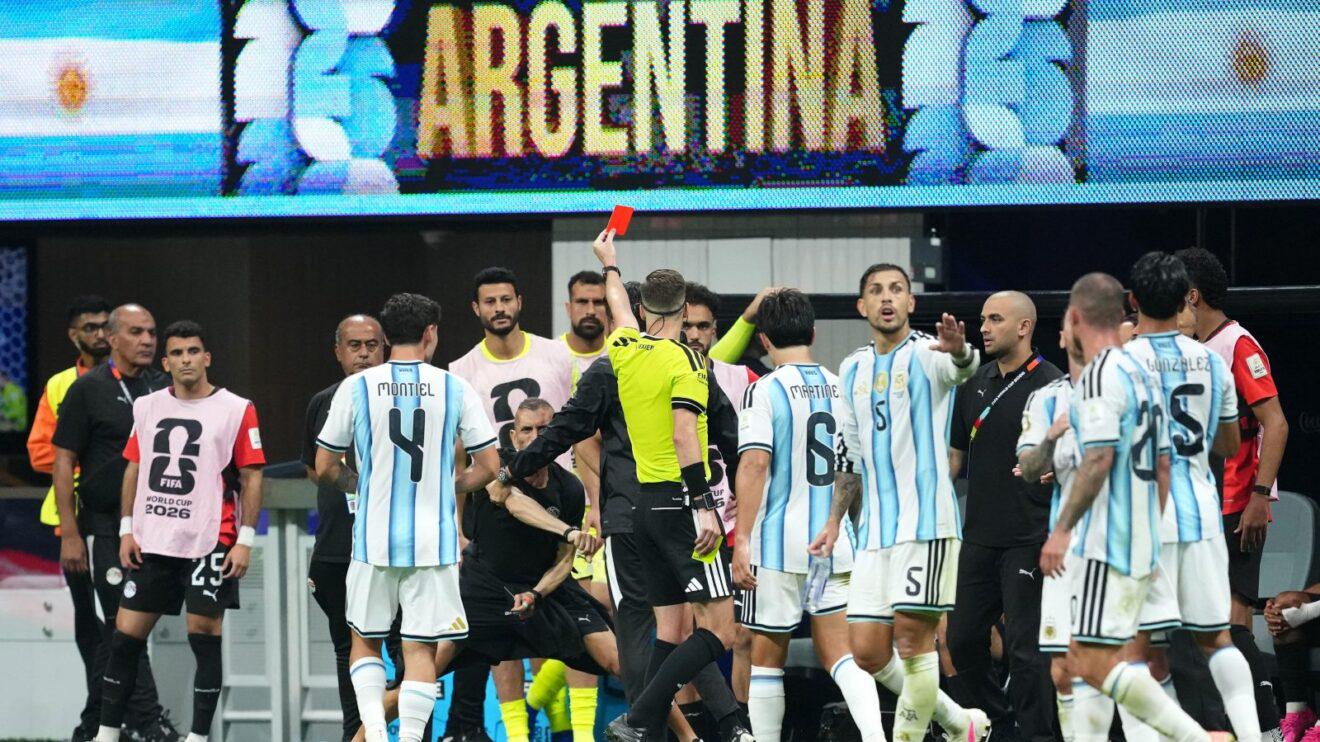
The refereeing fallout from World Cup round-of-16 football rarely stays confined to press releases. When Argentina overturned a two-goal deficit to beat Egypt 3-2, the result was not just a classic comeback on the scoreboard. It became a test case for how modern officiating holds up under the weight of elimination football, VAR intervention, and the emotional charge that follows when a favorite survives and an underdog walks convinced the margins were tilted.
FIFA refereeing chief Pierluigi Collina entered officials at this tournament operate with complete independence, and allegations of bias have no place in the sport. His intervention came after Egypt's camp questioned the integrity of key decisions that shaped the closing stages, including the disallowance of a Mostafa Zico strike and the absence of a penalty when Mohamed Salah went down in the buildup to Argentina's stoppage-time winner.
What the numbers say beneath the controversy
Strip away the protest language for a moment and the match profile still tells a coherent tactical story. Argentina finished with 64% possession, 19 shots and seven on target, completing 602 passes at a 90% success rate. Egypt, by contrast, held the ball for just 36% of the match, managed only five attempts and two shots on target, and circulated 348 passes at 83% accuracy.
Those figures do not erase disputed calls, but they explain why the game felt like a siege in the second half even before the final swing. Egypt's early two-goal cushion was built on efficiency rather than territorial control. Once Argentina raised the tempo and began flooding the final third, the Pharaohs spent long stretches defending a lead they could not protect through sustained possession.
The comeback also fits Argentina's broader World Cup profile. FIFA ranks La Albiceleste third in the world with 1,874.81 points, one place down from their previous position but still among the elite. Egypt arrive from 29th, up two spots to 1,563.24 points, which underlines the gap in baseline squad depth and game management under pressure. In a knockout tie, that gap often shows up not in one moment, but in the cumulative effect of repeated attacking waves.
The Zico disallowed goal: foul, phase of play, and tactical consequence
Egypt's sharpest grievance centered on Zico's second-half finish being ruled out for a foul in the buildup. The Egyptian Football Association described the infringement as non-existent. Collina offered a different reading, stating that VAR had correctly recommended overturning the goal after identifying a foul by Marwan Attia on Argentina defender Lisandro Martinez during the attacking possession phase.
From a tactical lens, that sequence matters because it was not a random whistle in a static moment. It arrived in the phase where Egypt were trying to transition from survival mode into something more ambitious. A validated Zico goal would have restored a two-goal cushion and forced Argentina into even more risk. Instead, the decision kept the scoreboard tight and preserved Argentina's structural advantage: more bodies forward, more rest-defense exposure from Egypt, and a psychological opening for the favorite to keep pressing.
Collina's explanation leaned on procedure rather than optics. "We believe that a foul is a foul," he said, adding that VAR can intervene when the on-field referee misses an infringement regardless of whether it appears obvious. That is the procedural heart of the dispute. Egypt saw a clean attacking action punished at the worst possible time. FIFA saw a defender foul in the possession chain that invalidated the finish.
The Salah incident and the winning move
The second flashpoint arrived minutes before Enzo Fernandez's stoppage-time winner. Egypt argued that a challenge on Salah went unpunished immediately before Argentina launched the move that decided the tie. Collina defended the non-call, saying both the referee and VAR judged the contact between Salah and Julian Alvarez to be normal football contact rather than a foul worthy of a penalty.
Tactically, that is the highest-leverage type of decision in knockout football because it sits directly on the event chain that produces elimination. If awarded, Egypt likely receive a spot kick with the score level and the clock winding down. If play continues, Argentina retain the freedom to attack with numbers and spacing already tilted in their favor.
Collina distinguished between stepping on an opponent's foot and a defender who touches the ball first before making contact in the challenge. That distinction is exactly what VAR rooms are built to parse, but it rarely satisfies the losing side in a game of this magnitude. For Egypt, the non-penalty and the disallowed Zico goal formed a narrative of inconsistency. For FIFA, they were two separate judgments made within the same independence framework Collina spent Thursday defending.
Hassan's pressure claim and the independence argument
On the touchline, Hossam Hassan went further than debating individual calls. After the match he suggested there may have been pressure on the referee to keep Argentina in the tournament, a claim that cuts deeper than any single offside or handball review because it attacks the legitimacy of the entire officiating apparatus.
Collina rejected that framing outright. He said nobody can question the integrity of World Cup match officials and that FIFA refereeing cannot be influenced by anyone, not even by the organization's president. He also warned that unfounded allegations can provoke threats against referees and their families, shifting the conversation from football analysis to duty of care for officials operating under extreme scrutiny.
That is the political layer sitting on top of the tactical one. Egypt exited the tournament with a statement citing "several key incidents" that raised serious concerns about consistency and fairness. Argentina advanced with a comeback that will be remembered for Fernandez's late winner, but also for the procedural war that followed.
Why this dispute will outlast the final whistle
Constructive debate about refereeing decisions will always be part of football. Collina acknowledged as much. What Egypt challenged was not merely a borderline offside or a debatable yellow card. They questioned whether the two decisive interventions in the second half belonged to the same standard of judgment.
Seen through Ariel's usual prism, the match was won and lost in transitions: Egypt's early efficiency, Argentina's sustained territorial pressure, and the narrow regulatory gaps between a legal challenge, a foul in buildup, and a penalty-worthy contact. The 3-2 scoreline captures the drama. The underlying data captures the trend. The officiating dispute captures why knockout football at this level is never only about who had more shots.
Argentina move on with their tournament life intact and a round-of-16 escape that reinforces their capacity to win when structure, not just chance, tilts the field. Egypt leave with pride in the fight and frustration in the process. Collina's message was clear: the officials stood alone, VAR applied the protocols as FIFA understands them, and the sport must draw a line between scrutiny and accusation.
Whether that line satisfies Cairo is another matter entirely. In World Cup terms, the tie is over. In football terms, the argument is only beginning.