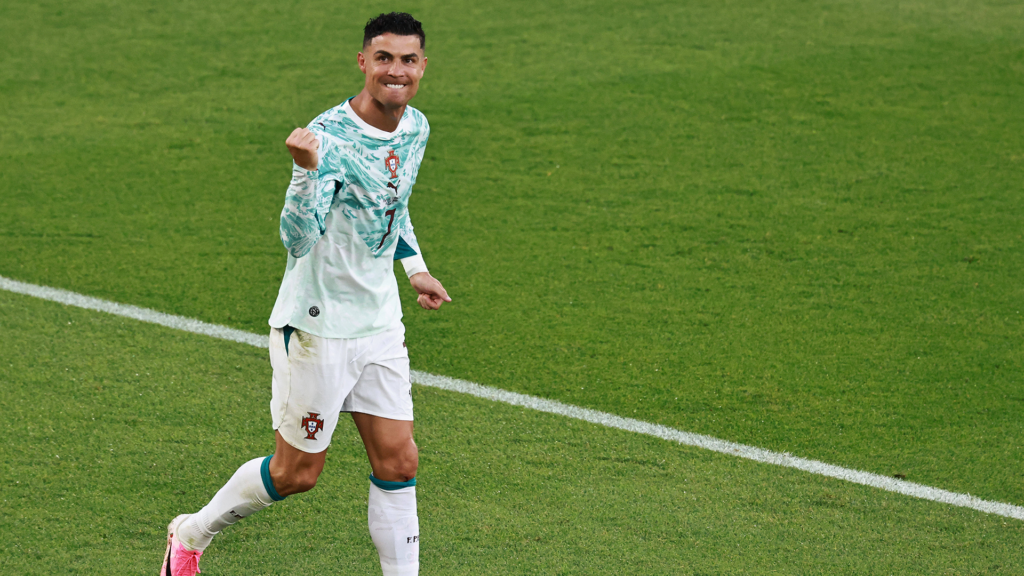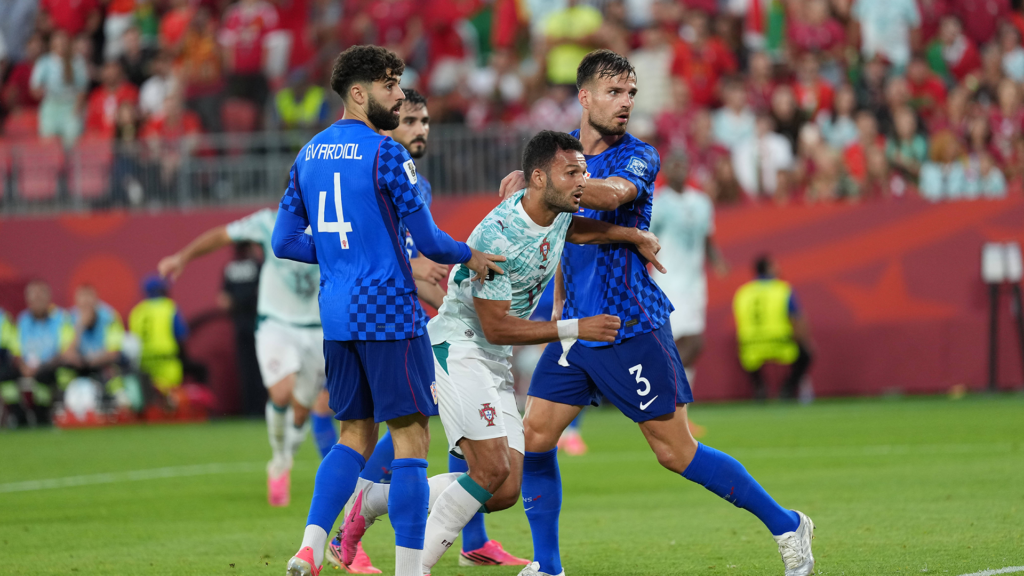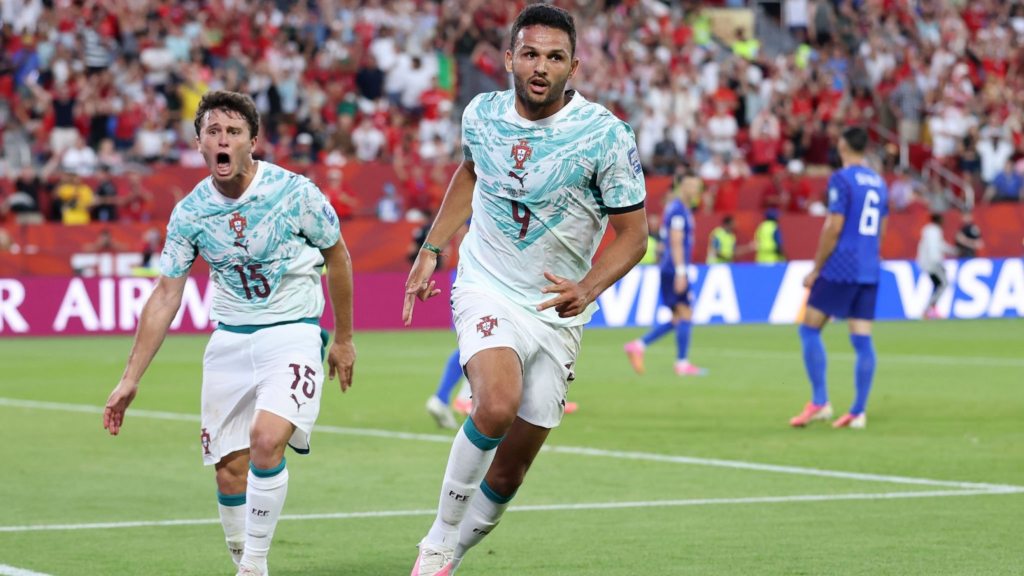

















There is a particular kind of silence that follows a goal at a World Cup knockout stage — not empty, but charged, as if the stadium itself is holding its breath before deciding what the moment will mean. Folarin Balogun lived inside that silence twice on the same night. He scored. He was sent off. And still, the United States moved forward.
That combination is almost never seen. Since 1966, only three players have scored and received a red card in a single World Cup knockout match. Balogun is the latest. Ronaldinho did it in 2002. Zinedine Zidane did it in 2006. It is a club built from equal parts brilliance and chaos, and nobody plans their career around joining it.
A Night Split in Two
Knockout football rewards caution. Managers tighten shapes. Challenges grow sharper. Tempers shorten. To finish a match as both its decisive scorer and the player who leaves his team a man down is to live two different games in ninety minutes.
For Balogun, the arc felt personal before it felt historical. He had already built momentum across the tournament, finding rhythm in the kind of runs that do not always look spectacular in real time but change the weight of a match when they arrive. When his goal came, the celebration carried the release of a player who had been chasing this stage for years — through youth setups, through club moves, through the quiet work of becoming someone a national team can trust when everything narrows.
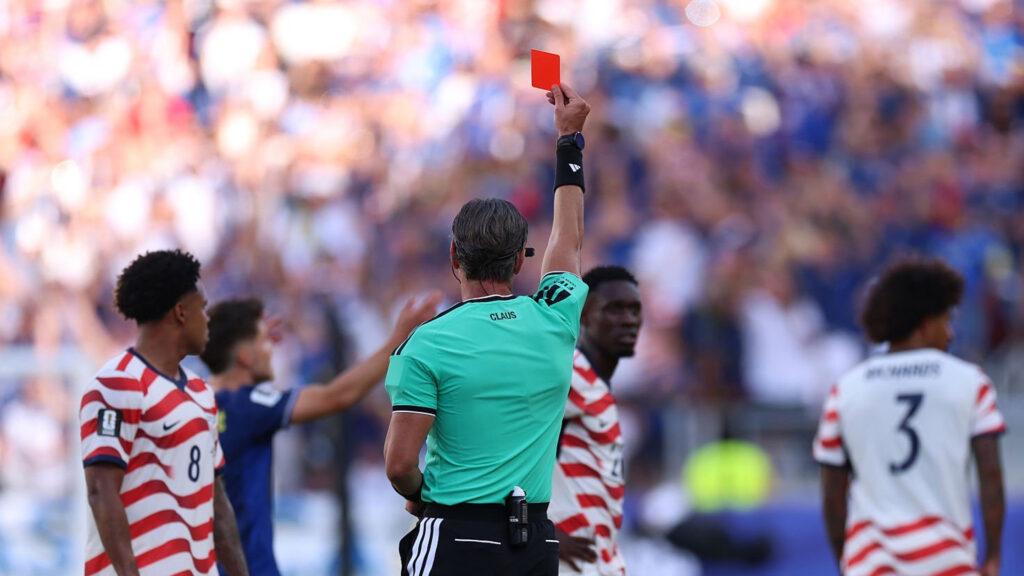
Then the night turned. A challenge. A straight red. The walk off the pitch is its own story: shoulders still high from the goal, mind already calculating what the team must do without him. His teammates closed the gap. The run continued. That detail matters. This is not merely a statistical oddity. It is a player whose impact was large enough to survive his own absence.
The Short List Before Him
Records like this stay rare because knockout rounds punish extremes. Ronaldinho and Zidane did not merely appear on a spreadsheet. They shaped entire evenings.
Ronaldinho, 2002: Magic, Then a Man Down
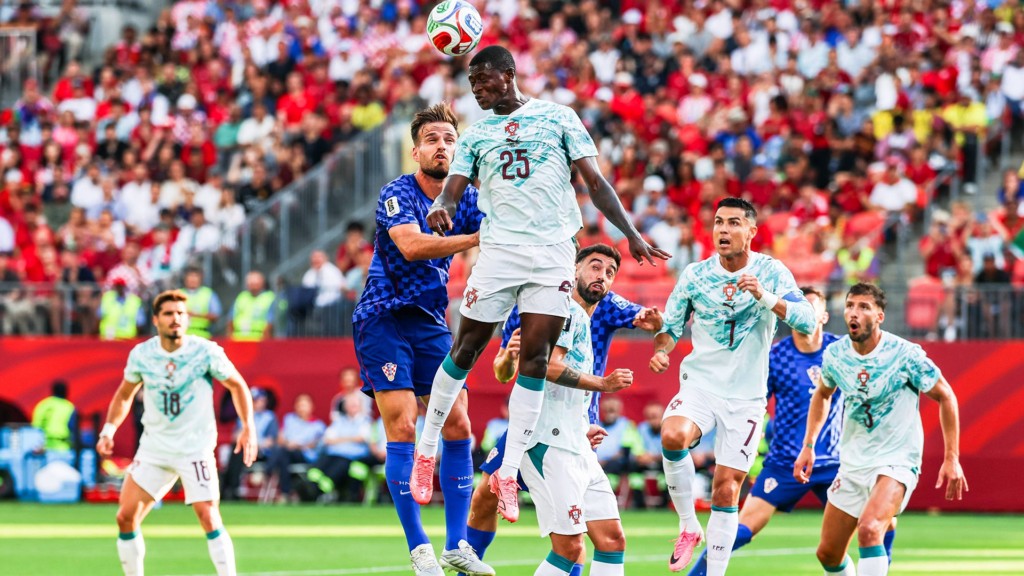
The 2002 quarterfinal between Brazil and England was already tense before Ronaldinho rewrote it. Brazil needed a response after falling behind. He helped pull them level by setting up Rivaldo, mixing vision with audacity on the biggest stage. Then, before halftime, he produced one of the tournament's most replayed goals — a free kick from more than forty meters that drifted over David Seaman and into the net.
The numbers matched the memory: key passes, successful dribbles, a performance that felt larger than the box score. Then came minute 57. A high challenge brought a straight red, and Brazil were left to protect a lead with ten men. They did, winning 2-1 and eventually lifting the trophy in Yokohama. Ronaldinho's night ended in dismissal, but his team's tournament did not.
Zidane, 2006: The Final That Refused Simplicity
If Ronaldinho's story mixed joy and disruption in a quarterfinal, Zidane's came in the final itself. Playing for France, he scored and later saw red in the same match — a night so charged that the result almost feels secondary to the emotional whiplash. That is the company Balogun now keeps: players whose influence was undeniable even when their evenings ended in controversy.
American Company on the Score Sheet
The red card will dominate headlines, but Balogun's tournament should be remembered for more than one chaotic hour. He has now scored three or more goals at a single World Cup, placing him alongside Bert Patenaude and Landon Donovan as the only Americans to reach that mark.
That is a different kind of history — quieter, more durable. Patenaude belongs to the game's earliest chapters. Donovan became the face of a generation that believed the United States could live inside knockout conversations rather than merely visit them. Balogun's path has been less linear, shaped by movement, patience, and the modern reality of choosing where and how to grow. Yet the outcome rhymes with theirs: a forward who made a World Cup his own.
There is something instructive in that parallel for anyone watching from the stands or from a living room halfway around the world. World Cups are often sold as stories of nations, but they are lived by individuals — by the player who scores and then must sit helplessly in the dressing room, by the veteran whose name enters a short list decades later, by the teenager in a academy who sees proof that a complicated path can still arrive somewhere meaningful.
What the Moment Says About the Run
Balogun will not want to be remembered only for the red. Neither should he be. The goal kept the United States alive in the knockout bracket. The broader tally put him among the country's most productive scorers on this stage. Together, those facts describe a player who changed the temperature of his team's tournament rather than merely appearing in it.
The wider picture adds context without changing the core story. Brazil, England, and France all remain among the sport's elite national sides in the current cycle, ranked inside the top six globally, and each has been navigating a demanding World Cup schedule of their own. The United States are building a different narrative — not always polished, not always comfortable, but increasingly difficult to dismiss when the lights sharpen.
Knockout football rarely offers clean endings. It offers nights that split in two, lists that were never meant to be short, and players who leave fingerprints on history even when they cannot finish the final whistle on the pitch. Balogun's evening belonged to that tradition — rare, messy, and impossible to forget.